
MDF ordering process

Turn an MDF requirement into a controlled B2B order.

Follow a transparent path through application, specification, drawings, samples, required documents, quotation, packaging and production review.

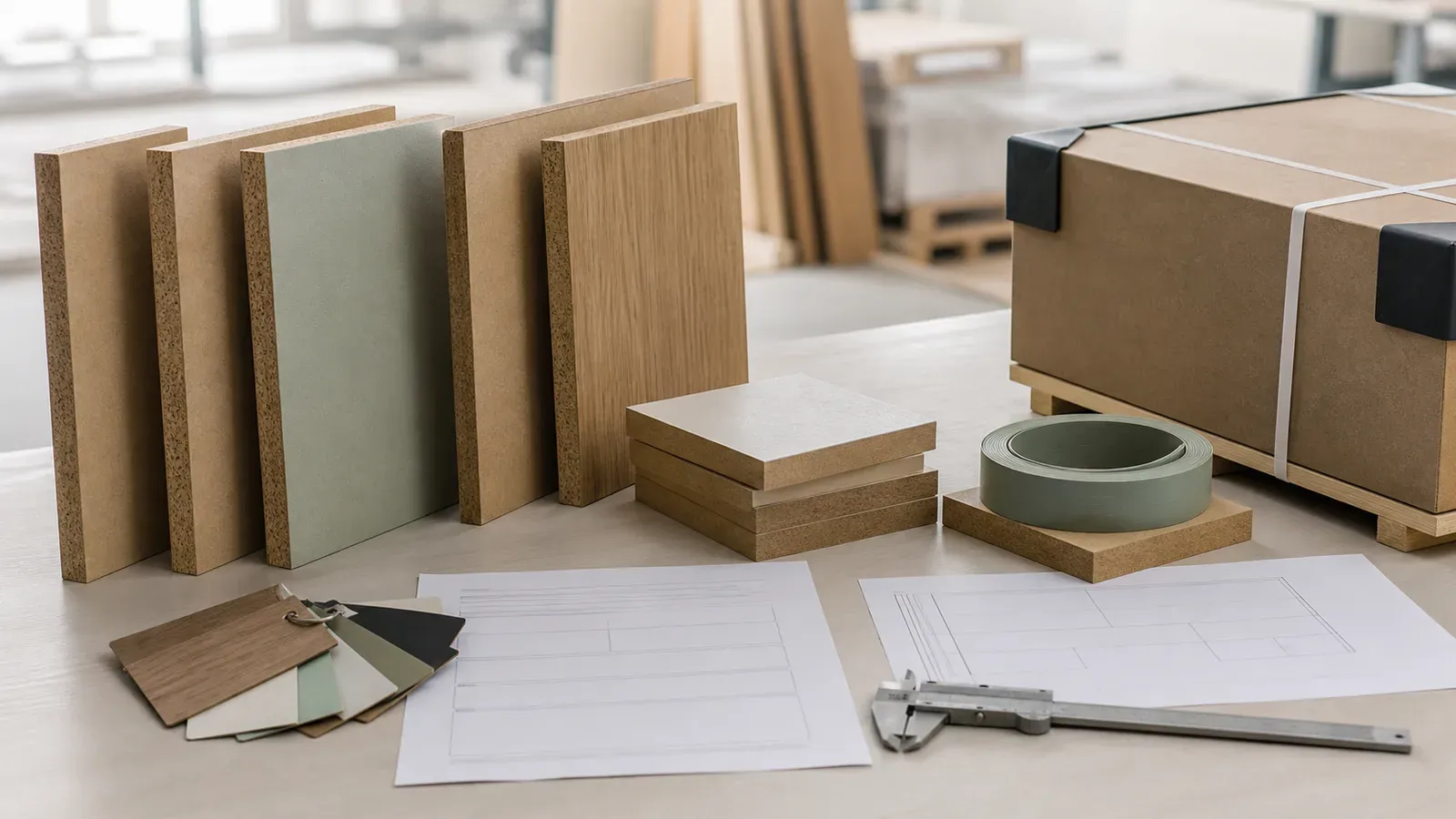
MDF samples drawings and packaging references arranged for order review

Specification-led purchasing

A useful quotation starts with controlled inputs.

A reliable MDF order begins before production. CUZI MDF uses a specification-led purchasing workflow so product, application, drawings, samples, required documents, quantity, packaging and destination can be reviewed before commercial commitment.

Buyer-to-production workflow

Keep every commercial decision connected to the same revision.

  1. Use case

    Application brief

    Describe the finished component, environment, finish and downstream work.

  2. Material

    Specification

    Define the product, construction, dimensions, surface and required documents.

  3. References

    Drawings and samples

    Control geometry and appearance with identified references and revisions.

  4. Commercial scope

    Quotation scope

    Align quantity, included work, packaging, destination and exclusions.

  5. Approved revision

    Order review

    Freeze the accepted revision before production and timing confirmation.

Minimum RFQ information

Make unknown values visible before commitment.

CUZI MDF reviews the supplied requirement and identifies the product, sample, drawing, technical document or packaging decision still needed.

  • Application and MDF construction
  • Thickness, dimensions and supplied surface
  • Drawings, samples and processing
  • Quantity, packaging and destination
  • Required documents and timing

Timing after confirmation

7–15 days

Typical lead times may range from 7 to 15 days after order requirements are confirmed. Final timing depends on specification, quantity, production scheduling and destination.

Company information

1. Describe the Application

Explain the finished component, service environment, visible faces, support, hardware, finishing process and downstream manufacturing. If the product is not yet selected, describe the requirement and keep product choice open for review. This prevents a familiar grade name from replacing the actual use case.

2. Build the Product Specification

Identify MDF type, thickness, dimensions, surface or face/back construction, processing and any technical requirement. A required density, emission class, moisture property, fire classification or other value should reference the applicable standard and required test report or certificate. Unknown values remain questions.

3. Control Drawings and Samples

Cut parts, holes, routed profiles and other components need controlled drawings with units, revision and critical dimensions. Physical samples may control finish, texture, veneer, gloss, profile or finished appearance. Record what each reference proves and use an identified physical sample for exact appearance approval.

4. Confirm Commercial Scope

State whether the request is for full board, faced panel, cut-to-size parts, routed components or another agreed supply scope. Provide quantity by product or part, destination, requested timing and any minimum or alternative under consideration. Ask the quotation to identify inclusions, exclusions and unresolved items.

5. Review Technical Documents

List current product data, declarations, certificates or test reports required for the proposed order. Match each document to the exact product, construction, thickness, dates and destination need. Fire-rated claims remain unavailable without authentic applicable test reports and product documents, and a website statement does not replace those documents.

6. Approve Packaging and Identification

Define face and edge sensitivity, separators, covers, corner protection, wrapping, support, bundle or kit grouping, labels, destination and unloading conditions. Packaging should remain traceable to the approved product and part schedule and should support receiving without exposing private customer information publicly.

7. Freeze the Order Revision

Before production review, align the specification, drawings, samples, quantity, packaging and document requirements under one accepted revision. A later change should identify what changed, who approves it and whether quotation, sample, capability or timing needs to be reviewed again.

8. Plan Timing by Milestone

Typical lead time is 7–15 days after requirements are confirmed. Final timing depends on specification, quantity, production scheduling and destination. Sampling, approvals, document review, packaging preparation and logistics should be planned separately; no website range is a guaranteed arrival date.

Buyer support

Start an order-specific MDF review.

Tell us your application, board specification, quantity and destination so CUZI MDF can review the requirement.