
Professional MDF Manufacturer & Supplier

PVC Faced MDF Manufacturer in China

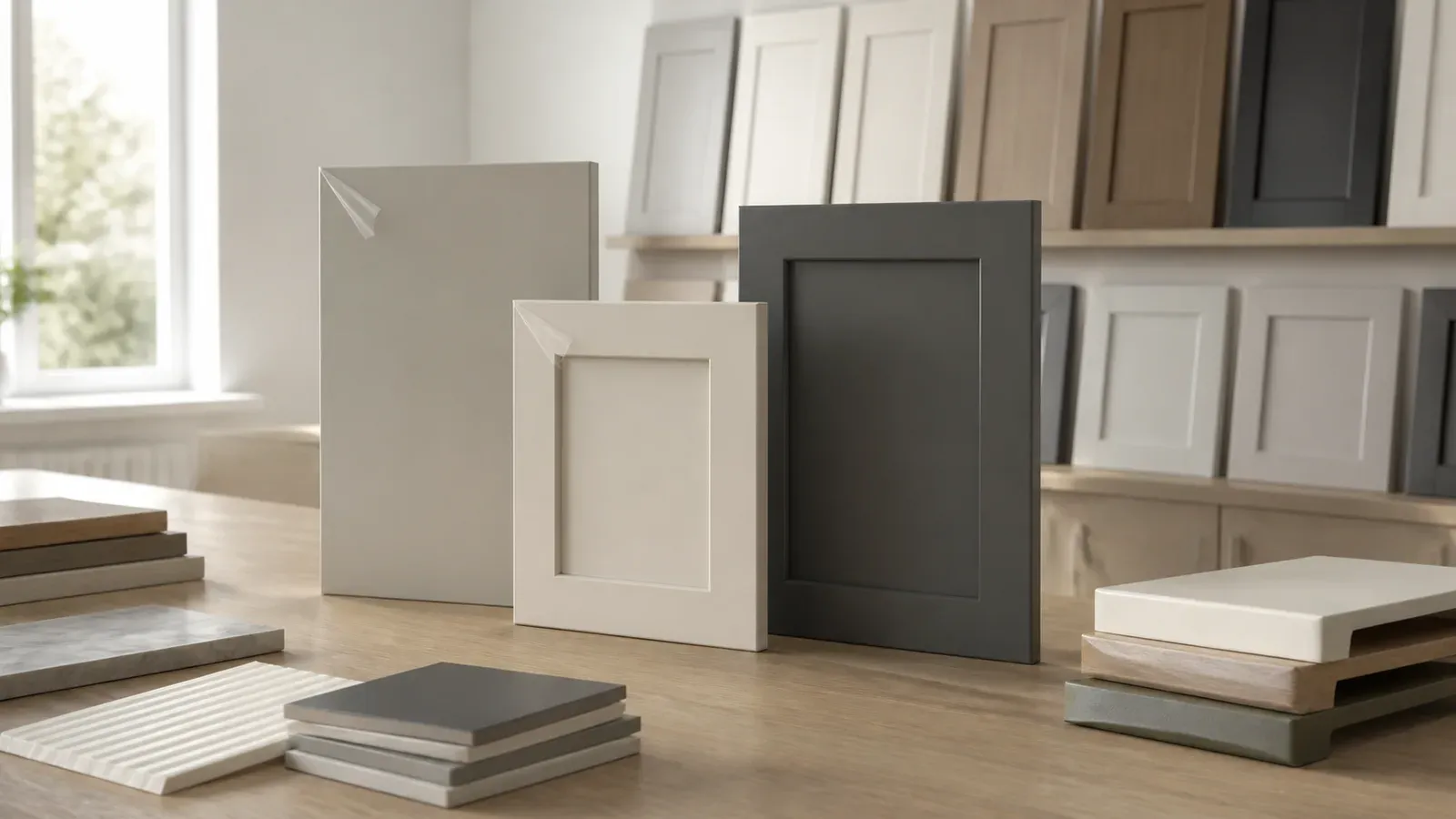
PVC Faced MDF and membrane-pressed MDF components from Shuyang, China, specified by PVC film reference, MDF core, flat or routed construction, profile geometry, reverse face and approved sample.

Product focus
PVC Faced MDF supply
Buyer review
Grade · size · finish · processing
PVC faced MDF flat panels and membrane-wrapped routed cabinet-door samples

Why this panel exists

PVC Faced MDF specified by flat or membrane construction, film reference and profile geometry.

This page covers complete PVC film-faced MDF constructions: flat PVC-laminated panels and routed components wrapped by membrane or vacuum pressing. Laminated MDF covers a separately manufactured decorative laminate or HPL sheet, Melamine MDF covers resin-impregnated decor paper, and Routed MDF Cabinet Doors covers unfinished or paint-ready routed geometry. The quotation must identify which PVC construction is required.

Product introduction

What is PVC Faced MDF?

Product definition

What is PVC Faced MDF?

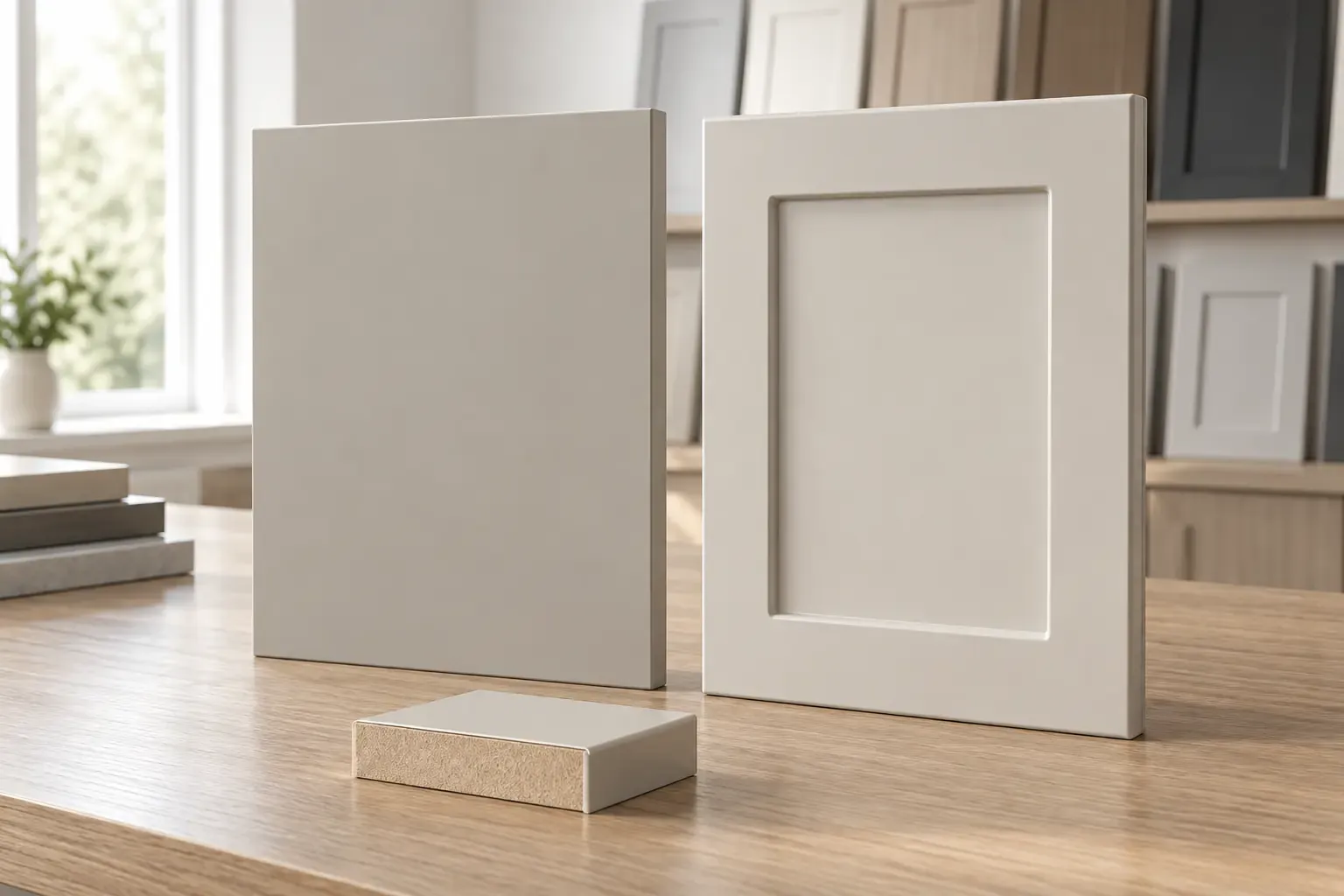
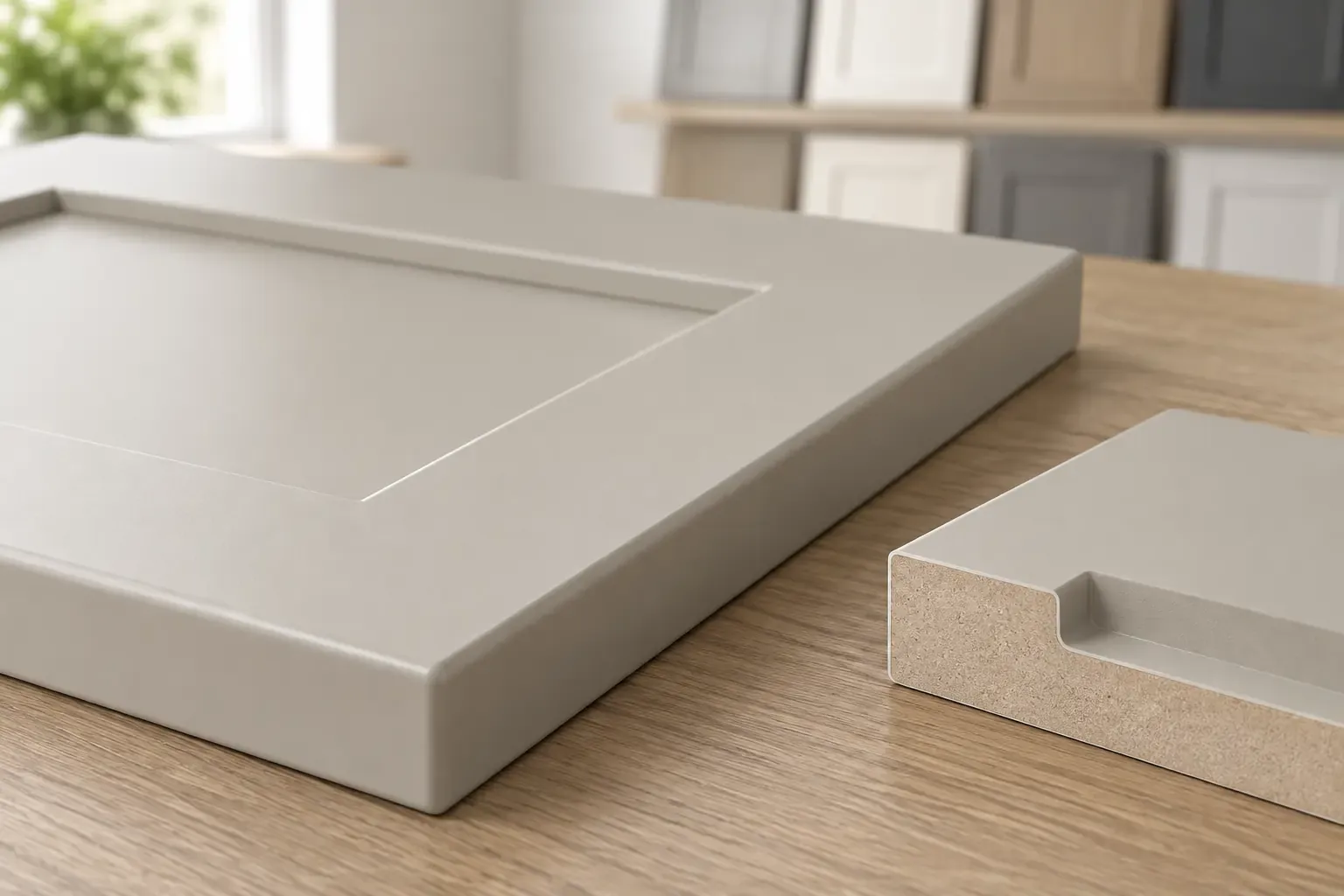
PVC Faced MDF combines a confirmed MDF substrate with an identified PVC film and bonding process. Flat panels may be faced on one or both sides. Routed doors and furniture fronts use membrane or vacuum pressing to carry one continuous film across the face, routed profile and outside edges, subject to compatible geometry. Buyers should define the PVC film reference, colour, texture, gloss, thickness category, MDF core, door or panel thickness, face and reverse-face construction, profile drawing, minimum radii, groove depth, remaining section, machining, quantity and finished use. Tight corners and deep or sharp profiles can stretch the film or prevent continuous contact, so a representative finished component should be approved before repeat production. A continuous PVC face can slow short-duration moisture contact, but PVC Faced MDF is not waterproof: cut edges, the reverse face, holes and joints remain relevant, and prolonged water, heat or humidity can affect the MDF, adhesive and film.
Buyer advantage

Why choose PVC Faced MDF?

A flat-faced board and a routed door wrapped across its face, profiles and edges are different constructions and require different drawings, film behaviour and acceptance checks. Sharp corners, tight internal radii, deep grooves or a thin remaining section can cause bridging, stretching, poor contact or visible defects. MDF face condition, routed-edge quality, dust control, adhesive and pressing process must be compatible with the approved film and component. Use an identified physical sample to establish the supplied colour, texture, gloss, film feel and acceptable production variation. Cut edges, drilled holes, joints and the reverse face can remain moisture-sensitive even when the visible face is continuously wrapped. PVC Faced MDF is intended for a confirmed protected-interior use. Any heat, humidity, cleaning or moisture requirement must be reviewed for the complete construction and actual exposure.

Application fit

Applications

Relevant application discussions include bathroom furniture, cabinet doors. Final product suitability must be reviewed against the buyer's actual application and confirmed specification.

Supply support

Why choose CUZI MDF?

CUZI MDF coordinates PVC Faced MDF and membrane-pressed component production and delivery from Shuyang, Jiangsu, China. Capacity is 300 m³ per day for each thickness. The normal MOQ is 1 × 20'GP for each individual PVC film/MDF construction, and normal production lead time is 7–15 days after the film reference, physical sample, flat or routed construction, drawings, MDF core, dimensions, packaging and commercial requirements are confirmed. Buyer terminology: PVC Faced MDF may be searched as PVC laminated MDF, PVC coated MDF, PVC wrapped MDF, membrane pressed MDF doors or thermofoil MDF cabinet doors. This page covers flat PVC film-facing and complete routed membrane-wrap constructions. Routed MDF Cabinet Doors owns unfinished or paint-ready routed geometry, Melamine MDF owns resin-impregnated decor-paper faces, and Laminated MDF owns separately bonded decorative laminate or HPL sheets.

Product USP

Why Buyers Choose PVC Faced MDF

The purchasing priorities below connect PVC Faced MDF with specification, processing and order requirements.

Flat and routed construction control

The order identifies a flat-laminated panel or a membrane/vacuum-pressed routed component, including both faces, exposed edges and supplied condition.

Physical film-reference approval

Colour, texture, gloss and acceptable variation are tied to an approved PVC film reference and representative finished sample.

Profile and wrap compatibility

Door thickness, routing depth, remaining section, edge radii and film-forming process are reviewed together before repeat production.

Surface-protective export packing

Clean separators, face protection, edge and corner protection, stack support and strap pressure are selected for the finished PVC surface and component geometry.

Buyer problems solved

PVC Faced MDF Purchasing Risks to Control Before Production

Flat lamination and membrane wrapping are confused

A flat-faced board and a routed door wrapped across its face, profiles and edges are different constructions and require different drawings, film behaviour and acceptance checks.

Profile geometry prevents a reliable wrap

Sharp corners, tight internal radii, deep grooves or a thin remaining section can cause bridging, stretching, poor contact or visible defects.

Substrate and bonding conditions are incomplete

MDF face condition, routed-edge quality, dust control, adhesive and pressing process must be compatible with the approved film and component.

A screen colour replaces the physical sample

Use an identified physical sample to establish the supplied colour, texture, gloss, film feel and acceptable production variation.

Edges and reverse faces are omitted

Cut edges, drilled holes, joints and the reverse face can remain moisture-sensitive even when the visible face is continuously wrapped.

Heat and moisture resistance are assumed

PVC Faced MDF is intended for a confirmed protected-interior use. Any heat, humidity, cleaning or moisture requirement must be reviewed for the complete construction and actual exposure.

Why choose CUZI MDF

MDF manufacturing, customization, inspection and international supply.

CUZI MDF reviews different MDF grades and specifications for furniture factories, distributors and international B2B buyers.

Professional MDF manufacturing

CUZI MDF focuses on MDF manufacturing and specification-led supply for international B2B buyers.

Customized MDF review

Thickness, size, surface, processing and packaging requirements are reviewed against the requested product and order.

Quality and document control

Quoted technical values are matched to the selected product, current test reports and the written order specification.

International supply planning

Order planning covers confirmed specification, quantity, packaging needs, destination and shipment coordination.

Technical specification

PVC Faced MDF Specifications

CUZI MDF supplies standard and customized specifications for furniture factories, distributors and project orders.

ThicknessMDF core 2–35 mm with nominal core thickness tolerance ±0.1 mm, subject to the confirmed measuring and acceptance method. Final panel or door thickness includes the selected PVC film and bonding construction.
DimensionsInput board formatsInput MDF formats include 1220 × 2440 mm; 2100 × 2800 mm; 1830 × 3660 mm; 1830 × 2440 mm; 2440 × 3660 mm; 1830 × 4200 mmFinished panel or door dimensionsFollow the controlled cut list, front drawing, section drawing and nesting plan.
DensityCUZI MDF core density range: 2–4 mm: 800–810 kg/m³; 5–8 mm: 780–800 kg/m³; 9–11 mm: 760–780 kg/m³; 12–18 mm: 680–750 kg/m³; 19–35 mm: 650–680 kg/m³.
GlueThe MDF bonding system and PVC film adhesive/pressing process are selected for the confirmed core, film, flat or routed construction and protected-interior end use.
Formaldehyde gradeE0, E0.5 and E1 options. The specified emission class, test standard, product scope and destination requirement must be confirmed for each order.
SurfaceIdentified PVC film on a flat MDF face or continuously membrane/vacuum wrapped across an approved routed face, profile and outside edges. Confirm the physical sample, colour, texture, gloss, thickness category, reverse face and edge treatment.
PVC facing constructionOrder-specific PVC-faced construction for protected interiors. It is not waterproof; prolonged water, heat or humidity exposure requires review of the core, film, adhesive, profiles, edges, reverse face and complete component.

All product options, processing, packaging and timing remain subject to confirmation against the final specification, quantity, production schedule and destination.

Indicative export pricing

A practical starting range for quotation planning.

US$225–556 per m³

Availability
Available to order
Specification review
5.0/5.0

Custom specifications determine the final price.

This price range is an indicative export reference for configurable B2B orders, not a fixed or binding offer. Final unit pricing is confirmed in a written quotation.

  • Product grade, thickness, density and board size
  • Surface construction, color, processing and packaging
  • Order quantity, payment terms and production scheduling
  • Incoterm, destination, freight and document requirements

Technical specification completeness review

The product page states the principal board or component specification, configurable order factors, indicative price basis and quotation requirements needed for an initial B2B purchasing review.

Reviewed by CUZI MDF Product & Technical Team.

Request an exact quotation

Features

Specify what matters on the factory floor.

2–35 mm MDF core range

CUZI MDF reviews PVC Faced MDF using a 2–35 mm MDF core with nominal core thickness tolerance of ±0.1 mm, subject to the confirmed measuring and acceptance method.

Six input-board formats

Reference MDF core formats include 1220 × 2440 mm; 2100 × 2800 mm; 1830 × 3660 mm; 1830 × 2440 mm; 2440 × 3660 mm; 1830 × 4200 mm; finished panel and door dimensions follow the controlled cut list and drawings.

Thickness-specific MDF density

The MDF core follows the CUZI MDF standard density schedule: 2–4 mm: 800–810 kg/m³; 5–8 mm: 780–800 kg/m³; 9–11 mm: 760–780 kg/m³; 12–18 mm: 680–750 kg/m³; 19–35 mm: 650–680 kg/m³.

Flat or membrane-pressed supply

The construction can be reviewed as single- or double-faced flat PVC lamination, or as a one-piece membrane/vacuum wrap over an approved routed component.

First-component approval

A representative finished door, profile or flat panel can establish appearance, coverage, profile contact, edge condition and reverse-face treatment before repeat production.

Inspection and protective handling

Finished surfaces, profiles, edges, part identity, separators, wrapping, supports and packaging are checked against the confirmed order.

Protected-interior use

A continuous PVC face can slow short-duration moisture contact, but PVC Faced MDF is not waterproof. Review the MDF core, film, adhesive, profiles, exposed edges, reverse face, holes, joints and actual exposure.

Processing notes

Confirm flat or membrane construction, substrate preparation, routing, profile radii, groove depth, remaining section, adhesive/pressing process, trimming, drilling and representative sample before repeat production.

Applications

Applications of PVC Faced MDF

MDF for Bathroom Furniture

MDF can be specified for protected-interior bathroom furniture when the order controls how humidity, splash or plumbing-related water could reach each component. Compare MR or HMR grade, face and reverse construction, cut edges, sink and pipe openings, hardware and the finished sample; the complete protected-interior construction determines the vanity's moisture performance.

Explore application

MDF for Cabinet Doors

MDF cabinet-door selection connects flat or routed front geometry with the substrate, finish, reverse face, hinges and gaps. Decide the construction before comparing door prices.

Explore application

Buyer guides

Continue the PVC Faced MDF purchasing review.

These guides explain the next specification, application and procurement decisions connected to this product.

Procurement Scenario: Routed MDF Cabinet Door Drawing Approval

Approve routed MDF cabinet doors through controlled elevations and sections, profile geometry, remaining material, tool radii, hardware interfaces, first components and protected batch packing.

Explore application

MDF Cabinet Door Guide: Material, Routing, Finish and Hardware

An MDF cabinet-door specification connects the finished door style to its substrate, dimensions, face and reverse construction, profile section, remaining material, edges, finish, hardware machining, finished weight, first article and protective packing. This guide forms a production-ready door schedule.

Explore application

Bathroom Vanity MDF: Substrate, Wet-Adjacent Details and Finish

Bathroom vanity MDF selection begins with the complete furniture design: room humidity, intermittent splash, basin and countertop junctions, plumbing access, floor clearance, cleaning and ventilation. Each component then receives a defined substrate, face, reverse, edge and cut-out construction.

Explore application

PVC Faced MDF and Thermofoil Doors: Flat Panels, Profiles and Inspection

PVC faced MDF can describe a flat laminated panel or a routed door wrapped through a membrane or vacuum-press process. A production-ready inquiry identifies the construction, film, MDF substrate, profile geometry, face and reverse construction, service environment, first article and finished-component acceptance.

Explore application

Customization capability

Customized PVC Faced MDF Supply

Send the required dimensions, surface, processing drawings, packaging and destination. CUZI MDF confirms production feasibility before issuing a quotation.

MDF core specification

Specify core thickness, input format, density, E0/E0.5/E1 requirement, tolerance and protected-interior application.

PVC construction

State flat single- or double-faced lamination, or one-piece membrane/vacuum pressing over a routed component.

Film and appearance reference

Provide the PVC film reference or physical sample, colour, texture, gloss, thickness category and acceptable variation.

Routed component geometry

Provide front and section drawings showing overall thickness, profile, groove depth, minimum radii, remaining section, holes and critical dimensions.

Reverse face and edge construction

Define reverse-face material, exposed edges, wrapped edges, trimming, joints, drilling and any downstream edge treatment.

Sample and inspection

Confirm the representative finished sample and required checks for appearance, film contact, profiles, edges, dimensions and supplied condition.

Protective packaging

Packaging is selected from component size, quantity, PVC surface, profile, destination, handling route and customer requirements.

Packaging options

Use clean separators, face protection, edge and corner protection, supported component stacks and controlled strap pressure selected for the PVC surface, routed profiles, quantity, handling and destination.

Purchasing / RFQ guidance

Provide PVC film reference or physical sample, flat or membrane construction, MDF core thickness, size, density, E0/E0.5/E1 requirement, face/reverse construction, routed drawings, edges, quantity, packaging, destination and documents.

Manufacturing capability

CUZI MDF Manufacturing Capability

MDF production capability

Production planning begins after the product specification and commercial requirements are confirmed.

Quality management

Applicable checks are aligned with the confirmed MDF product, dimensions, surface, processing and other agreed criteria.

Customized manufacturing

CUZI MDF reviews grade, dimensions, surface, CNC processing and packaging requirements before confirming production.

Packaging and supply

Packaging and timing are confirmed against the final product, quantity, production schedule and destination.

Production workflow

CUZI MDF Manufacturing Process

The production workflow connects the confirmed product specification with panel manufacturing, inspection and export-oriented packaging.

Confirm specification

Review product type, dimensions, surface, processing, quantity and destination.

Plan production

Translate the approved order requirements into the applicable production and handling plan.

Inspect and prepare

Review the finished order against agreed requirements before packaging and shipment preparation.

Buyer FAQ

Questions buyers ask before specifying PVC Faced MDF.

What is PVC Faced MDF?

PVC Faced MDF is an MDF substrate finished with an identified PVC film. It may be a flat-laminated panel or a routed component membrane/vacuum pressed so one continuous film follows the face, profile and outside edges.

How does flat PVC lamination differ from membrane pressing?

Flat lamination bonds film to a flat face and may be single- or double-faced. Membrane or vacuum pressing forms the film over a routed three-dimensional component, so profile radii, groove depth, remaining section and edge geometry become part of the specification.

How is PVC Faced MDF different from Melamine MDF?

PVC Faced MDF uses a PVC film bonded to the MDF and can wrap suitable routed profiles. Melamine MDF uses resin-impregnated decor paper pressed as the panel face and normally requires a separate edge solution after component cutting.

How is PVC Faced MDF different from Laminated MDF or HPL-faced MDF?

This page covers PVC film-facing and profile wrapping. Laminated MDF covers a separately manufactured decorative laminate sheet, including identified HPL-faced constructions. The RFQ should name the actual surface material.

Can PVC film be applied to routed MDF cabinet doors?

Yes, when the selected MDF, face and routed-edge condition, adhesive, film and pressing process are compatible. Front and section drawings should define profile radii, groove depth and remaining material, followed by a representative finished-door approval.

Is PVC Faced MDF waterproof?

No. A continuous PVC face can slow short-duration moisture contact and protect the visible surface, but the MDF core, cut edges, reverse face, holes and joints remain relevant. It is not intended for prolonged soaking or uncontrolled wet exposure.

Which colours and finishes are available?

Colour, woodgrain or solid appearance, texture and gloss are reviewed against the customer's requirement and an approved physical PVC film sample. A screen image alone does not define the supplied finish.

Which MDF core sizes and densities are available?

Reference core formats are 1220 × 2440 mm; 2100 × 2800 mm; 1830 × 3660 mm; 1830 × 2440 mm; 2440 × 3660 mm; 1830 × 4200 mm. The MDF core density follows the thickness-specific CUZI MDF standard schedule and is confirmed with the selected PVC construction.

What are the PVC Faced MDF MOQ, capacity and lead time?

Capacity is 300 m³ per day for each thickness. The normal MOQ is 1 × 20'GP for each individual PVC film/MDF construction, and normal lead time is 7–15 days after the film, sample, drawings and commercial requirements are confirmed.

What should a PVC Faced MDF RFQ include?

Send the PVC film reference or physical sample, flat or membrane construction, MDF core thickness, size, density, E0/E0.5/E1 requirement, face and reverse face, routed drawings, edges, quantity, packaging, destination and required documents.

Are the ranges on this page confirmed for every order?

No. Product-specific availability and values are confirmed against the proposed order.

What should the purchasing RFQ include?

Provide PVC film reference or physical sample, flat or membrane construction, MDF core thickness, size, density, E0/E0.5/E1 requirement, face/reverse construction, routed drawings, edges, quantity, packaging, destination and documents.

Specification to quotation

Request a PVC Faced MDF Quotation

Send your target grade, dimensions, quantity, surface or processing requirements and destination. CUZI MDF will review the specification and provide quotation support for the confirmed requirement.

  • Target grade or test standard
  • Thickness, size, density and quantity
  • Surface, CNC and packaging requirements
  • Destination and requested timing

By submitting this business inquiry, you acknowledge how CUZI MDF handles the information described in our Privacy Policy.