
Calculate weight from the chosen board
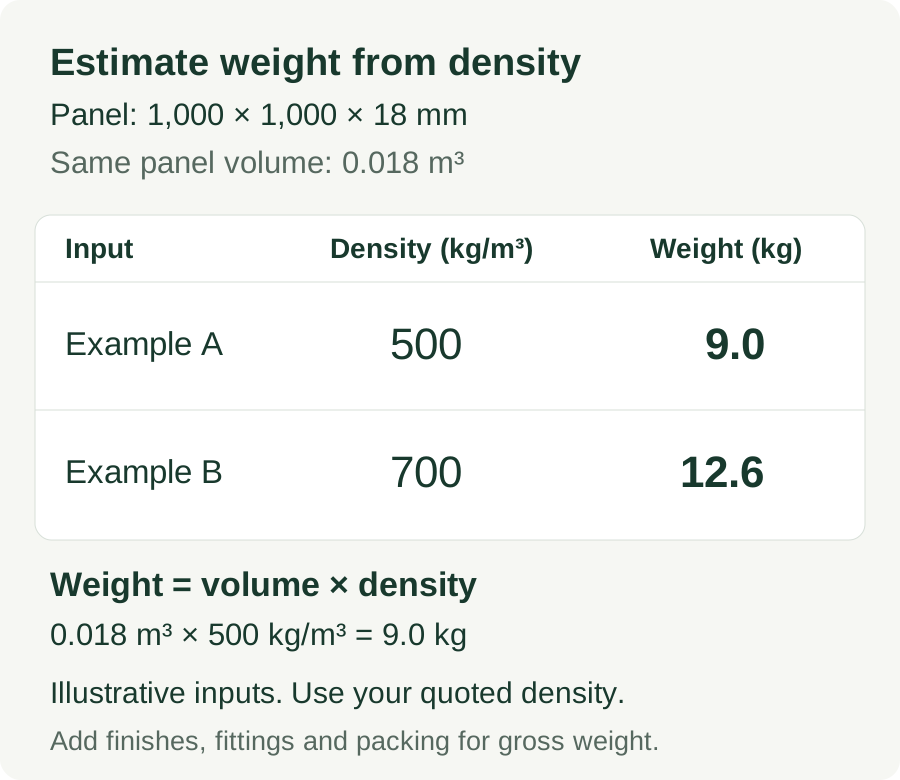
Board weight equals length × width × thickness in metres, multiplied by density in kg/m³. Use the quoted product density; packing is additional.
Lightweight MDF Manufacturer · Shuyang, China
Make boards and finished components easier to handle. We manufacture and supply reduced-density Lightweight MDF from our Shuyang factory for furniture, display parts and interior components where lower weight helps your production.
Technical specification
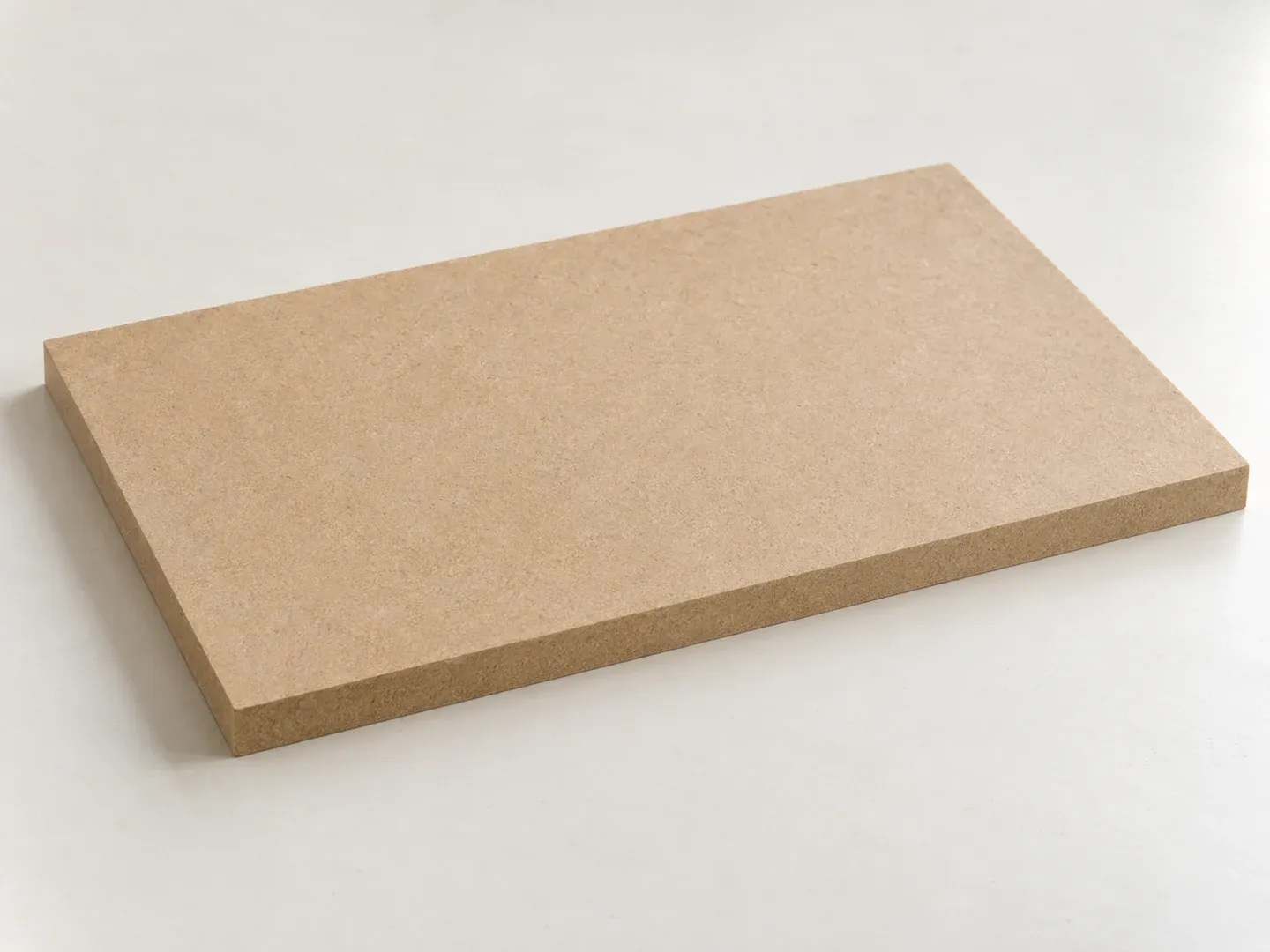
Lightweight MDF is a reduced-density solid wood-fibre board for furniture, displays and interior components where lower weight helps handling. Choose the density with the strength, support and machining your part needs.
Finish and processing
Board weight equals length × width × thickness in metres, multiplied by density in kg/m³. Use the quoted product density; packing is additional.
Match span, load, edge distances, pilot holes and inserts to the selected board. Check the actual hardware on a representative assembly.
Compare cuts, routed details and remaining material on the chosen grade. Agree the face, edge preparation and paint, veneer or facing system.
Applications
Sheets and drawing-based components with agreed machining, face orientation, part IDs and packing groups for assembly.
Explore applicationOrder desk tops, meeting-table leaves, storage panels and drawer fronts for your office furniture range. Our Shuyang factory combines the selected board and surface with cut sizes, cable openings, hardware machining and labelled component packs.
Explore applicationBoards and components
Request the selected Lightweight MDF density, dimensional, strength and fixing information, along with emissions documents for your destination. Do not substitute standard MDF properties.
Made in Shuyang, China
Work with Shuyang Cuzi MDF Co., Limited on board selection, machining, inspection and export packing. Our factory has a total daily production capacity of 500 m³ across its operations.
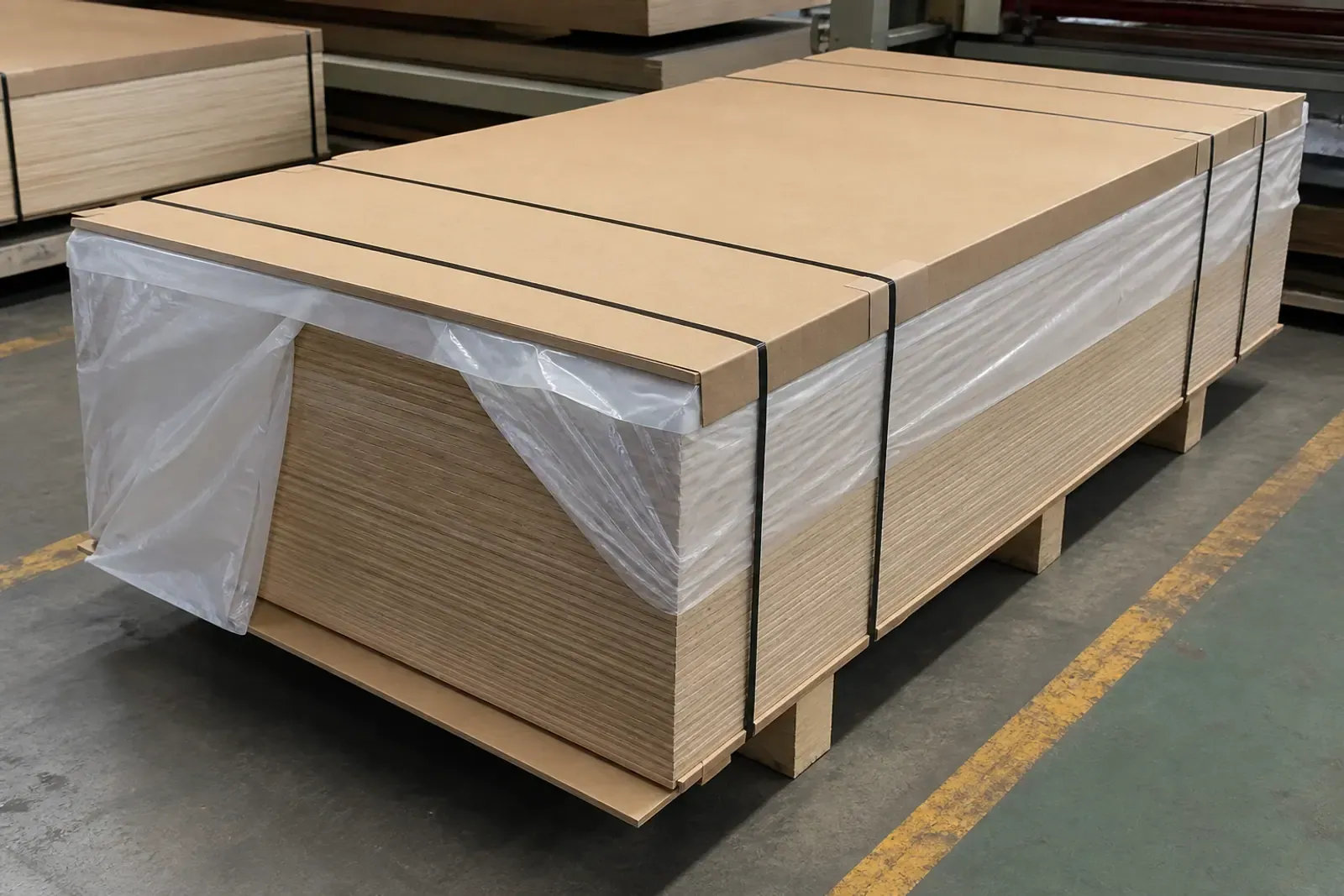
Made to order. Quantities and mixed specifications are confirmed in your quotation. Delivery lead time starts after specifications and terms are confirmed; sea transit is scheduled separately.
Freight is calculated for your ports and cargo quantity. Returns and exchanges, including timing and costs, are agreed in the order.
Delivery and freight terms · Returns and 180-day warranty · Packing and loading information
US$160–290 per m³
Your quotation confirms the specification, quantity, packaging and final price.
Buyer FAQ
These terms describe reduced-density MDF, but individual product ranges use different densities and properties. Compare the actual board specification and component performance. Tell us the target weight, dimensions and use so the quotation identifies the Lightweight MDF product for your order.
Compare the same length, width and thickness using each board's nominal density. Divide the density difference by the comparison board density to calculate the percentage mass reduction for those equal dimensions. Use the actual quoted densities and add any faces, fittings or packing when comparing finished components or shipments.
Convert length, width and thickness to metres, multiply them to obtain volume in m³, then multiply by density in kg/m³. For a 1,000 × 1,000 × 18 mm calculation example, volume is 0.018 m³: density inputs of 500 and 700 kg/m³ give 9.0 kg and 12.6 kg respectively. Use the density specified in your quote for your order estimate.
Match the actual product's mechanical properties with the component span, support, loading and hardware. Agree the screw type, pilot hole, insertion depth and edge distance, or the insert detail. Test the selected board and hardware in a representative assembly where fixing or load performance is important.
Review the selected board with the primer, coating, veneer or facing system you intend to use. Check face condition, cut-edge absorption, adhesive or press conditions, and the face and reverse construction on a representative sample. The order specifies the supplied surface and finishing scope.
Solid Lightweight MDF has wood fibres through its cross-section, with its weight controlled by the selected density. A hollow or honeycomb panel has a different internal construction. Choose and detail the actual product for the machining, edges, hardware and support your component needs.
Lower density reduces net board weight at equal dimensions, while each board's volume stays the same. Loading depends on both volume and gross weight, plus pack dimensions, supports and protection. We calculate the shipment from the actual product and packing plan.
Send thickness, dimensions, target density or part weight, finish, quantity and destination. Samples are free; the buyer pays courier cost, which can be credited against a formal order. We confirm availability, any custom preparation and dispatch timing. Our team replies within 12 hours.
Buyer guides
MDF density is the mass of a board divided by its volume, expressed in kg/m³. For CUZI MDF Raw MDF, the published 12–18 mm density band is 680–750 kg/m³; other thickness groups have their own ranges.
Read guideChoose MDF thickness for the part you are making: a supported back, routed door and desk top ask different things of the panel. Thickness affects the volume, weight, interfaces and remaining material in your component.
Read guideChoose MDF thickness from the component's support, hardware, machining and finished construction. Choose the parent-sheet size by laying out the same cut list with the actual direction, trim and kerf, then check that format against your machines, handling and packing.
Read guideSend the thickness, sizes or drawing, target part weight, finish, quantities and destination. We reply within 12 hours to help choose the product, arrange a free sample and prepare a written quotation.