
Compare matched moisture data
Compare MR and HMR using the same thickness, test method and exposure. Density and the HMR name alone do not establish performance.
HMR MDF Manufacturer · Shuyang, China
Build kitchen and bathroom furniture with a core selected for higher moisture resistance. We manufacture HMR MDF in Shuyang, China, with a higher-density formulation, smooth sanded faces and machining to your drawings.
Technical specification
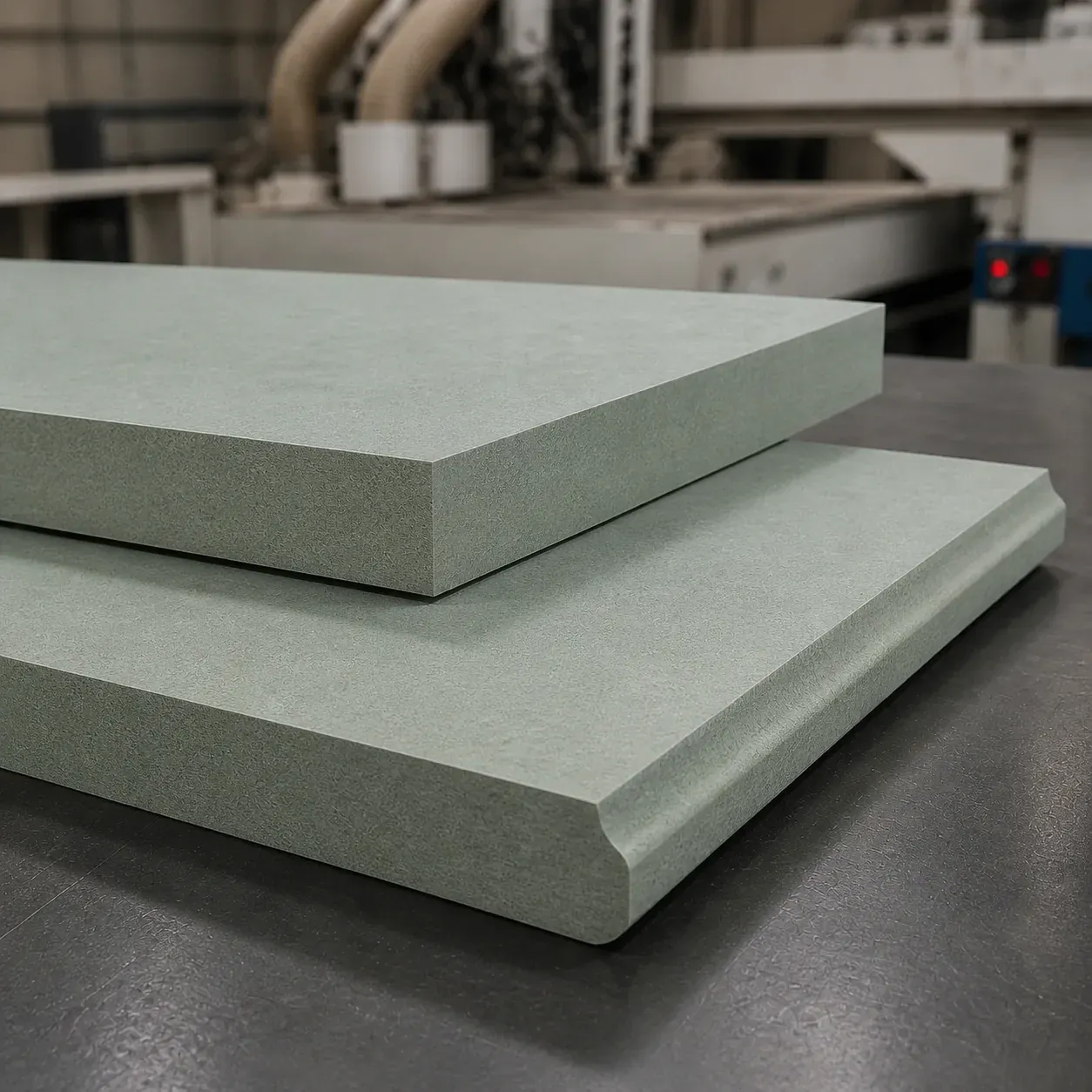
High Moisture Resistant MDF, or HMR MDF, is for humid-interior furniture requiring higher specified moisture performance. Our HMR construction uses increased moisture-resistant resin and additives with tighter production control.
Finish and processing
Compare MR and HMR using the same thickness, test method and exposure. Density and the HMR name alone do not establish performance.
Specify the face, reverse, edges, joints and openings together. Reseal later cuts and drilled holes; HMR MDF is not waterproof.
Order sanded sheets or discuss paint and decorative faces. Define part dimensions, profiles, hardware holes and supplied edge preparation.
Selection guide
Start with the furniture you are making and the moisture performance it needs. High Moisture Resistant MDF is our option for a higher specified moisture-performance requirement in protected humid interiors. It gives your workshop a sanded MDF core for painting, decorative facing and machining, with the grade and relevant result identified for the proposed supply. A useful upgrade connects a board property to the actual component requirement.
Our HMR construction uses a higher density schedule, more moisture-resistant resin and additive material, and tighter production-line control. Those inputs describe the construction. The reported moisture result describes the board's response under the stated test. Keep both with the product identity, nominal thickness and supplied condition when choosing between HMR and Moisture Resistant MDF.
For a bathroom vanity front, consider the room humidity, cleaning routine, routed detail, lower edge and fittings. For a cabinet side around a sink, add the plumbing openings, joints and any installation cuts. A suitably selected core and complete finish can serve a protected humid interior. Sustained water contact, standing water, immersion and exterior weather require a material and assembly specifically designed for that exposure. Choose around the real location and maintenance conditions.
| Purchasing task | Compare before choosing the core | Detail on the finished part |
|---|---|---|
| Painted vanity front | Required moisture property, MR/HMR grade and matched thickness | Broad faces, routed detail, lower edge, hinge holes and coating system |
| Kitchen cabinet side or sink-unit component | Board result under the specified method and anticipated indoor exposure | Cut-outs, joints, exposed edges, installation sealing and clearance |
| Faced bathroom storage panel | Actual HMR core, facing/adhesive and reverse construction | Edge band, corners, holes, support and finished dimensions |
| Humid-interior joinery | Project property requirement, product scope and representative sample | Finish, fixing, ventilation, joints and preparation after site cutting |
HMR selection is useful where its documented performance meets a requirement that matters to your part. For a protected dry-interior component, review Raw MDF against its design. For a humid-interior component, compare the offered MR and HMR specifications and complete cost. Our bathroom furniture guidance helps connect the board to the installed furniture.
Request two identifiable specifications and reports for the same comparison. Match nominal thickness, specimen preparation and conditioning, test method and edition, exposure conditions, measurement and reported property. Then place the actual MR result, actual HMR result and agreed requirement in separate columns of your purchasing record. A grade name alone supplies only part of that record.
| Comparison field | MR information to obtain | HMR information to obtain | Basis for a useful comparison |
|---|---|---|---|
| Product and grade | Manufacturer's product/grade ID and report reference | CUZI MDF HMR product/grade ID and report reference | Each report covers the offered product and thickness |
| Specimen | Nominal/actual thickness, raw or faced state and preparation | The same specimen details for HMR | Comparable thickness and supplied construction |
| Method and edition | Exact method and edition used | Exact method and edition used | A matched method, with any differences identified |
| Conditions | Conditioning, exposure duration, temperature and treatment | Corresponding conditions for HMR | Matched conditions appropriate to the property |
| Result and requirement | Measured value, unit, statistic and applicable grade/limit | Measured value, unit, statistic and applicable grade/limit | Compare the same property against the agreed requirement |
| Date and scope | Report date, laboratory and covered range | Report date, laboratory and covered range | Confirm coverage of the proposed supply |
Thickness swelling, cyclic moisture performance and moisture content answer different questions. The European Panel Federation property guide identifies EN 317 for thickness swelling and EN 321 for cyclic moisture assessment. Record the exposure duration and measurement conditions for swelling, and the treatment and post-treatment properties for a cyclic result. A percentage labelled only as moisture performance needs its measured property and method alongside it.
DIN Media identifies EN 322 as a moisture-content measurement method. That reading describes water within the board at the measured condition. It has its own use in receipt, storage and workshop preparation; it is a separate quantity from thickness swelling after exposure. Keep density and emission requirements separate as well. This makes the report comparison easier for purchasing, production and quality teams to use.
Use the edition stated in the actual report and project specification. Ask our team to confirm the proposed grade, covered thickness and documents against those requirements before order confirmation. The MR versus standard MDF guide explains the wider grade choice; this HMR page focuses on selecting the higher specified option for your component.
The HMR MDF range is 2–35 mm, with six listed full-sheet formats. Choose thickness around the part dimensions, span, support, hardware and machining. An 18 mm front, a supported cabinet side and a shelf need their respective drawings and loading or fitting requirements even when they use the same core. Share the actual part and assembly so the quotation covers the required material and preparation.
Our published density schedules below refer to the two core ranges. They help you plan mass, handling and machining. Density is mass per volume; moisture resistance is assessed through the relevant property and test. Treat the density schedule as one specification field alongside the actual MR/HMR grade and moisture data.
| Nominal core thickness | CUZI MDF MR density | CUZI MDF HMR density |
|---|---|---|
| 2–4 mm | 800–810 kg/m³ | 820–860 kg/m³ |
| 5–8 mm | 780–800 kg/m³ | 790–820 kg/m³ |
| 9–11 mm | 760–780 kg/m³ | 760–790 kg/m³ |
| 12–18 mm | 680–750 kg/m³ | 710–750 kg/m³ |
| 19–35 mm | 650–680 kg/m³ | 650–710 kg/m³ |
For example, 18 mm HMR is within the published 710–750 kg/m³ band. The nominal density of the offered board belongs in the quotation and sample record. Overlap between MR and HMR bands shows why a density value by itself leaves the moisture comparison incomplete. Use the matched test results to assess that property, then try the selected board with your tooling, fittings and finish.
The six formats are 1220 × 2440, 2100 × 2800, 1830 × 3660, 1830 × 2440, 2440 × 3660 and 1830 × 4200 mm. Confirm the selected thickness/format combination and quantity in the order. Our nominal ±0.1 mm tolerance concerns MDF board thickness, with measurement agreed. A decorative layer adds to finished-panel thickness; cut sizes, edge bands, profiles, holes and assembly dimensions each follow the separately agreed drawing and checks.
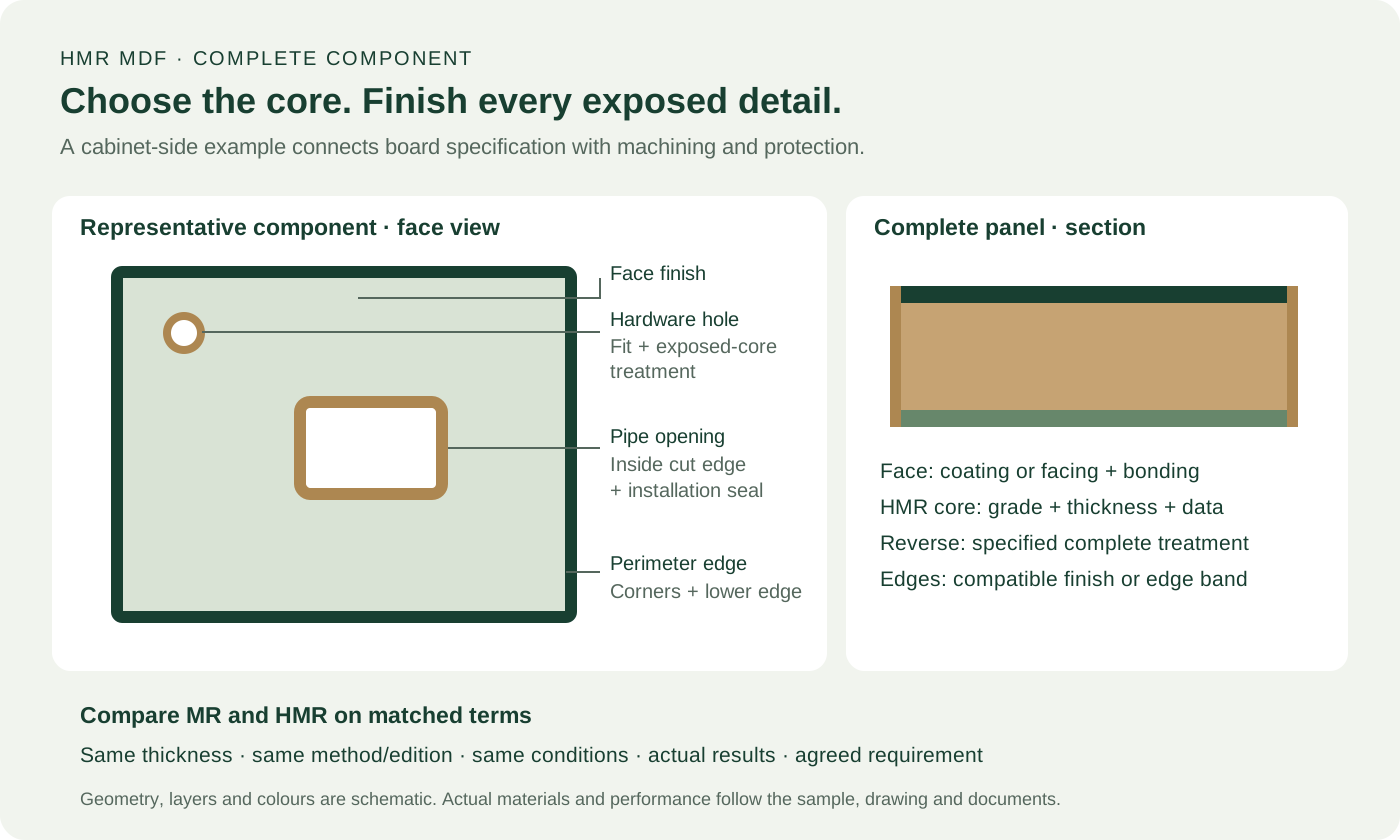
An HMR core and a finished face are two parts of the construction. Identify the face material or coating, bonding system where used, HMR core, reverse and perimeter treatment. Add routed areas, hardware holes and service openings. Agree which work is included in the supplied board or component and which work your workshop or installer completes.
The construction drawing above shows a schematic cabinet-side component with a plumbing opening. Face and reverse treatment, perimeter edges, the inside edge of the opening and a hardware hole are identified together. The coloured treatments indicate locations to specify; the actual materials, dimensions and process follow your drawing and finishing system. This is a construction guide, with each actual component receiving the detail suited to its use.
| Component detail | Specify for the selected construction | Check on the representative part |
|---|---|---|
| Face and reverse | Named coating or facing, adhesive where used, supplied condition and compatibility | Coverage, adhesion, appearance and complete layer arrangement |
| Perimeter cut edge and corner | Edge preparation, compatible sealer/coating or edge band and corner joint | Continuous finish, corners and completed dimensions |
| Routed profile or groove | Preparation and finish through floors, walls and tight details | Coverage, retained geometry and remaining core section |
| Hinge or connector hole | Hardware-fit requirements and compatible protection of exposed core | Position, depth, fitting and finish after drilling |
| Pipe opening or installation cut | Treatment of the exposed cut and agreed installation sealing | Coverage around the complete opening and after final fitting |
| Assembly joint and lower edge | Joint detail, clearance, support and ventilation for the location | Finished assembly, contact points and maintenance access |
Broad-face finishing and cut-edge preparation can need different workshop steps. EPF's edge-finishing guidance discusses preparing exposed edges before the finish is completed. Use the actual coating, adhesive or edging supplier's instructions and a representative trial to establish compatibility, preparation and curing. Our MDF edge preparation guide helps describe those steps in the order.
For faced HMR MDF, specify both the visible face and reverse. For painted parts, include reverse, edges and profiles in the coating plan. Cutting or drilling later exposes new core material; record its final treatment with the workshop or installation operation. Keep the lower-edge clearance and joint details with the complete design, especially near plumbing, cleaning water and appliance interfaces.
Begin with an identified HMR board sample, then prepare a representative finished part. Record the product/grade, nominal thickness, offered density, document references, drawing revision and supplied state. Include the narrowest routed detail, exposed edge, fitting or opening that matters to your component. A flat swatch establishes only some of the finish information needed for production.
Try the actual cutters and hardware, edge treatment, facing or coating system and assembly. Record the preparation and finish materials, relevant application and cure instructions, coverage, dimensions and fitting observations. Compare appearance using the agreed colour/texture reference and viewing conditions. A finished trial establishes a useful production reference, while the matching laboratory data describes the tested board property. Keep both with the order.
For an MR/HMR component comparison, use the same drawing, support, hardware, finish and evaluation conditions, identifying the actual core in each trial. Agree the property and method if a further performance test is required. Workshop soaking, handling or appearance observations have their stated conditions; standard test results come from the specified procedure and covered specimens. This keeps decisions traceable when another batch or finish is requested.
Keep HMR boards supported flat and protected during transport and covered storage. Prepare them for the workshop environment before machining and finishing, and identify any receipt-condition issue with the pack and batch. The moisture content, storage and conditioning guide helps organize these checks. Our CNC MDF Processing service covers drawing-defined cuts, holes and profiles for the chosen core.
Send the component and indoor exposure, thickness, sizes, quantities and destination. Add the grade or moisture-property requirement, method and edition, applicable limit and product documents you need. For a prepared component, include part IDs, drawings, facing or paint specification, reverse, edge treatment and the work completed before delivery. We can quote full boards for your production or agreed machined parts from our factory in Shuyang, Jiangsu, China.
The published HMR MDF price range is US$230–350/m³. Your formal quotation identifies the actual grade, dimensions, density, supplied condition and quantity, with price/currency, processing, packaging, FOB Qingdao or FOB Lianyungang, lead time, T/T or LC conditions and validity. Compare complete specifications and included services when assessing MR and HMR prices.
We reply within 12 hours. All samples are available to request free of charge and generally in stock. You cover the courier cost, which can be credited against a formal order. We confirm the selected sample, any machining or finishing preparation, dispatch and estimated transit time for your address. Request its matching product information with the sample so your team can evaluate the board and construction together.
Normal MOQ is 1 × 20'GP per individual specification. MDF board production capacity is 500 m³ per day across the factory; the schedule for the chosen HMR grade and further processing is confirmed with the order. Normal production lead time is 3–10 days after specification and commercial confirmation. Third-party inspection is supported. Shipments use Lianyungang or Qingdao, with container quantity based on board dimensions, density and protective packing. Keep the agreed grade, documents, finish, drawings and packing reference for repeat supply.
Applications
Order MDF sheets, decorative panels, routed doors and cut or machined cabinet parts from our Shuyang factory. Choose the faces, visible edges, hardware holes and packing groups for your cabinet range.
Explore applicationOrder moisture-resistant boards, vanity fronts, side panels and machined cabinet parts from our Shuyang factory. Choose the supplied finish and edge work around your basin and plumbing layout, with MR or HMR MDF selected for each component’s exposure.
Explore application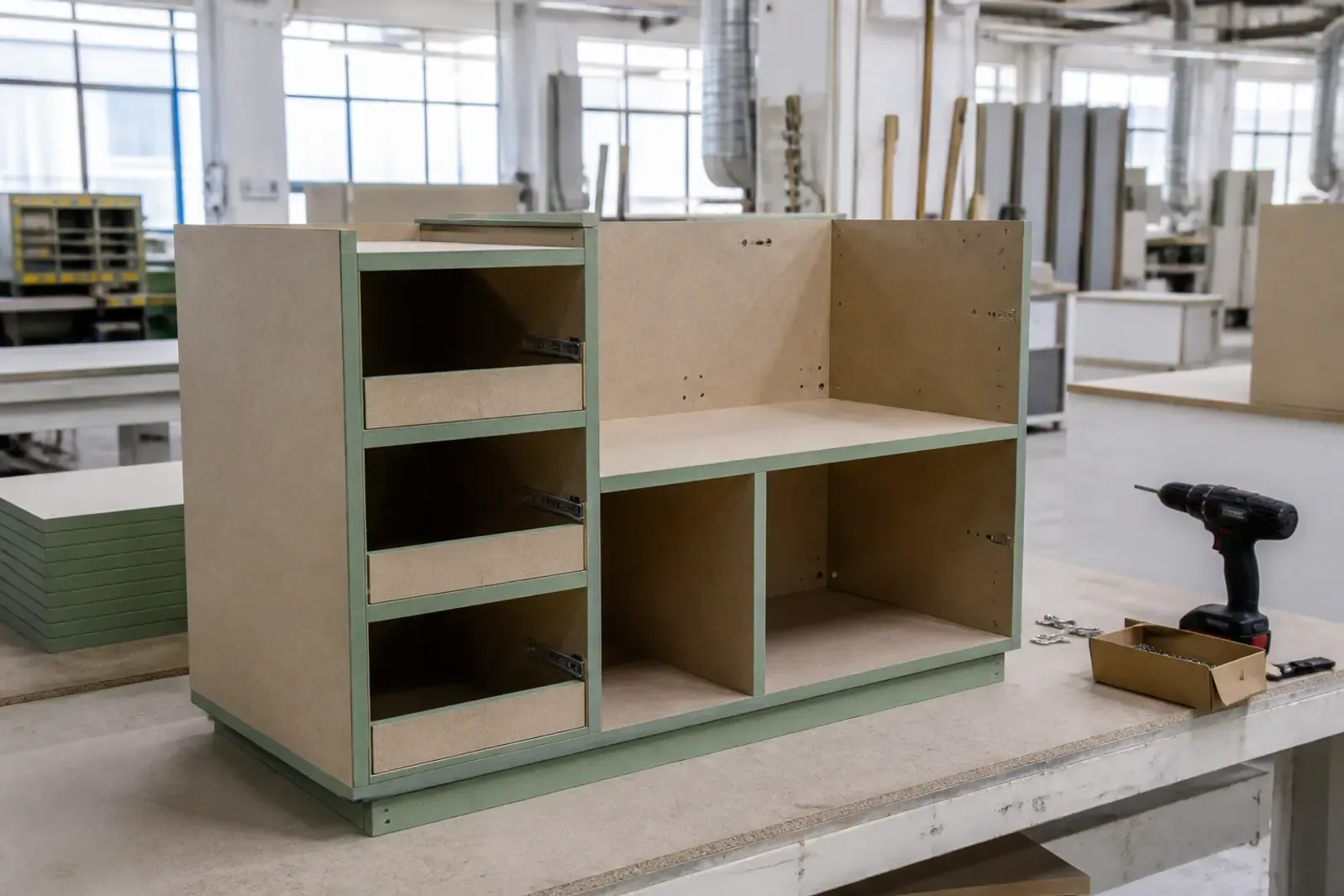
Boards and components
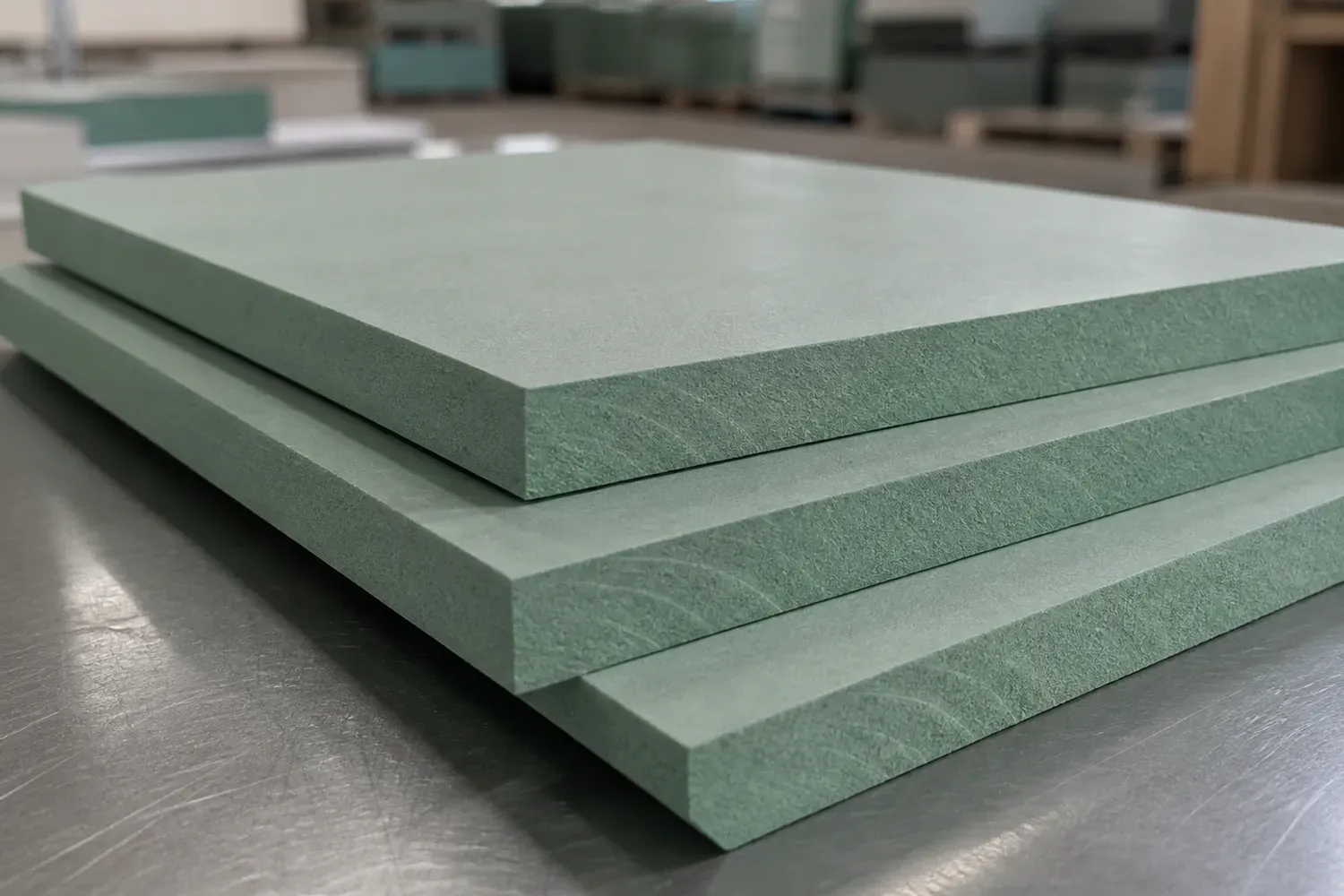
View the identified HMR MDF report below. For your order, request the moisture-performance and emissions documents covering the selected grade, thickness and finish.
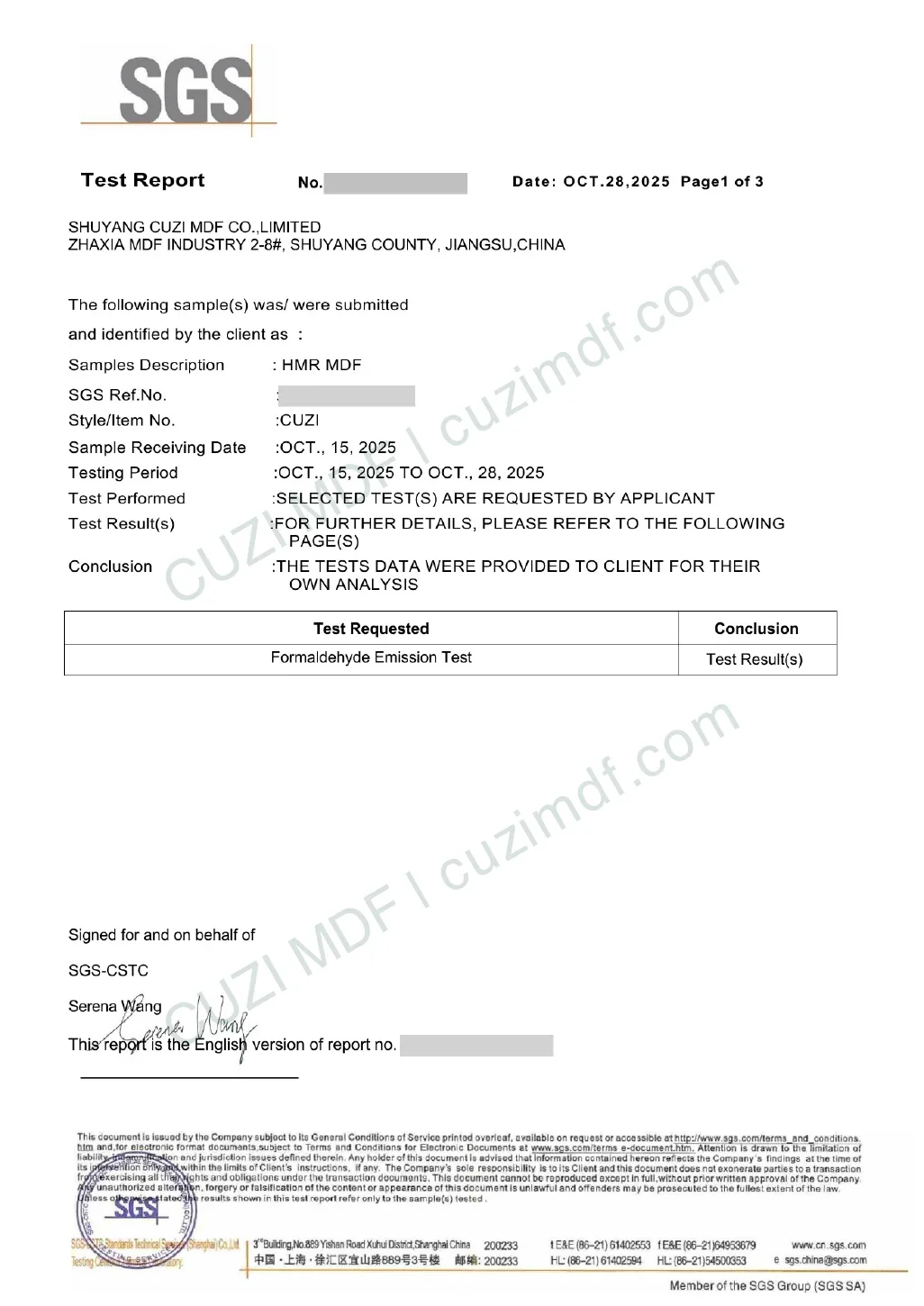
Product report
View the HMR MDF report and request documents for the board specification you plan to order. Download the complete PDF to read the report information and results.
Made in Shuyang, China
Work with Shuyang Cuzi MDF Co., Limited on board selection, machining, inspection and export packing. Our factory has a total daily production capacity of 500 m³ across its operations.
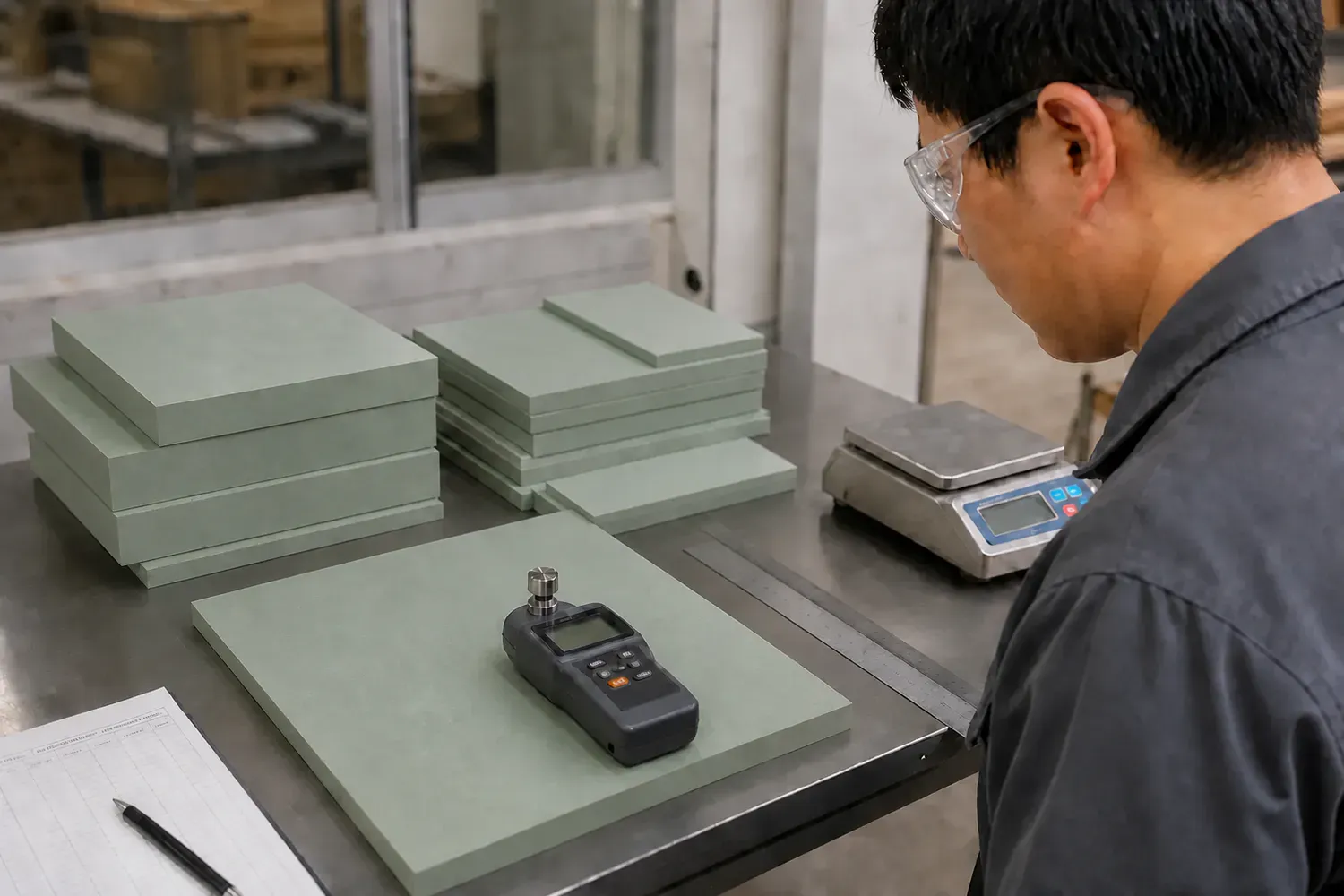
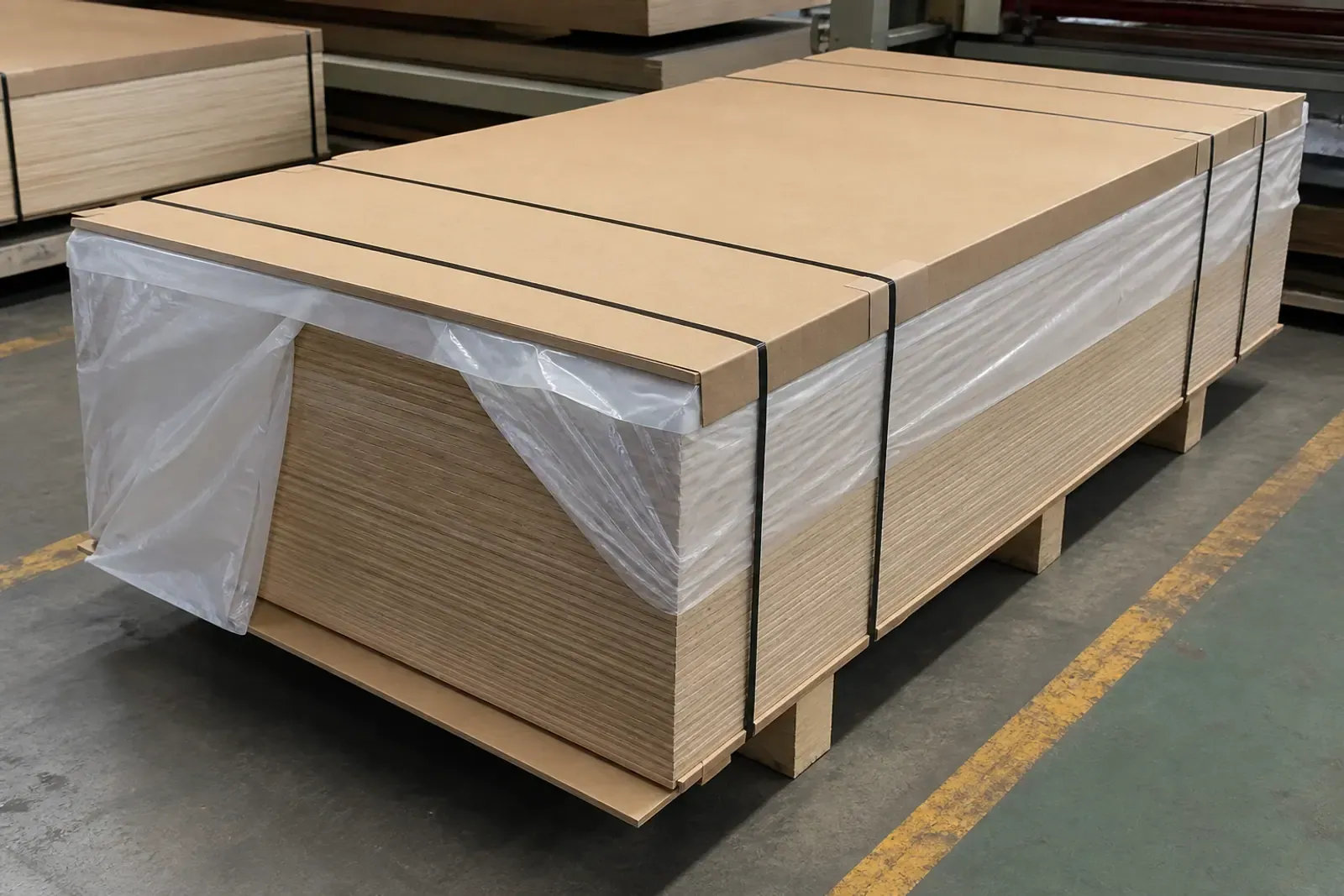
Made to order. The usual minimum is 1 × 20'GP per specification; mixed sizes or finishes are quoted together. Delivery lead time starts after specifications and terms are confirmed; sea transit is scheduled separately.
Freight is calculated for your ports and cargo quantity. Returns and exchanges, including timing and costs, are agreed in the order.
Delivery and freight terms · Returns and 180-day warranty · Packing and loading information
US$230–350 per m³
Your quotation confirms the specification, quantity, packaging and final price.
Buyer FAQ
Compare the actual MR and HMR grade, covered thickness and measured result under the same method, edition, specimen condition and exposure. Put both results alongside the agreed requirement. Density helps plan weight and handling; the matched moisture-property results establish that comparison. Keep the finish, support and component drawing consistent when evaluating a representative part.
Thickness swelling expresses a thickness change under the stated exposure and method, such as EN 317 when specified. Moisture content measures water within the board at the measured condition, with a method such as EN 322 when specified. Cyclic testing under EN 321 assesses properties following its treatment. Record each property, unit, conditions and result separately.
Our HMR specification combines a higher density schedule, more moisture-resistant resin and additive material, and tighter production-line control of blending, forming, pressing and density profile. Compare HMR and MR boards of the same thickness using the required moisture test method and reported result, then choose the finish and edge protection for the furniture.
HMR MDF is designed for higher moisture resistance in protected indoor use. It remains a wood-based panel: prolonged wetting can cause water absorption, edge swelling and dimensional change. Choose a material designed for standing water, long-term immersion, repeated direct water contact or exterior exposure. For humid interiors, pair the selected HMR board with a suitable finish and protected faces, edges, holes and joints.
It can be selected for protected cabinet fronts, panels and storage where the HMR test data, finish and room conditions suit the design. Pay particular attention to sink and plumbing openings, lower edges and joints. Suitable sealing, surface protection, ventilation and detailing help keep water away from the core.
Density tells you the board's mass per volume and helps plan weight, handling and processing. Moisture performance also depends on the formulation and finished board construction. Use the relevant moisture test method and result to select the HMR grade, and test machining, hardware and finishing on a sample.
You can view and download our HMR MDF formaldehyde report in the product report section above. For your order, request the board specification, moisture-performance information and emissions documents for the selected thickness, construction and destination. Tell us the required test method or class so our factory team can prepare the documents for your purchase.
Yes. All product samples can be requested free of charge and are generally in stock. You pay the courier cost, which can be credited against a formal order. Send the thickness, supplied finish and delivery address; we confirm availability, dispatch, courier cost and estimated transit time. Custom sample preparation is confirmed with your request.
Buyer guides
Choose the board and finish for humid interiors, with practical guidance on water exposure and edge protection.
Read guidePlan cabinet parts around the room, surface finish, machining, hardware and protection at edges and openings.
Read guideFind the reports and paperwork for your EU MDF order. Start with the board and intended use, then bring product assessments, wood-source records and shipment documents into one purchasing file.
Read guideFor a US MDF order, connect the offered board to its certification scope, test records and shipment identity. Start with the product and thickness, then match the producer, third-party certifier and lot information across the documents you request.
Read guideKeep MDF ready for accurate cutting, finishing and assembly. Agree the moisture check, store panels on suitable supports and condition them for the production environment.
Read guideRed MDF commonly identifies fire-retardant board, while green MDF commonly identifies moisture-resistant board. Choose by the job the panel needs to do, then match the grade, finish and dimensions.
Read guideTell us the room, component, thickness, sizes, quantity and destination. We'll reply within 12 hours to help with a free sample, product information and a written quote.