
Drawing and material
Send the drawing revision, units, part IDs and quantities. Name the board, thickness, visible face and datum edges used to locate features.
CNC MDF Processing · Shuyang Factory, China
Bring your MDF part drawings to our factory in Shuyang, China. We help you combine cutting, routing, drilling and profiling with the right board, a sample plan and protective packing for furniture and interior projects.
Technical specification
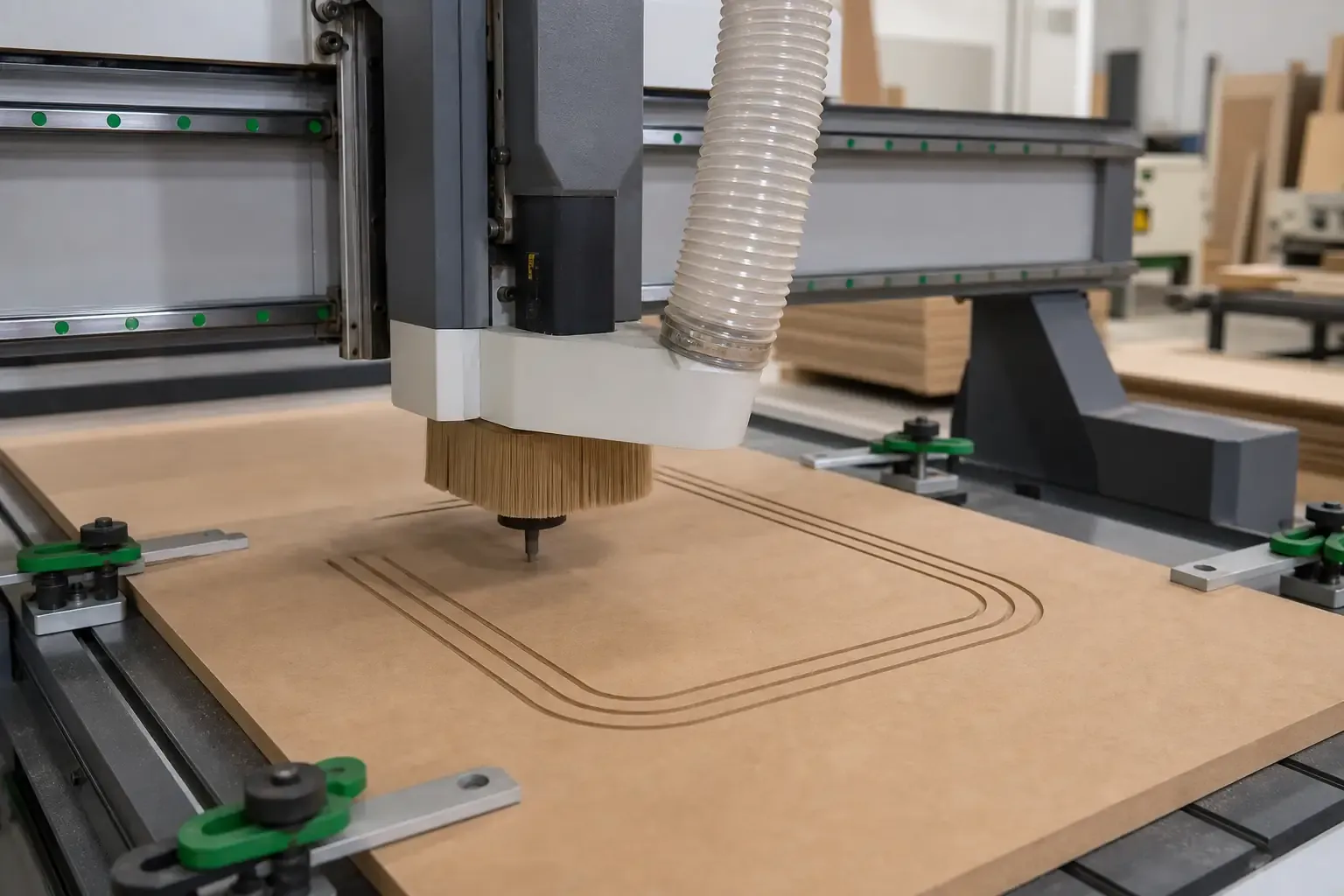
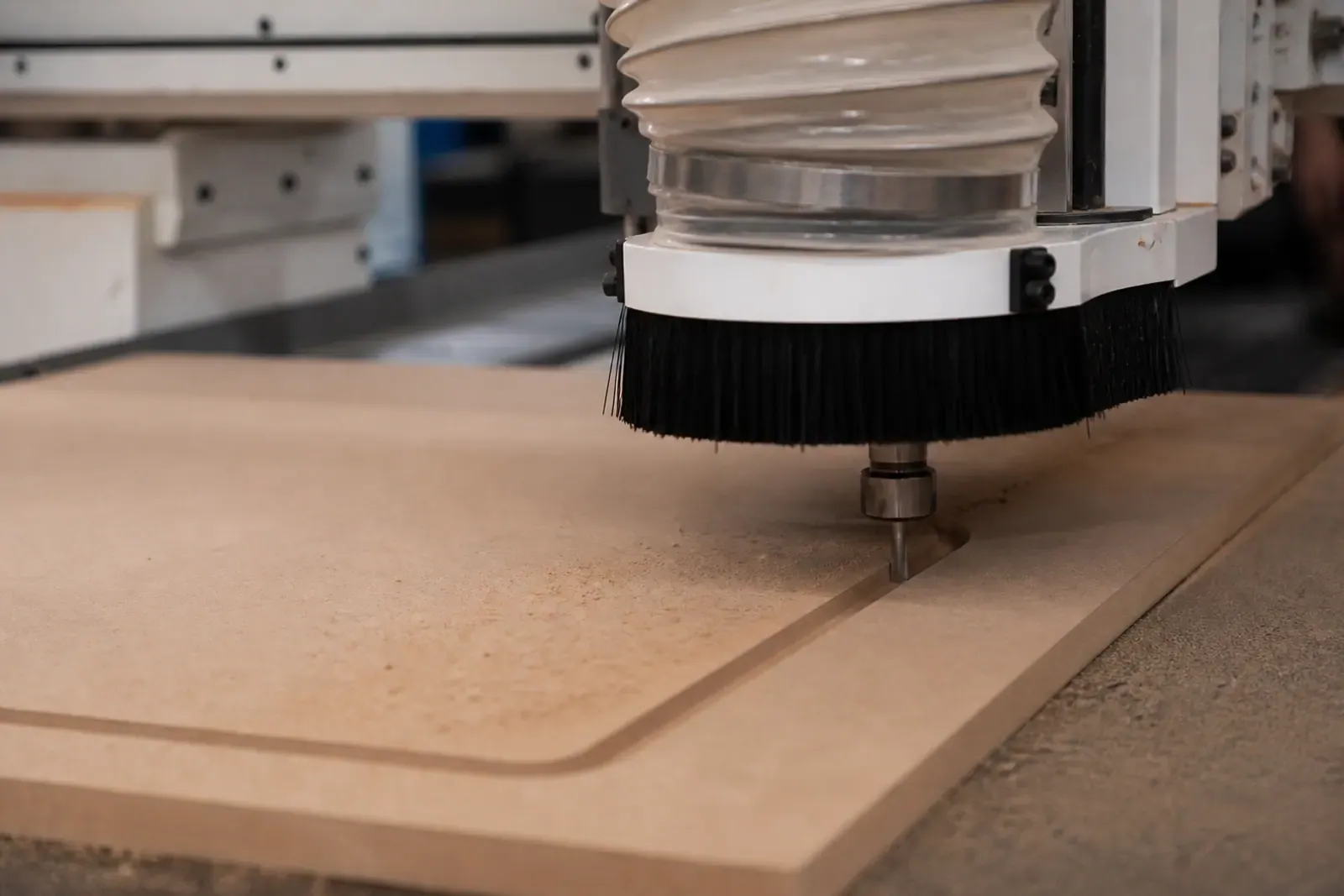
CNC MDF processing turns selected boards into drawing-based furniture and interior components. Order shaped cuts, drilled holes, pockets, grooves and profiles with the supplied surface and tolerances defined together.
Finish and processing
Send the drawing revision, units, part IDs and quantities. Name the board, thickness, visible face and datum edges used to locate features.
Specify groove and pocket depths, corner radii and hardware positions. Check remaining sections and mating features on a representative part.
Agree sanding, exposed edges and any supplied finish. Record first-part dimensions, hardware fit and pack labels so the components reach the right assembly set.
Selection guide
CNC MDF processing is most useful when your drawing describes the component your workshop wants to receive. Start with its assembly role, material, visible faces and supplied finish. CUZI MDF manufactures MDF and machines parts in Shuyang, Jiangsu, China, so you can discuss the board, cutting, routing, drilling and packing with the same factory. Our input MDF capability is 2–35 mm; we confirm the workable material, geometry and operations for each part.
Send a dimensioned reference drawing with units, revision, part IDs and quantities, together with the corresponding CAD file where relevant. Both files should describe the same version. Tell us the CAD format so we can confirm compatibility. Include the hardware or mating-part drawing when hole alignment, fixing, clearance or a profile determines fit. Your drawing defines the finished geometry; we plan tooling, holding, nesting and machining against that geometry and the agreed finish.
For rectangular parts needing length-and-width cutting, our Cut-to-Size MDF page includes a downloadable part list. For shaped cabinet fronts and door-specific profiles, use Routed MDF Cabinet Doors. This CNC page brings general furniture parts, profiles, grooves, pockets, holes and openings together in one machining enquiry.
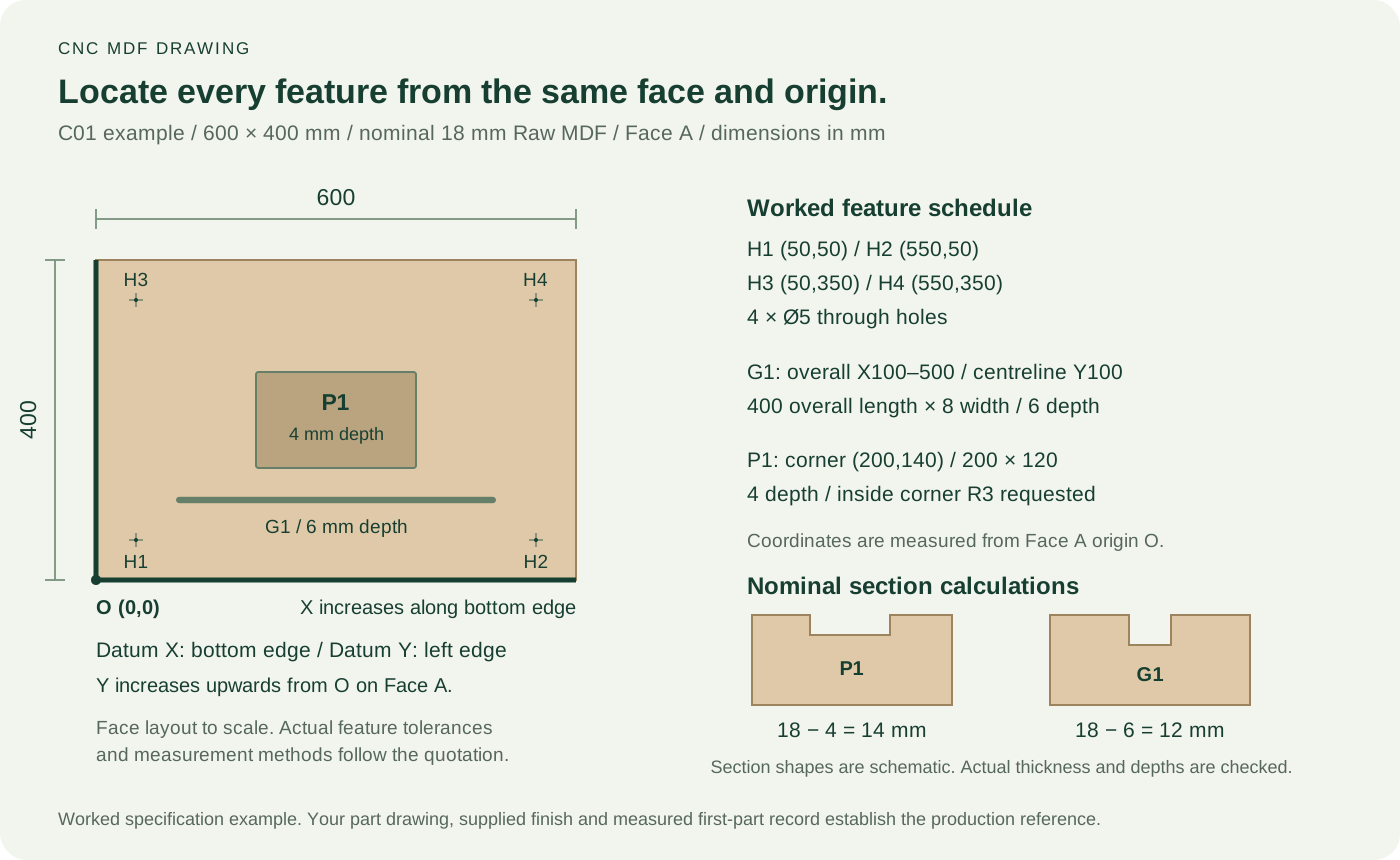
Identify Face A and the reverse, then choose the finished edges or points used to locate features. In the drawing example, C01 is a 600 × 400 mm rectangular part from nominal 18 mm Raw MDF. The bottom-left corner is origin O (0,0): X is measured along the bottom edge and Y upwards from it. Each hole centre and routed feature is located from that same face and origin. This is a worked specification example; the dimensions illustrate drawing information for quotation.
| Example feature | Position from O on Face A, in mm | Geometry to show on the drawing |
|---|---|---|
| C01 perimeter | Overall X = 0–600; Y = 0–400 | 600 × 400 mm; supplied thickness specified separately |
| H1 | Centre X = 50; Y = 50 | Ø5 mm through hole |
| H2 | Centre X = 550; Y = 50 | Ø5 mm through hole |
| H3 | Centre X = 50; Y = 350 | Ø5 mm through hole |
| H4 | Centre X = 550; Y = 350 | Ø5 mm through hole |
| G1 groove | Overall X limits 100–500; centreline Y = 100 | 400 mm overall length, 8 mm width, 6 mm depth; end shape shown |
| P1 pocket | Lower-left corner X = 200; Y = 140 | 200 × 120 mm, 4 mm depth; inside corner R3 requested |
Hole diameter and position are separate dimensions. Specify through or blind holes, the drilling face, depth definition, any countersink or counterbore, and the intended hardware. For blind holes, show how the usable depth and drill-point clearance are measured. The MDF drilling and hardware guide connects the hole schedule to actual fittings and assembly trials.
For G1, the overall ends are X = 100 and 500; they describe the finished groove limits. We plan the cutter-centre path from its width, end radius and tool. For P1, the requested R3 corner is part of the finished geometry. A circular 6 mm cutter has a nominal 3 mm radius; tool access and the actual process are reviewed with the part. A mating square corner may need an agreed radius or relief, located on the drawing and checked with the adjoining piece.
The C01 example's pocket depth is 4 mm from Face A on a nominal 18 mm board. Its nominal remaining section is 18 − 4 = 14 mm. The 6 mm groove leaves a nominal 18 − 6 = 12 mm section. These are geometric calculations using the stated drawing inputs. The actual supplied thickness, cut depth, opposite-face work, sanding and final preparation determine the section on a machined part.
Specify depth from the relevant supplied face and show sections wherever both faces are machined or where thin bridges remain between cut-outs. Include the finished thickness of a faced construction, identifying its MDF core, veneer or laminate where relevant. We agree minimum remaining material and the handling/support of that feature around your component design. A nominal remaining-thickness calculation helps describe the geometry; assembly performance follows the actual material, support, fixings and finished construction.
The MDF core's nominal thickness tolerance of ±0.1 mm is a material parameter. Hole position, groove width/depth, pocket size, outside dimensions and supplied faced-panel thickness each receive their own tolerance and measurement agreement. Mark each fit-critical feature and its specific dimensional check. We confirm the actual machining tolerances for the material, geometry and supplied condition in the quotation and current drawing.
The European Panel Federation's routing guidance relates cutter choice and cutting conditions to MDF edge quality. Your part's profile depth, access, face construction and finishing requirements guide our machining review. The CNC MDF specification guide expands the file, section and sample information used to prepare the enquiry.
Choose a first part or small set that covers the features important to your assembly. For C01, keep the drawing revision, selected MDF and supplied finish with the sample ID. The table below is a check plan: record actual measurements, observation and any changes when that part is made. Confirm the agreed changes in the drawing before repeat production, so the sample and the next batch refer to the same component.
| First-part check | What is measured or tried | What the record keeps |
|---|---|---|
| Material and face | Actual thickness, selected grade, Face A/reverse and direction | Board reference, sample ID and supplied surface |
| Perimeter and holes | Length/width, squareness, diameter and positions from the datums | Measured values, method and the agreed tolerance for each feature |
| G1 and P1 | Width, length, depth, corner/end shape and remaining section | Actual feature measurements and visible machining result |
| Assembly and finish | Actual hardware or mating part; agreed sanding, edge or coating trial | Fit observations, finish reference and any drawing change |
| Identity and packing | Part label, revision, quantity and protection of profiles/openings | The label and pack information used for repeat supply |
Inspect the actual mating part or hardware with the sample where fit depends on it. A hole schedule can describe a pattern accurately, while the assembled fitting establishes whether the full arrangement works for that component. For finish-sensitive edges, try the next coating or banding step on the supplied sample. Agree who confirms the first-part record and how its preparation and review fit the production schedule.
State whether parts arrive as machined, sanded or with another agreed preparation or finish. Identify exposed MDF cuts, veneer or decorative faces, both sides, grooves and hardware openings. The quote records sanding, edge preparation, banding or coating work included in our supply and the steps your workshop completes. Keep finished-size allowances and the physical finish reference with the drawing.
The MDF furniture components application connects material, machining and assembly-ready delivery. As a quantity example, a kit containing two C01 parts and one C02 part gives the following schedule for 50 kits. C02 needs its own drawing and supplied-finish record; the quantities demonstrate set planning. Actual quantities and MOQ are confirmed in the quotation.
| Example part | Pieces per kit | Quantity for 50 kits |
|---|---|---|
| C01 | 2 | 100 parts to the C01 drawing revision |
| C02 | 1 | 50 parts to its own drawing revision |
| Complete kit | 3 pieces | 150 identified parts in total |
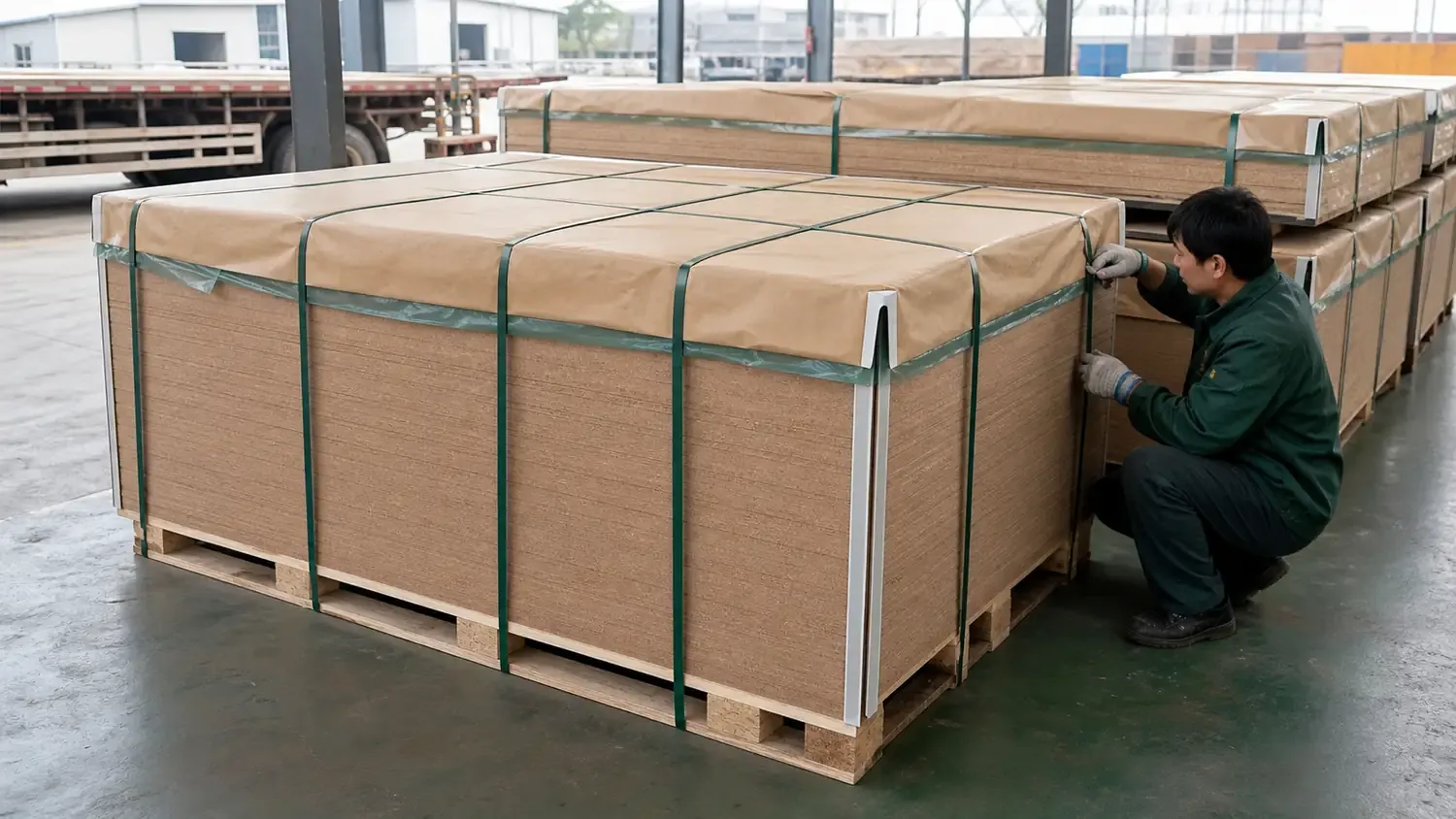
Add spare quantities as separate lines. Labels connect each ID to its drawing revision, material, face direction and pack group. You can group by part, cabinet, room or installation sequence. Clean separators, supported stacks, MDF cover boards and protection for profiles and cut-outs help preserve the machined geometry. Pack size and handling follow the actual part set, surface and destination, with the packing list describing what your receiving team will count.
For a repeat order, send the same part IDs and revisions with the sample or first-part reference. List changes to hardware, depths, profiles, finish or quantities explicitly. We reconcile those changes with the machining and inspection record before planning the next run.
Use US$3–45/m² as a starting price range for MDF processing. The quote lists the board, quantities, machining, finishing and packing, with setup or sample charges shown separately. Tell us the parts you need so we can price the complete job and explain how the area is calculated.
Start with the current drawing and part list, MDF specification, quantity, supplied finish and destination. Add the critical fit dimensions, first-part plan and required product documents. We reply within 12 hours. Samples are free and generally in stock; you cover the courier cost, which can be credited against a formal order. Preparation for a custom machined part, dispatch and estimated transit time are confirmed with your request.
Normal MOQ is 1 × 20'GP per specification, with mixed-part supply and grouping agreed in the quote. Normal production is 3–10 days after the specification and commercial terms are confirmed, with CNC operations and the first-part stage included in the agreed schedule. CNC output and timing follow the operations, material and part mix. Your written quote includes price and currency, packaging, FOB Qingdao or FOB Lianyungang, T/T or LC payment terms and validity. Third-party inspection is supported, and shipments use Lianyungang or Qingdao with loading planned from component sizes, density and packing.
Applications
Order desk tops, meeting-table leaves, storage panels and drawer fronts for your office furniture range. Our Shuyang factory combines the selected board and surface with cut sizes, cable openings, hardware machining and labelled component packs.
Explore applicationSupply your shopfitting team with slotted panels, shelves, counter fronts and drawing-based display parts. Our Shuyang factory coordinates the selected surface, slots, openings and store labels for repeat fixtures and phased fit-outs.
Explore applicationOrder MDF boards, decorative panels and machined parts for hotel headboards, wardrobes, desks and bedside units. Coordinate finishes, component quantities and labelled packs by room, floor or delivery phase.
Explore applicationOrder flat, veneered or grooved wall panels with the openings, trims and finish your interior needs. Our Shuyang factory supplies boards and machined modules to your elevation, keeping panel positions, adjoining finishes and installation packs coordinated.
Explore applicationCreate your feature wall with grooved, fluted, veneered or CNC-profiled MDF panels. Our Shuyang factory coordinates modules, corner returns and trims around your elevation, with the selected raw, primed or finished supply and clearly identified packs.
Explore applicationOrder slab fronts, routed doors and shaker-style MDF components from our Shuyang factory. Choose raw blanks, prepared fronts or the agreed finished construction, with profiles, hinge holes and left/right pairs matched to your door schedule.
Explore applicationPanels, plinths and display modules cut and labelled for transport, assembly and repeat use.
Explore applicationMachined substrates for a specified acoustic assembly. Performance depends on the backing, absorber, cavity and mounting as well as the panel.
Explore applicationSheets and drawing-based components with agreed machining, face orientation, part IDs and packing groups for assembly.
Explore application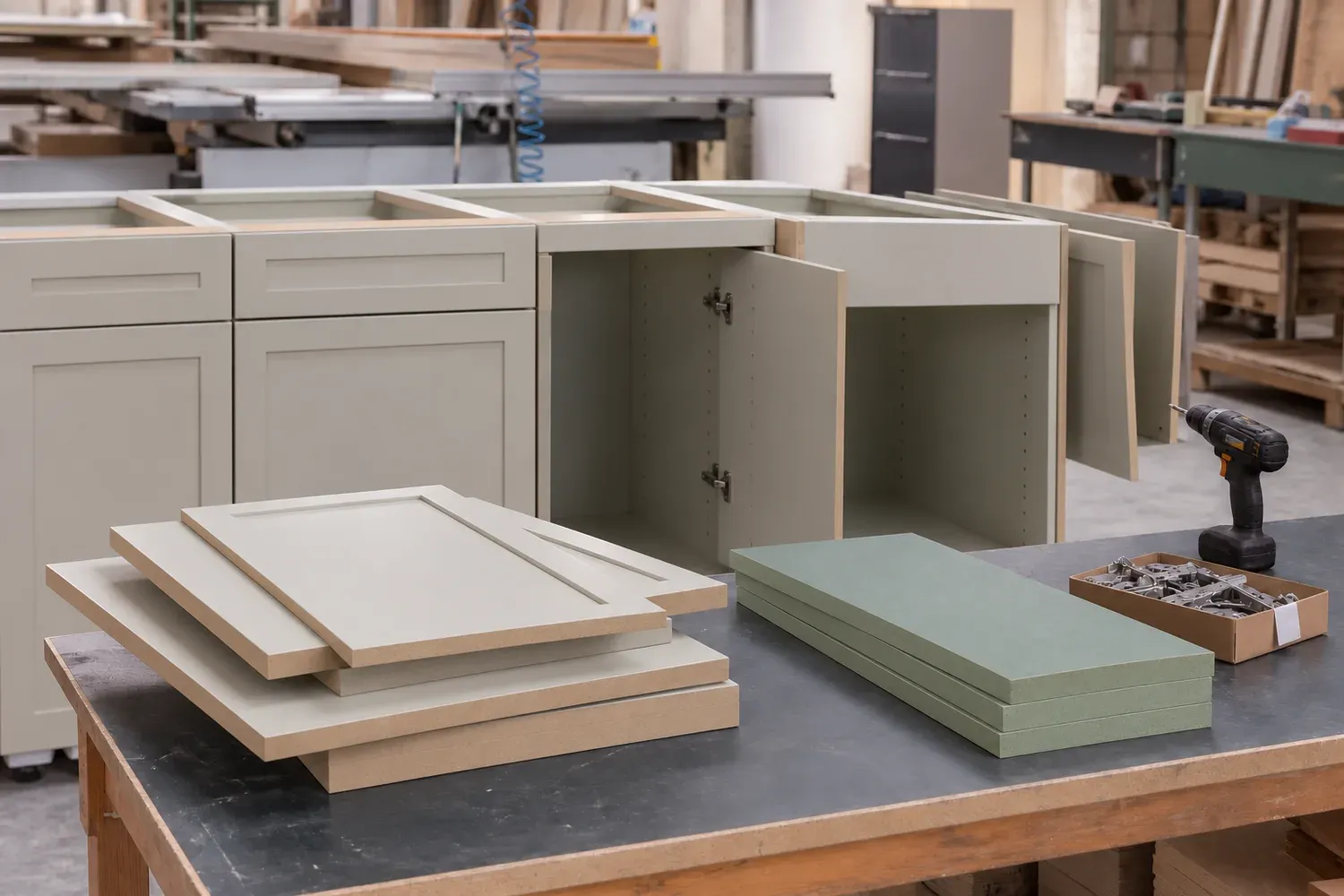
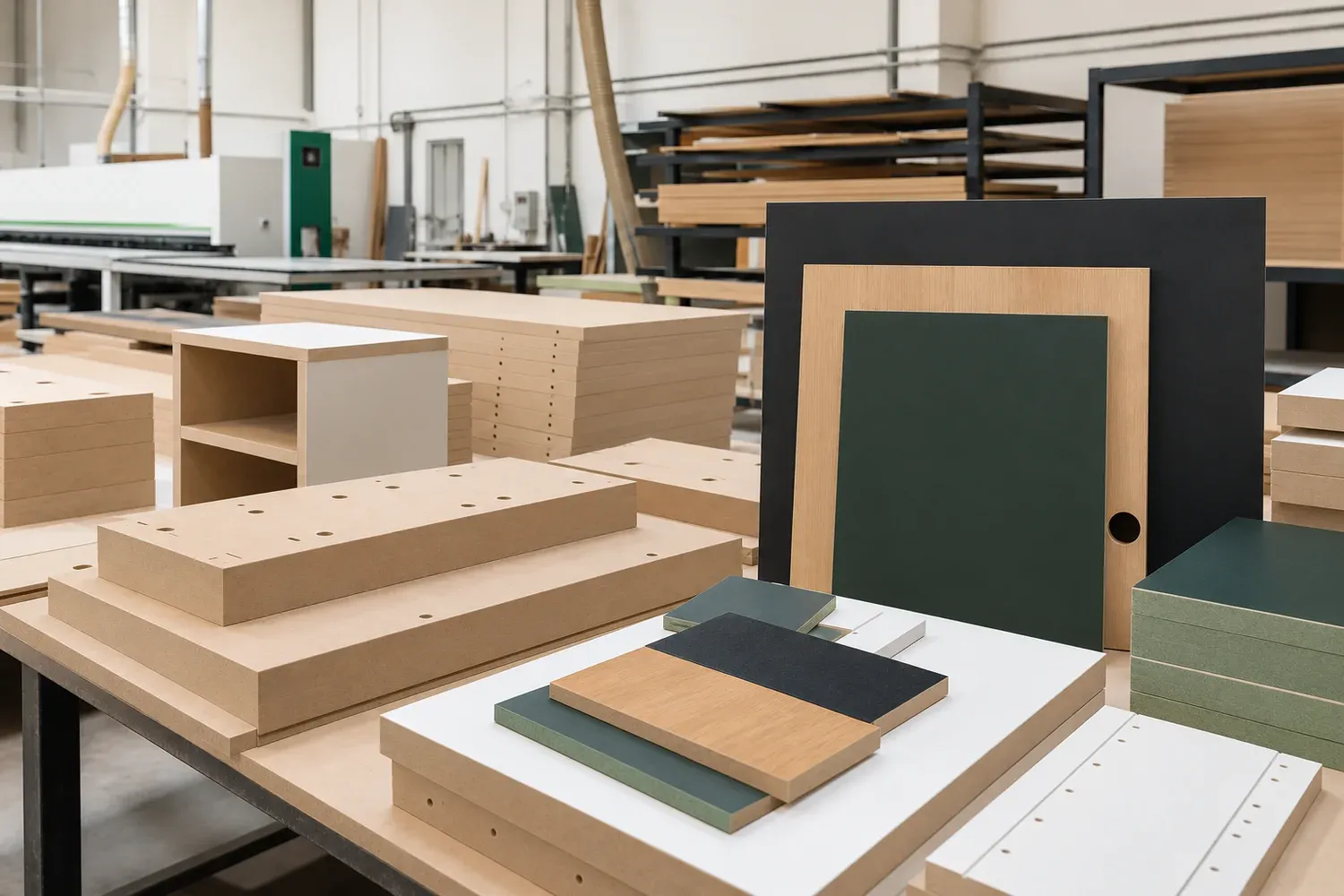
Boards and components
Request the selected-board documents and first-part inspection records for your drawing revision, with measured features, tolerances, remaining material and hardware fit.
Made in Shuyang, China
Work with Shuyang Cuzi MDF Co., Limited on board selection, machining, inspection and export packing. Our factory has a total daily production capacity of 500 m³ across its operations.
Made to order. The usual minimum is 1 × 20'GP per specification; mixed sizes or finishes are quoted together. Delivery lead time starts after specifications and terms are confirmed; sea transit is scheduled separately.
Freight is calculated for your ports and cargo quantity. Returns and exchanges, including timing and costs, are agreed in the order.
Delivery and freight terms · Returns and 180-day warranty · Packing and loading information
US$3–45 per m²
Your quotation confirms the specification, quantity, packaging and final price.
Buyer FAQ
Name the visible face, origin and datum edges or points, then locate hole centres and routed features from those references. Keep units, part ID and revision consistent across the dimensioned drawing and CAD file. Hole diameter, depth, position and the drilling face are separate fields; the quotation records their agreed checks.
The nominal calculation is 18 − 4 = 14 mm remaining section. A 6 mm groove leaves a nominal 12 mm. These calculations use stated example inputs; actual thickness, routed depth, opposite-face machining, sanding and finish determine the supplied section. The component design, material, support and fixing arrangement establish the performance required.
Yes. List each part ID and revision, pieces per set, number of sets, spares and pack group. In a quantity example, 50 kits with two C01 and one C02 contain 100 C01 and 50 C02 parts. Each part needs its own drawing and finish record. We agree labels, supported packing and the receiving sequence for the actual order.
Choose cut-to-size MDF for rectangular pieces defined by length, width and a part list. Choose CNC processing when the part also needs shaped outlines, profiles, grooves, pockets, holes or cut-outs. Share the complete drawing so we can quote cutting and secondary features together.
Send a dimensioned reference drawing and the corresponding machine-readable file, with matching revision, units, scale, part IDs, material and quantities. Mark datum edges or points, hole centres, feature depths and critical tolerances. We confirm file-format compatibility and any details to complete before production.
We agree the finished-part tolerances for the material, thickness, geometry, reference points and supplied finish, and record the critical checks in the drawing and quote. The MDF core's nominal thickness tolerance is ±0.1 mm; complete faced-board thickness is agreed separately. Hole positions, overall component sizes and routed features each use their agreed machining tolerances and measurement method.
We review machining on raw, sanded, melamine-faced, veneered, laminated and other agreed MDF constructions. Identify the visible face, reverse, grain or pattern direction and exposed edges for each part. Agree the machining result and face protection on the representative sample, including any subsequent edge banding or finishing.
The quote states the supplied condition: as machined, sanded, decorative-faced or with separately agreed preparation. For painting, agree sanding, edge sealing and the coating process on a representative sample. For assembly, include hardware positions, mating-part allowances and the required edge or face finish so your workshop can plan the next step.
Buyer guides
See the white and brown slatwall panels, T-slot profiles, aluminium channels and fitting checks from a 980-panel order inspected in Suqian on 20 October 2026.
Read guideTurn your cabinet-door design into a routed MDF sample. Plan profiles, hardware positions, finish and packing before ordering the production batch.
Read guideKeep MDF furniture parts consistent across repeat orders. Plan drawing changes, matching finishes, samples and packing with a practical reorder example.
Read guideSpecify Flexible MDF around the finished curve, its support and the chosen finish. CUZI MDF supplies 3–6 mm whole thin sheets for longitudinal bending.
Read guideChoose MDF strength data around the furniture part you are making. A shelf needs bending strength and stiffness; a hinge or cabinet joint needs the relevant screw-withdrawal data and a trial with its actual hardware, thickness and hole pattern.
Read guideSend your drawing or part list, board type, quantities and destination. Add the critical dimensions, finish and timing you need. We reply within 12 hours to help complete the machining specification, sample plan and written quotation.