
Select the actual acrylic series
High gloss and matte describe appearance. Check the uncovered face sample for colour and reflection; scratch or fingerprint claims need product-specific information.
Professional MDF Manufacturer & Supplier
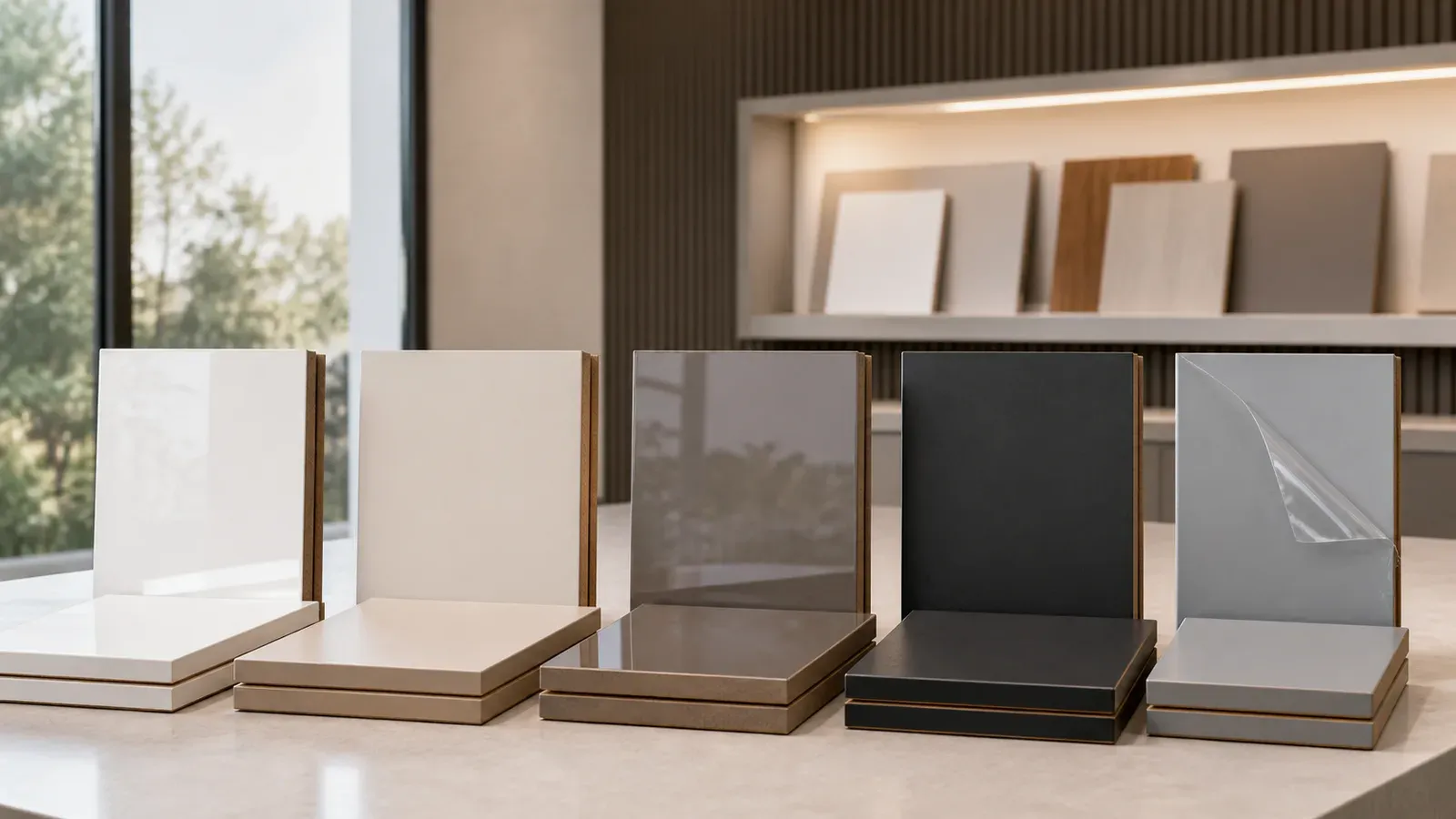
Create a crisp, coordinated furniture front with Acrylic Faced MDF. Our Shuyang factory supplies high-gloss or matte flat panels, with colour, reverse face, finished thickness and edges agreed from your physical sample.
Technical specification
Acrylic Faced MDF combines an acrylic decorative face with an MDF core and agreed reverse. Choose the acrylic series, gloss or matte finish, edging and supplied panel dimensions.
Finish and processing
High gloss and matte describe appearance. Check the uncovered face sample for colour and reflection; scratch or fingerprint claims need product-specific information.
Specify face, reverse and finished thickness together. Agree edge-band material, colour, corner details and whether part sizes include the edges.
Keep the protective film separate from permanent panel thickness. Follow the selected surface’s film-removal and cleaning instructions, and protect faces during cutting and packing.
Selection guide
Acrylic Faced MDF brings a decorative acrylic surface and an MDF core into a flat furniture panel. Choose high gloss when your design calls for a reflective front and depth of colour. Choose matte when a quieter reflection and softer visual effect suit the room. Bring the colour, edge and reverse into that decision, so an individual swatch becomes a coordinated cabinet door, drawer front or storage panel.
CUZI MDF manufactures and supplies acrylic-faced MDF from our factory in Shuyang, Jiangsu, China. Work with us on the selected acrylic reference, core and complete panel, or send a cut list for prepared components. A physical sample establishes the appearance; the construction, machining and supplied condition establish what your workshop receives. Keep these references together when you place or repeat an order.
High gloss is a finish description used across several materials. Acrylic, PET, PVC, paint and other systems can each produce a glossy appearance with different constructions and processing needs. Our Decorative MDF page helps compare that broader choice. This page focuses on identified acrylic-facing systems bonded to MDF, with the edges, back and protective film specified for your flat furniture components.
| Finish choice | What to inspect on an acrylic sample | Information to retain for the order |
|---|---|---|
| High-gloss acrylic | Colour depth, reflection, visible surface texture and the edge joint | Material/series, colour code, gloss reference and viewing conditions |
| Matte acrylic | Colour, level of reflection, texture and touch where relevant | Material/series, matte reference and agreed appearance variation |
| Surface with an identified hard coat | Actual appearance plus the required resistance data | Named coating/series, test method, result and cleaning guidance |
| Two visible acrylic faces | Front and reverse appearance together | Both material references, nominal layers and edge schedule |
Surface treatments vary by series. As an external material example, REHAU's RAUVISIO brilliant range distinguishes acrylic finishes and hard-coated options. That named manufacturer's specifications belong to its own products. For your CUZI MDF supply, we identify the selected facing and applicable information in the sample and quote. A matte appearance and an anti-fingerprint result describe different attributes; request the required property for the actual series.
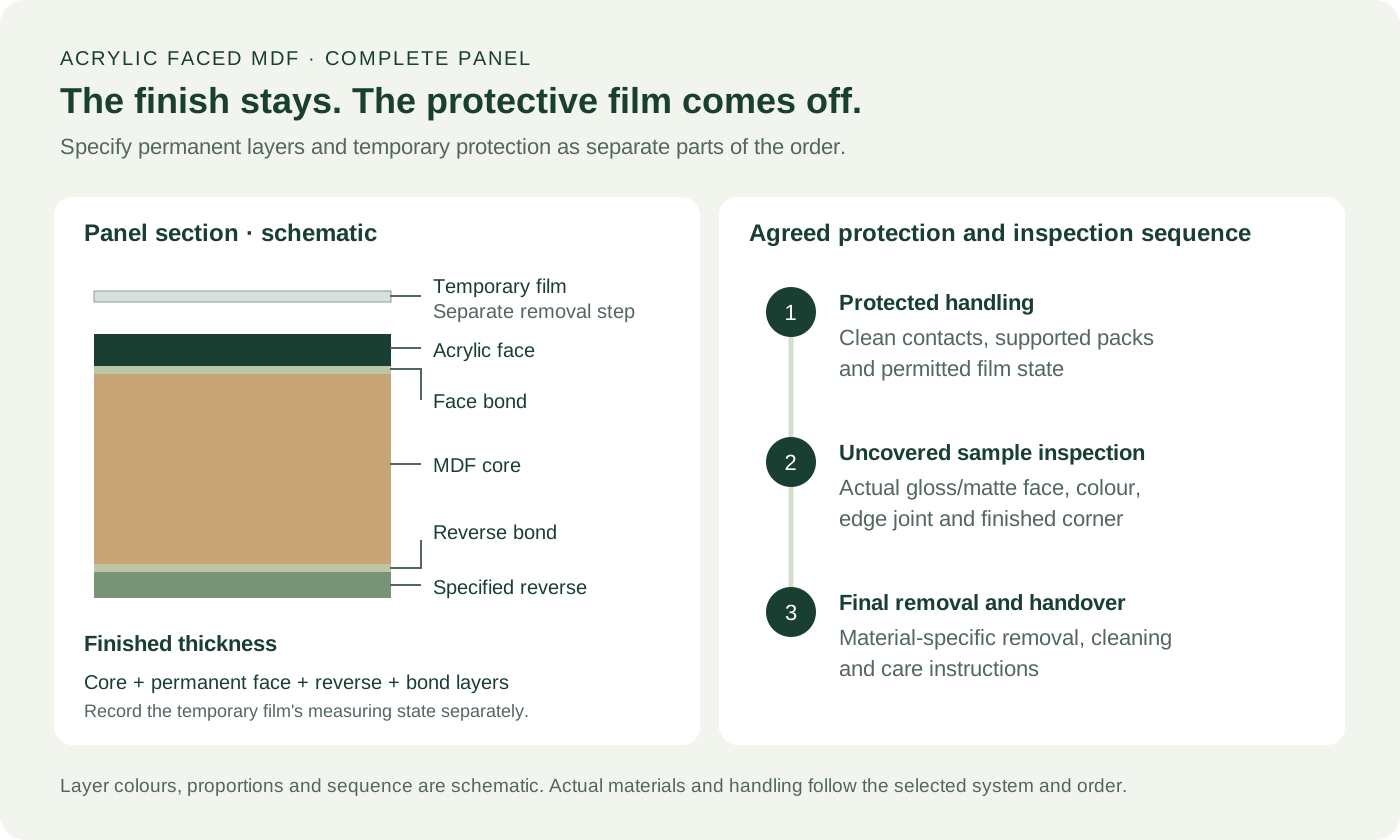
The acrylic facing is part of the finished panel. The removable protective film protects the exposed surface during agreed handling stages. Record these as separate layers and functions. The film can change the visible reflection and hide fine surface details, so the actual acrylic finish is evaluated on the designated uncovered sample area.
Identify the acrylic material or laminate structure, any specified hard coat, nominal facing thickness, face adhesive, MDF core, reverse adhesive and reverse material. Some acrylic-facing materials are multilayer constructions; record the offered material as the manufacturer describes it. Keep the actual layer names and thicknesses with the sample. Our quotation confirms the selected build, supplied condition and completed panel thickness.
| Construction field | Specify for the supplied panel | Check on the sample or component |
|---|---|---|
| Temporary protective film | Film type, covered side, handling/removal guidance and supplied state | Coverage, labels and the finish after the agreed removal step |
| Acrylic face | Material/series, colour, finish, nominal thickness and any hard coat | Face appearance, actual section and corresponding material information |
| Face bonding | Adhesive system and compatible substrate/facing preparation | Agreed bond checks and complete-panel appearance |
| MDF core | Grade, nominal thickness, density and emission requirement | Board identity, thickness and matching product documents |
| Reverse and reverse bonding | Named balancing material or decorative face, thickness and bond system | Back appearance, complete layer arrangement and agreed flatness |
| Edge construction | Material/reference, thickness, appearance and bonding process | Edge joint, corner, alignment and finished component dimensions |
A balancing reverse is selected with the face, core and bonding system. Its appearance can differ from the decorative front where the back is concealed. Where both faces are visible, specify both decorative references and the complete balanced construction. The actual panel, supported handling, conditioning and machining establish the agreed flatness checks. A reverse description such as white back needs its material and construction alongside the colour.
The input MDF core range is 2–35 mm, with nominal core thickness tolerance of ±0.1 mm subject to the agreed measuring method. Finished-panel thickness includes the permanent face, adhesive and reverse layers; the temporary protective film's measuring state is recorded separately. Your drawing's finished thickness and fit requirements belong to that complete construction. The core tolerance alone describes only the input MDF measurement.
Our six listed MDF formats describe input board capability. The available acrylic and reverse-material format, trimming and cut list establish the finished panel size. Send the required completed component dimensions and quantities, alongside any full-sheet request. We confirm the offered construction and usable format for the selected finish before the order is agreed.
A cut blank and a fully edged front have different size references. State whether dimensions are before or after edging, identify each visible edge and include the chosen edge-band thickness. For fitted fronts, add the finished thickness, hinge cup and fixing details, handle or pull arrangement and required clearance. An edge schedule keeps the appearance and assembly information with each part ID.
| Component detail | Drawing or order information | First-component check |
|---|---|---|
| Cut and edged rectangle | Finished length/width, squareness and dimension reference | Complete dimensions, diagonals and agreed edge condition |
| Visible front edge and corner | Edge material, colour, thickness, joint and corner detail | Colour under agreed light, alignment, adhesive residue and corner finish |
| Back and hinge area | Visible/concealed back, hinge model, cup/fixing coordinates and depths | Reverse construction, remaining section and hardware fit |
| Handle or finger-pull detail | Actual profile and material/edge treatment through the detail | Geometry, exposed cuts and the finished touch/appearance |
| Paired or adjacent fronts | Part IDs, front orientation, colour reference and layout | Consistent appearance and alignment across the intended set |
A colour-matched edge and an intentionally contrasting edge are both design choices. Agree the material, joint appearance and finished corner on the representative part. Terms such as seamless need a defined sample reference and an identified edging process. A close match in colour alone leaves the line, profile and corner quality to be checked on the actual component.
Acrylic-faced flat fronts and a continuously wrapped routed door use different constructions. PVC Faced MDF covers compatible flat-film and membrane-wrap options, while Routed MDF Cabinet Doors covers drawing-defined door geometry. Choose the material system for the actual shape. Any proposed acrylic bending or shaped-edge operation follows the selected material's process and a representative trial.
Agree a finished edged sample and the viewing conditions early. Include the colour reference, lighting, viewing distance and angle, face orientation, visible edge and acceptable variation. For a reflective front, the intended room lighting and neighbouring components help establish what your buyer will see. A small swatch is useful for colour selection; a larger representative component adds reflection, flatness, joint and assembly information.
Designate a sample or inspection area for removing the protective film under the selected material's instructions. Check the actual face for colour, gloss or matte appearance, marks, particles, reflected waviness and surface texture. Keep that uncovered reference protected with clean compatible contact materials. Record the film-covered state separately from the exposed finished appearance.
On a production order, agree the sequence for receipt inspection, machining, edging, assembly and final removal. Film may stay on suitable surfaces during approved operations, while a local area may need exposure for inspection or processing. The chosen film, surface and edging instructions establish the permitted state, storage period and removal method. Use the specified lifting and peeling approach so the film is separated from the acrylic surface without pulling the permanent facing or damaging an edge.
| Stage | Protection and inspection to agree | Record handed to the next team |
|---|---|---|
| Receipt and storage | Pack condition, supported storage, film state and batch identification | Product/colour/batch, condition and material instructions |
| Cutting, drilling and edging | Clean supports and tools, compatible contact materials and permitted film state | Drawing revision, finished size, edge quality and any newly exposed area |
| Sample and component inspection | Designated removal area and actual finish under agreed light | Uncovered appearance reference, edge/corner and fitting checks |
| Installation and handover | Film-removal timing/method, final cleaning and completed assembly | Care instructions, retained batch reference and finished inspection |
The diagram explains the permanent acrylic panel and temporary film separately. It also connects covered handling, a designated uncovered sample, and final removal/inspection. Layer colours and proportions are schematic; your actual facing, film and completed component provide the appearance and section references. Keep the agreed removal guidance with the delivered order so your workshop and installer follow the same sequence.
Tell us how the furniture will be used and which surface properties matter, such as scratch resistance, stain resistance, cleaning or fingerprints. We will help you compare acrylic finishes and the available test data for the selected material.
The permanent face, bonding, MDF core, reverse and edges work together in the finished part. For a kitchen front near appliances or a wet-area cabinet, add the real heat, steam, cleaning and moisture exposure, together with clearances, ventilation, openings and joints. Select the core and complete construction for that protected interior use. The acrylic surface selection guide helps organize finish-specific questions, and the kitchen cabinet guidance connects them to the complete cabinet.
Request cleaning and maintenance instructions for the chosen material with the sample. Establish compatible cleaners and soft, clean contact materials through those instructions and an appropriate trial. Polishing or repair methods depend on the actual finish and coating. A method suited to an uncoated glossy acrylic face can change the appearance of a matte or hard-coated surface. Carry the specified care method through final cleaning and customer handover.
REHAU's technical guide for its RAUVISIO brilliant system is an example of material-specific processing, storage and care instructions. Its procedures and values apply to the named REHAU system. For the acrylic material offered in your CUZI MDF order, use the corresponding instructions, construction and sample. Emission, moisture and fire requirements each follow their relevant product scope and method, recorded separately from appearance selection.
Send the acrylic reference or desired colour and finish, core grade/thickness, full-sheet or finished-part sizes, quantities and destination. Add the reverse, visible edge schedule, drawing or cut list, hardware details, supplied film condition and any requested performance or destination documents. We can begin from a physical sample, then quote the identified panel or prepared furniture front with the included work clearly stated.
The published reference range is US$258–480/m³ for acrylic-faced board supply. A component quote identifies its actual construction and the agreed price basis, with cutting, edging, drilling and protective packing recorded for the requested parts. Your formal quote contains specifications, quantity, price/currency, packaging, FOB Qingdao or FOB Lianyungang, lead time, T/T or LC terms and validity. Compare the same face, reverse, core, finished dimensions and included services when reviewing quotations.
We reply within 12 hours. Samples across our range are free and generally in stock. You cover courier cost, which can be credited against a formal order. We confirm the sample and any edged or machined preparation, dispatch and estimated transit for your address. A sample request can include a colour swatch, an identified panel section and a representative edged corner, with the actual preparation agreed for the finish you are evaluating.
Normal MOQ is 1 × 20'GP per specification. Normal production lead time is 3–10 days after specification and commercial confirmation; facing and component operations follow the schedule in the quote. MDF board production capacity is 500 m³ per day across the factory, with acrylic facing and finished-component output dependent on the actual operations. Third-party inspection is supported. Export shipments use Lianyungang or Qingdao, with loading based on dimensions, density and protective packing.
Retain the chosen material/series and colour code, physical sample, complete layer arrangement, film/care instructions, edge schedule, drawings and inspection reference. Identify changes in facing, reverse, bonding, machining or packing on a repeat order and confirm the updated sample where they affect the finished part. Clean compatible separators, protected corners and supported packs help your coordinated fronts reach the workshop ready for the agreed next step.
Applications
Order MDF sheets, decorative panels, routed doors and cut or machined cabinet parts from our Shuyang factory. Choose the faces, visible edges, hardware holes and packing groups for your cabinet range.
Explore applicationOrder moisture-resistant boards, vanity fronts, side panels and machined cabinet parts from our Shuyang factory. Choose the supplied finish and edge work around your basin and plumbing layout, with MR or HMR MDF selected for each component’s exposure.
Explore applicationOrder slab fronts, routed doors and shaker-style MDF components from our Shuyang factory. Choose raw blanks, prepared fronts or the agreed finished construction, with profiles, hinge holes and left/right pairs matched to your door schedule.
Explore applicationBoards and components
Request selected-core and emissions documents, acrylic surface data, and the film-removal and care instructions for the supplied series.
Made in Shuyang, China
Work with Shuyang Cuzi MDF Co., Limited on board selection, machining, inspection and export packing. Our factory has a total daily production capacity of 500 m³ across its operations.
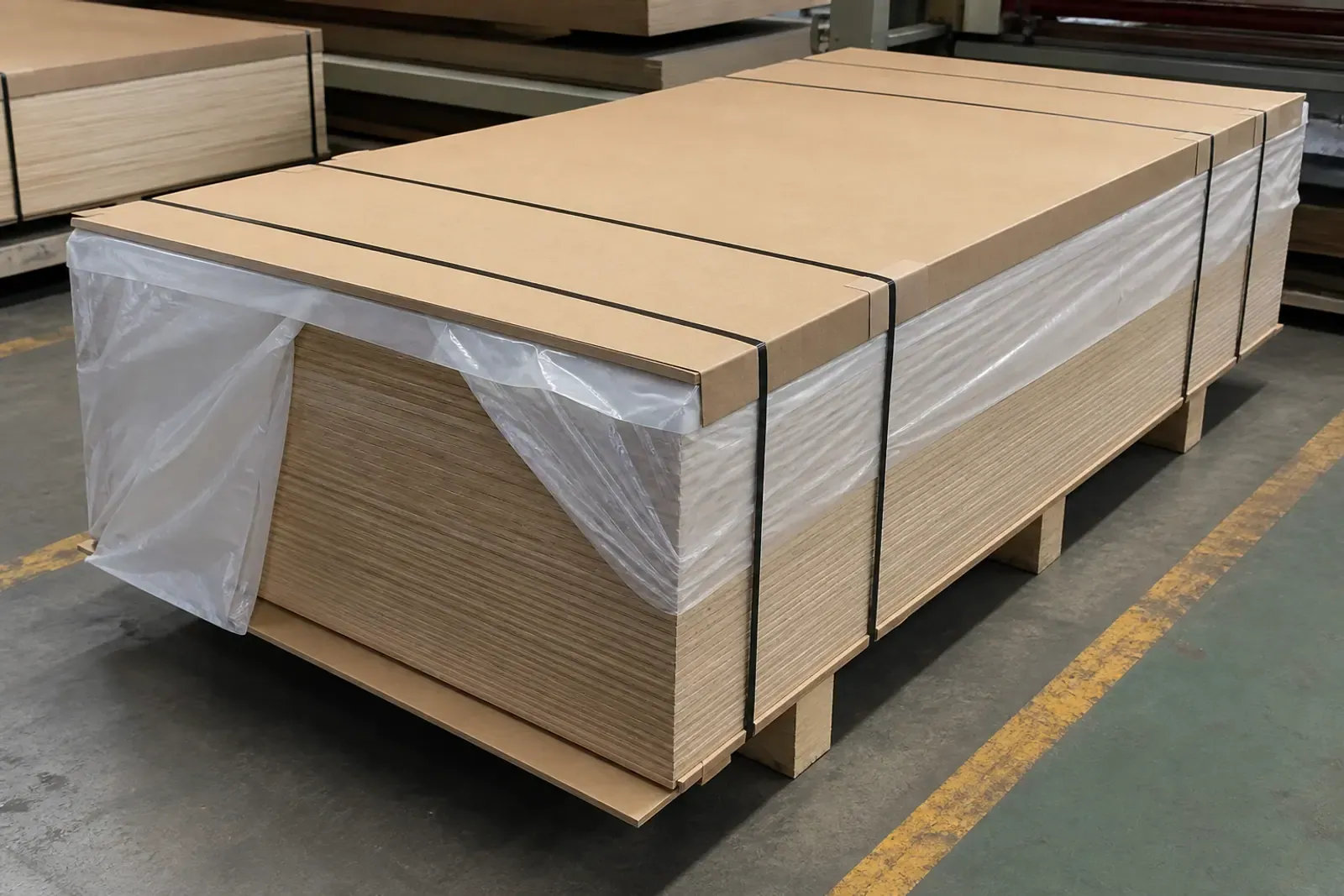
Made to order. The usual minimum is 1 × 20'GP per specification; mixed sizes or finishes are quoted together. Delivery lead time starts after specifications and terms are confirmed; sea transit is scheduled separately.
Freight is calculated for your ports and cargo quantity. Returns and exchanges, including timing and costs, are agreed in the order.
Delivery and freight terms · Returns and 180-day warranty · Packing and loading information
US$258–480 per m³
Your quotation confirms the specification, quantity, packaging and final price.
Buyer FAQ
Acrylic Faced MDF uses a specified acrylic decorative layer on flat MDF panels. PVC film can face flat panels or form around compatible routed profiles. Send your component drawing to choose the construction for the shape and appearance you need.
The face, core and reverse respond as a bonded construction. A suitable reverse layer helps balance the panel and reduce the tendency to bow. Its specification depends on the chosen face and bonding system; it need not be the same decorative appearance unless both faces are visible.
Use a finished edged sample to compare reflected appearance, colour, surface quality, back construction and the visible edge joint. Agree lighting and viewing conditions and retain those conditions with the delivery inspection reference.
Choose the core, adhesive, face, back, edge protection, openings and clearances for the actual indoor exposure. Follow the selected surface system's heat and care guidance, and protect cuts and joints around wet areas. The complete cabinet design determines the required construction.
Samples are free and usually in stock. You pay the courier charge, which can be credited against your order. Send the sample details and delivery address for availability, courier cost and timing. We will also give you a preparation date for custom samples.
Matte describes the level of reflection and surface appearance. Fingerprint behaviour, scratch resistance and other performance properties follow the actual material and any surface treatment. Request the required property, applicable method and result for the selected series, and compare an uncovered sample under agreed viewing conditions.
Follow the chosen film and acrylic material instructions for permitted processing, storage and removal. Agree covered handling, designated sample inspection and final removal before handover or use as specified for the system. Pass the material-specific timing, method and care instructions to the workshop and installer.
Identify the actual surface series, finish or hard coat, test method, result and covered material or panel. Keep the requirement and applicable information with the quote and sample. Appearance approval establishes the physical finish reference; the matching technical document addresses the tested property.
Buyer guides
Choose the MDF core, routed section, coating and hinge layout for cabinet doors. Work through front/reverse datums, finished dimensions and paired-front quantities.
Read guideAn acrylic MDF front is judged by its complete surface: colour, gloss or matte appearance, reflection and visible edges. Approve a finished corner alongside the flat sample, then define the reverse and protective-film handling.
Read guideSend a gloss or matte reference, core thickness, finished sizes, quantities and destination. Add visible edges, reverse face and hinge or handle details. We reply within 12 hours to help with a free sample and a complete quote.