Professional Fibreboard Manufacturer & Supplier

HDF Board Manufacturer in China

High-density fiberboard supplied from Shuyang, China in 2–35 mm thicknesses for furniture components, back panels, drawer bottoms, door skins, machining and further surface processing.

Product focus
HDF supply
Buyer review
Grade · size · finish · processing
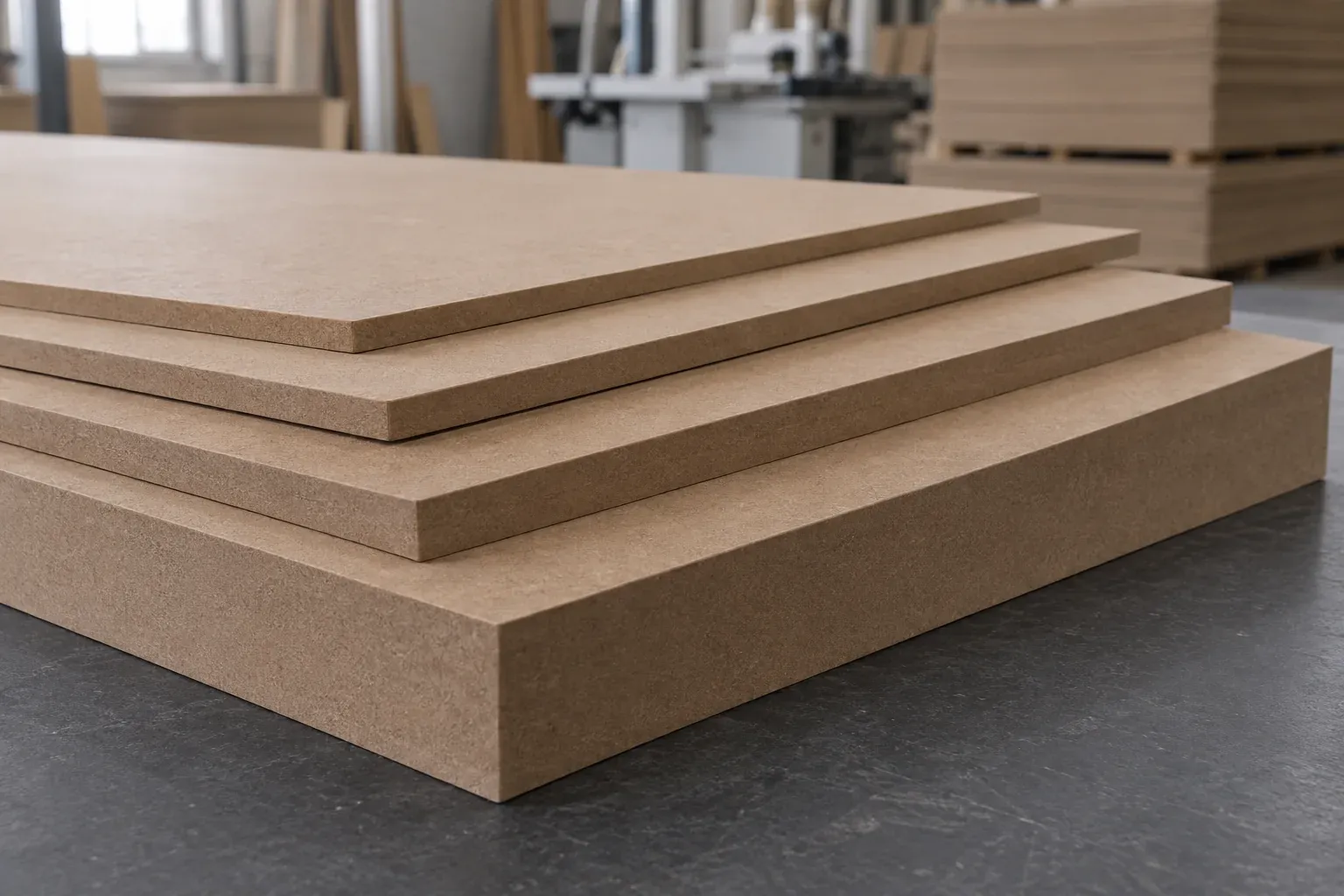
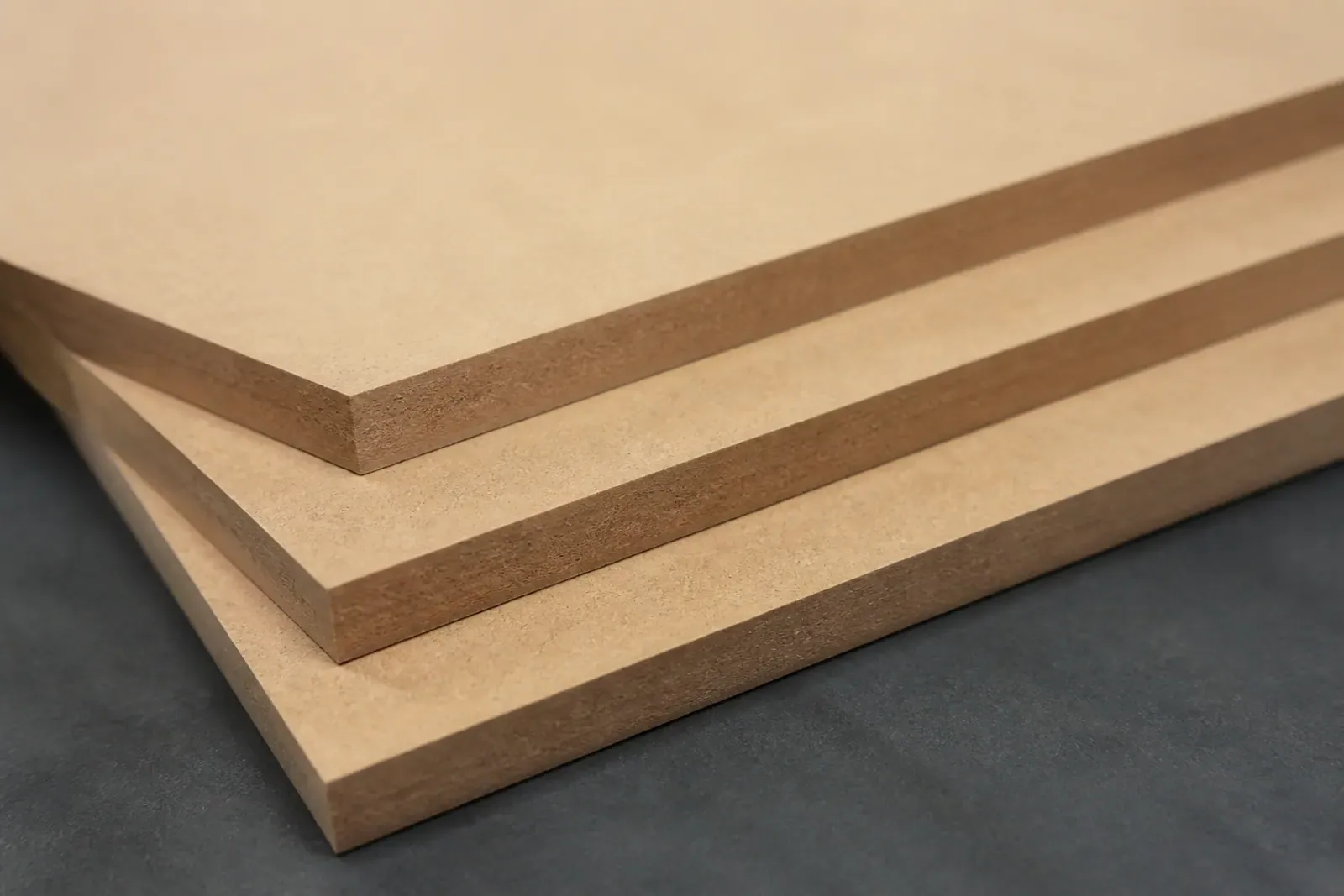
HDF panels with smooth faces and compact fine-fibre edges

Why this panel exists

HDF manufactured to confirmed buyer specifications.

HDF is selected when a buyer needs a dense, uniform fine-fibre substrate with a thickness-specific density target. The quotation should define thickness, size, density, surface, flatness, processing, component use, emission class, packing support and destination as the complete HDF specification.

Product introduction

What is HDF?

Product definition

What is HDF?

HDF means high-density fiberboard. It uses finely refined wood fibres compressed into a dense, uniform panel with smooth sanded faces. CUZI MDF supplies HDF from Shuyang, Jiangsu, China in 2–35 mm thicknesses, with density specified by thickness. Thin HDF is commonly reviewed for furniture backs, drawer bottoms and door skins, while thicker panels may be considered for furniture components, machining and downstream coating or lamination. This page addresses HDF board and high-density fiberboard purchasing intent. Thin MDF remains a thickness-led MDF category, while Hardboard has its own product construction and application page. Buyers should confirm the actual density, thickness, face condition, machining process and finished component before production.
Buyer advantage

Why choose HDF?

HDF, thin MDF and Hardboard are separate purchasing categories. Confirm the manufacturing construction, actual density, thickness, surface and end use before comparing quotations. Large thin sheets need continuous flat support and controlled lifting. Unsupported edges, uneven forks or poorly positioned straps can create bowing, corner damage and handling marks. A smooth face still requires the buyer to define whether the supplied board is raw, sanded, coating-ready or prepared for lamination, together with the responsible finishing process. Dense thin panels can show different cutting, drilling or punching behavior from standard MDF. Tooling, feed, edge quality, hole geometry and finished-part tolerance should be reviewed together. High density does not by itself establish moisture resistance, exterior suitability, flooring performance or suitability for a complete building system. Those requirements need product data, test reports and application review.

Application fit

Applications

Relevant application discussions include acoustic panel substrates, hardboard for furniture backs and drawer bottoms. Final product suitability must be reviewed against the buyer's actual application and confirmed specification.

Supply support

Why choose CUZI MDF?

CUZI MDF coordinates HDF production and delivery from Shuyang, Jiangsu, China. Capacity is 300 m³ per day for each thickness. The normal MOQ is 1 × 20'GP for each individual specification, and normal production lead time is 7–15 days after the thickness, size, density, surface, processing, packing and commercial requirements are confirmed. Buyer terminology: HDF means high density fiberboard. Buyers may also search for HDF board, HDF sheet, HDF material or HDF fiberboard. HDF is not simply a high-density version of any unspecified MDF order; the product identity, thickness, density and component requirement must remain explicit.

Product USP

HDF value translated into production priorities.

The purchasing priorities below connect HDF with specification, processing and order requirements.

Dense, uniform fine-fibre core

Provides a compact panel structure and consistent surface for thin components, cutting and further finishing when matched to the required specification.

Smooth sanded faces

Supports coating, lacquering, laminating and other downstream processes after the buyer confirms face preparation, adhesive or coating system and acceptance criteria.

Thickness-specific density control

Connects each 2–35 mm thickness band with its stated density range, component geometry, flatness, fixing method and machining requirements.

Export packing for thin boards

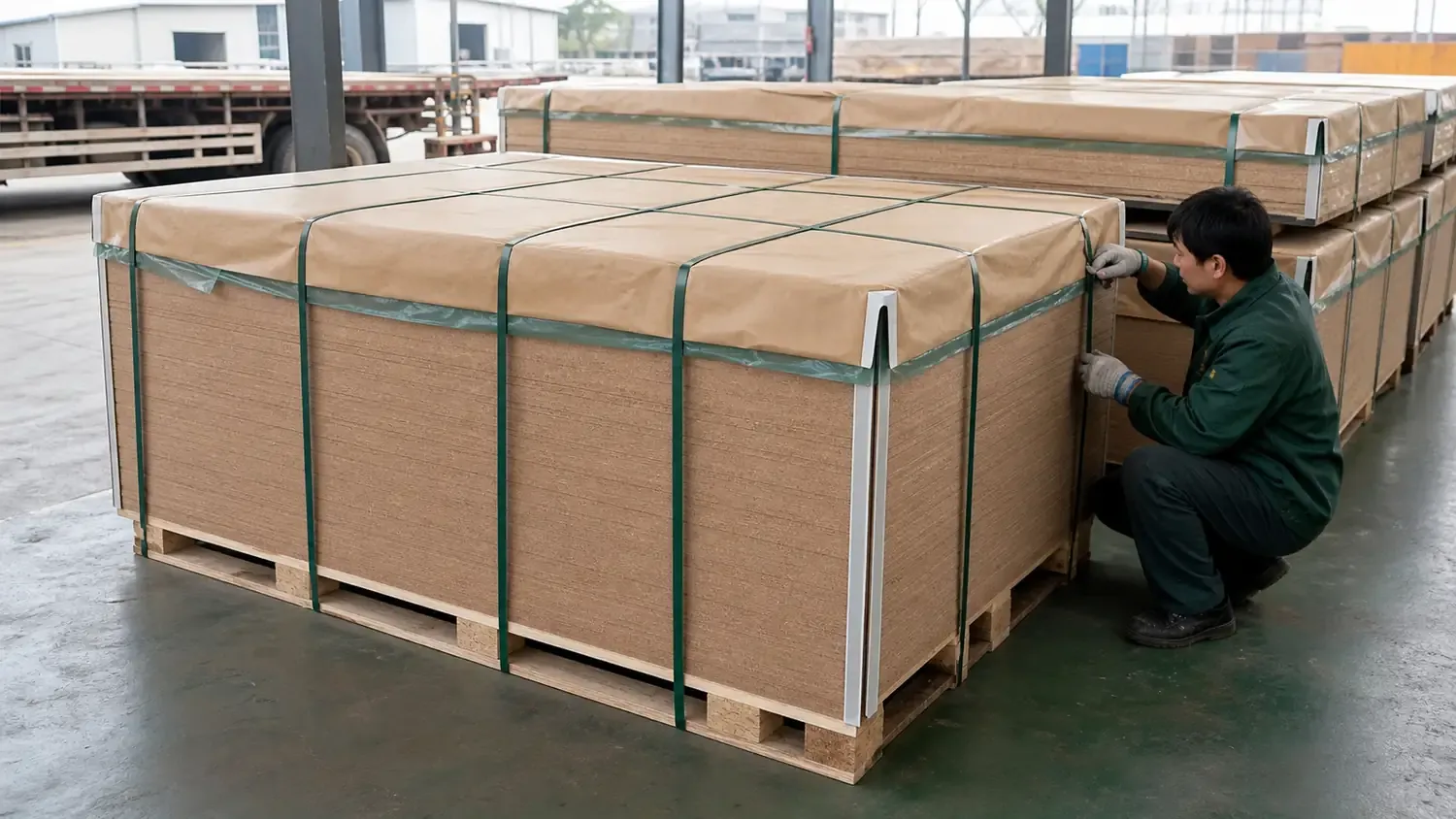
Uses flat support, cover boards, moisture protection, aligned straps and handling controls selected for the board thickness, format, quantity and route.

Buyer problems solved

Reduce risk before panels reach production.

HDF confused with MDF or Hardboard

HDF, thin MDF and Hardboard are separate purchasing categories. Confirm the manufacturing construction, actual density, thickness, surface and end use before comparing quotations.

Thin panels bending during handling

Large thin sheets need continuous flat support and controlled lifting. Unsupported edges, uneven forks or poorly positioned straps can create bowing, corner damage and handling marks.

Surface preparation omitted from the order

A smooth face still requires the buyer to define whether the supplied board is raw, sanded, coating-ready or prepared for lamination, together with the responsible finishing process.

Machining specified without edge criteria

Dense thin panels can show different cutting, drilling or punching behavior from standard MDF. Tooling, feed, edge quality, hole geometry and finished-part tolerance should be reviewed together.

Application performance assumed from density

High density does not by itself establish moisture resistance, exterior suitability, flooring performance or suitability for a complete building system. Those requirements need product data, test reports and application review.

Why choose CUZI MDF

MDF manufacturing, customization, inspection and international supply.

CUZI MDF reviews different MDF grades and specifications for furniture factories, distributors and international B2B buyers.

Professional HDF manufacturing

CUZI MDF focuses on HDF manufacturing and specification-led supply for international B2B buyers.

Customized HDF review

Thickness, size, surface, processing and packaging requirements are reviewed against the requested product and order.

Quality and document control

Quoted technical values are matched to the selected product, current test reports and the written order specification.

International supply planning

Order planning covers confirmed specification, quantity, packaging needs, destination and shipment coordination.

Technical specification

HDF Specifications

CUZI MDF supplies standard and customized specifications for furniture factories, distributors and project orders.

Thickness2–35 mm.
SizeCUZI MDF board formats: 1220 × 2440 mm; 2100 × 2800 mm; 1830 × 3660 mm; 1830 × 2440 mm; 2440 × 3660 mm; 1830 × 4200 mm.
DensityCUZI MDF HDF density range: 2–4 mm: 850–930 kg/m³; 5–8 mm: 830–890 kg/m³; 9–11 mm: 780–830 kg/m³; 12–18 mm: 730–780 kg/m³; 19–35 mm: 680–730 kg/m³.
GlueThe bonding system follows the selected product grade and construction.
Formaldehyde gradeE0, E0.5 and E1 options. The specified emission class, test standard, product scope and destination requirement must be confirmed for each order.
SurfaceSanded and smooth; suitable for painting, laminating and other downstream processes. Confirm the face construction, preparation and finishing process for the order.
Moisture resistanceHigh-density fiberboard for thin furniture and protected-interior components; moisture, exterior, flooring or complete-system performance requires separate test reports or application documents.

All product options, processing, packaging and timing remain subject to confirmation against the final specification, quantity, production schedule and destination.

Indicative export pricing

A practical starting range for quotation planning.

US$230–380 per m³

Availability
Available to order
Specification review
5.0/5.0

Custom specifications determine the final price.

This price range is an indicative export reference for configurable B2B orders, not a fixed or binding offer. Final unit pricing is confirmed in a written quotation.

  • Product grade, thickness, density and board size
  • Surface construction, color, processing and packaging
  • Order quantity, payment terms and production scheduling
  • Incoterm, destination, freight and document requirements

Technical specification completeness review

The product page states the principal board or component specification, configurable order factors, indicative price basis and quotation requirements needed for an initial B2B purchasing review.

Reviewed by CUZI MDF Product & Technical Team.

Request an exact quotation

Features

Specify what matters on the factory floor.

Thickness-specific HDF density ranges

CUZI MDF HDF density ranges are 2–4 mm: 850–930 kg/m³; 5–8 mm: 830–890 kg/m³; 9–11 mm: 780–830 kg/m³; 12–18 mm: 730–780 kg/m³; and 19–35 mm: 680–730 kg/m³.

2–35 mm thickness range

HDF is available from 2 mm to 35 mm. The quotation connects the selected thickness with board size, density band, component use, processing and handling requirements.

Thickness tolerance

Nominal thickness tolerance is ±0.1 mm, with the measurement position, sampling and acceptance method stated for the confirmed order.

E0, E0.5 and E1 options

The emission class is specified for the selected HDF product, applicable test method and destination requirement.

MOQ, capacity and lead time

Production and delivery capacity is 300 m³ per day for each thickness. Normal MOQ is 1 × 20'GP per specification, with a normal lead time of 7–15 days after specification and commercial confirmation.

Flat supported export bundles

Thin HDF is packed with full flat support, cover boards, protected edges, moisture-protective wrapping, aligned straps and identification selected for the loading and transport route.

Moisture-content range

Standard HDF is intended for protected dry-interior use unless a moisture-performance grade and supporting test report or certificate are separately specified.

Processing notes

Review cutting, punching, drilling, forming or coating requirements with the selected thickness, density, tooling, edge quality and thin-panel handling plan.

Applications

Applications of HDF

MDF for Acoustic Panel Substrates

MDF acoustic-panel procurement supplies a machined substrate within a specified acoustic assembly. The order must connect perforations or grooves, finish, backing, cavity and installation details to the system design.

Explore application

Hardboard for Furniture Backs and Drawer Bottoms

Hardboard backs and drawer bottoms are thin, supported furniture parts. Specify assembly fit, visible-face orientation and support before choosing a nominal sheet thickness.

Explore application

Buyer guides

Continue the HDF purchasing review.

These guides explain the next specification, application and procurement decisions connected to this product.

MDF Export Guide for International Buyers

Prepare an international MDF order by aligning product identity, specification, required documents, quantity, packaging, delivery basis and destination requirements.

Explore application

MDF vs Plywood: A B2B Material Comparison

Compare MDF vs plywood by construction, machining, surface, edge, support, moisture conditions, required test reports and finished-component requirements.

Explore application

What Is MDF Board? Material, Manufacturing and Uses

Understand what medium density fiberboard is, how MDF is made and which product, processing and application details buyers should compare.

Explore application

Hardboard for Furniture Backs: Fit, Face Orientation and Support

Specify a hardboard back or drawer bottom as part of the furniture assembly. Component dimensions, face orientation, groove or fixing interface, support, exposure, finish, trial fit and flat packing determine the delivered part.

Explore application

Customization capability

Customized HDF Supply

Send the required dimensions, surface, processing drawings, packaging and destination. CUZI MDF confirms production feasibility before issuing a quotation.

Thickness, size and density

Provide the required thickness, board format, density and finished component dimensions so production and handling feasibility can be reviewed together.

Surface and downstream finish

Specify raw or sanded supply, coating, lacquer, lamination or another finishing process, including face-quality and adhesion requirements.

Cutting, drilling and component processing

Provide drawings with units, revision, tolerances, holes, cut-outs, edge criteria and the required finished-part orientation.

Emission and application requirements

State E0, E0.5 or E1, the applicable method or destination requirement, and any separate moisture, flooring, fire or system-performance test reports needed.

Packaging and delivery

Packaging, bundle support, loading and transport are selected from sheet size, thickness, quantity, surface, handling method, destination and customer requirements. Delivery is available through Lianyungang or Qingdao, China.

Packaging options

Continuous flat support, cover boards, protected edges, moisture-protective wrapping, aligned straps and bundle identification are selected for sheet size, thickness, quantity, handling and destination.

Purchasing / RFQ guidance

Provide application, thickness, size, density, surface, E0/E0.5/E1 requirement, processing drawings, quantity, packing, destination, delivery term and required technical documents.

Manufacturing capability

CUZI MDF Manufacturing Capability

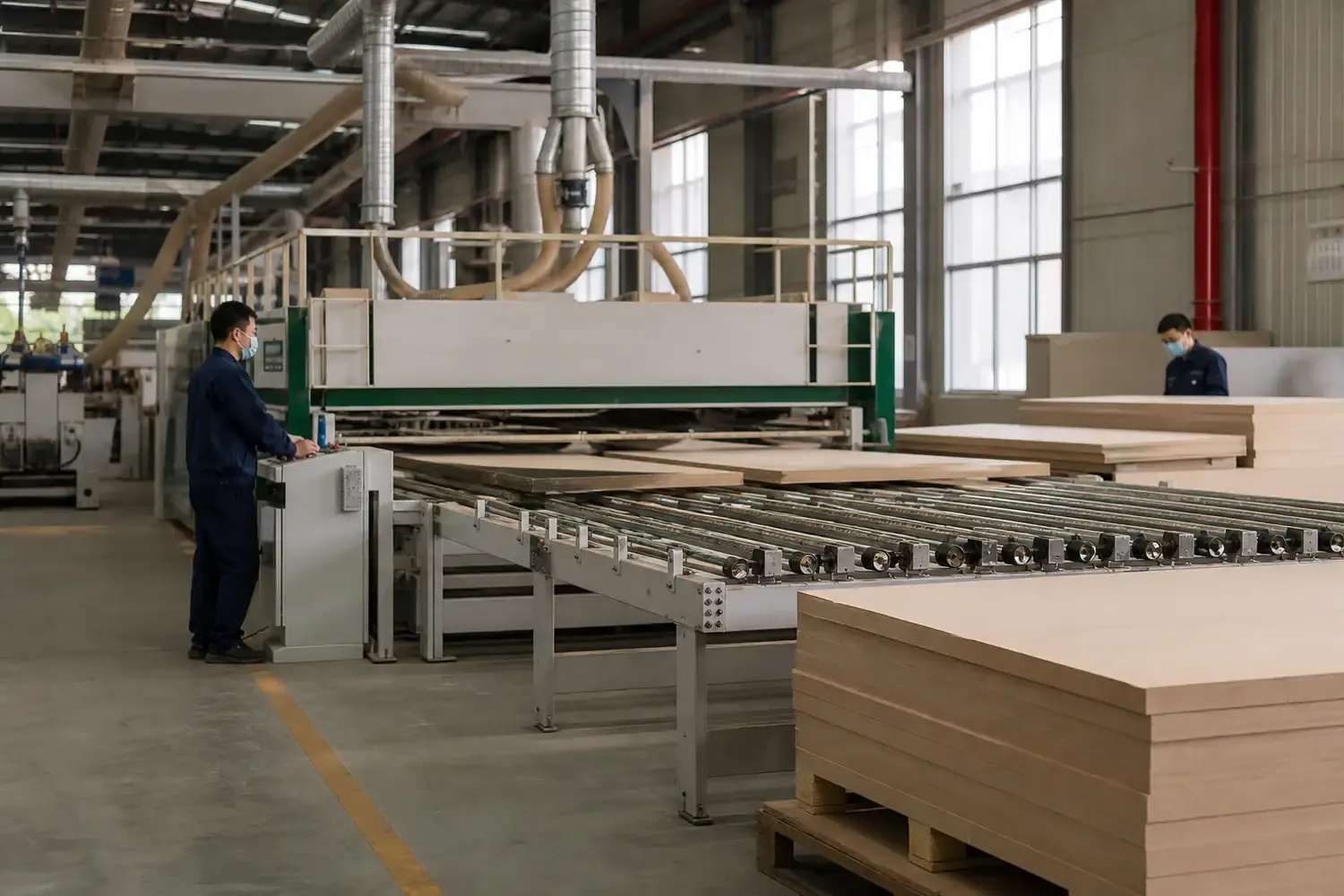
MDF production capability

Production planning begins after the product specification and commercial requirements are confirmed.

Quality management

Applicable checks are aligned with the confirmed HDF product, dimensions, surface, processing and other agreed criteria.

Customized manufacturing

CUZI MDF reviews grade, dimensions, surface, CNC processing and packaging requirements before confirming production.

Packaging and supply

Packaging and timing are confirmed against the final product, quantity, production schedule and destination.

Production workflow

CUZI MDF Manufacturing Process

The production workflow connects the confirmed product specification with panel manufacturing, inspection and export-oriented packaging.

Confirm specification

Review product type, dimensions, surface, processing, quantity and destination.

Plan production

Translate the approved order requirements into the applicable production and handling plan.

Inspect and prepare

Review the finished order against agreed requirements before packaging and shipment preparation.

Buyer FAQ

Questions buyers ask before specifying HDF.

What is HDF?

HDF is high-density fiberboard made from refined wood fibres compressed into a dense, uniform panel. Buyers commonly review thin HDF for furniture backs, drawer bottoms, door skins, interior components and surfaces that will be coated or laminated.

How is HDF different from standard MDF?

HDF is specified at a higher density and is commonly used in thinner component formats. Standard MDF covers a broader thickness range. Compare actual thickness, density, face condition, processing and finished use for each product category.

How is HDF different from Hardboard?

Both may be thin and dense, but they are separate product categories with different manufacturing constructions, surface characteristics and application histories. An RFQ should identify the required product, density, thickness, face and finished use.

What density does CUZI MDF supply for HDF?

Density is specified by thickness: 2–4 mm: 850–930 kg/m³; 5–8 mm: 830–890 kg/m³; 9–11 mm: 780–830 kg/m³; 12–18 mm: 730–780 kg/m³; and 19–35 mm: 680–730 kg/m³. The order records the target and inspection method for the selected thickness, format and application.

What thickness and board sizes are available?

The HDF thickness range is 2–35 mm. Listed formats are 1220 × 2440 mm, 2100 × 2800 mm, 1830 × 3660 mm, 1830 × 2440 mm, 2440 × 3660 mm and 1830 × 4200 mm. The complete combination is confirmed with density, quantity and handling requirements.

Can HDF be painted, coated or laminated?

Its smooth sanded faces can support further processing, but the order should define face preparation, coating or adhesive system, responsible processing party and finished-surface acceptance criteria.

Is HDF moisture resistant or waterproof?

Standard HDF is not automatically moisture resistant or waterproof. High density can slow short-term surface penetration in some conditions, but prolonged wet exposure, exterior use or a moisture-performance claim requires a specifically designed product and supporting test report or certificate.

How should thin HDF be packed?

Use continuous flat support, cover boards, protected edges, moisture-protective wrapping and aligned straps. Final bundle construction and loading follow the sheet size, thickness, quantity, handling method and destination.

What are the normal MOQ, capacity and lead time?

Production and delivery capacity is 300 m³ per day for each thickness. Normal MOQ is 1 × 20'GP per specification, with a normal lead time of 7–15 days after confirmation.

What should an HDF RFQ include?

Include application, thickness, size, density, surface, E0/E0.5/E1 requirement, processing drawings, quantity, packing, destination, delivery term and required technical documents.

Are the ranges on this page confirmed for every order?

No. Product-specific availability and values are confirmed against the proposed order.

What should the purchasing RFQ include?

Provide application, thickness, size, density, surface, E0/E0.5/E1 requirement, processing drawings, quantity, packing, destination, delivery term and required technical documents.

Specification to quotation

Request a HDF Quotation

Send your target grade, dimensions, quantity, surface or processing requirements and destination. CUZI MDF will review the specification and provide quotation support for the confirmed requirement.

  • Target grade or test standard
  • Thickness, size, density and quantity
  • Surface, CNC and packaging requirements
  • Destination and requested timing

By submitting this business inquiry, you acknowledge how CUZI MDF handles the information described in our Privacy Policy.

HDF Board Manufacturer in China | CUZI MDF