
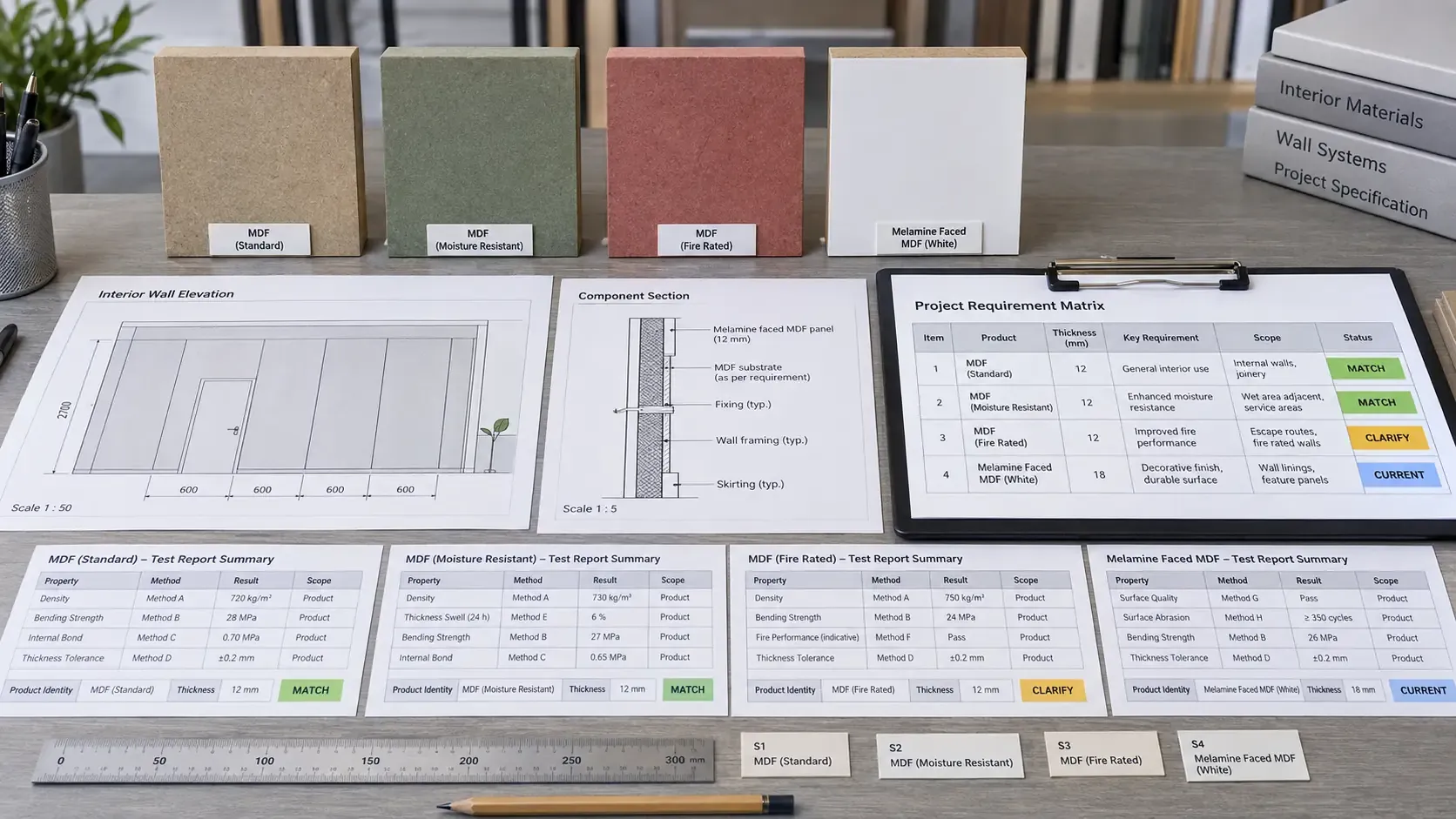
MDF Documents for Interior Projects: A Buyer Checklist
Plan MDF for interior projects with a practical checklist of products, drawings, samples and test reports, from material selection to ordering.
Read GuideMDF buying guides · From our factory
Find the board for your finish, the details for your drawing and the information for your quotation. Our guides help you compare MDF, HDF and hardboard, prepare components and plan delivery. Explore the question that matters to your production, then work directly with our Shuyang factory on your own material or project.
Guide library
Start with a material comparison, a component or the next step in your order. Choose a topic for the complete guide list, or browse the articles below.
Plan your quantities
Enter dimensions, density and quantity to estimate one-sheet weight, board volume and total net board weight. Use those figures to prepare your inquiry; packing weight and container loading are confirmed for the order.
A shipment in detail
See the board specification, bundle arrangement, weight breakdown and packing and loading photos from one MDF shipment. Use this example to discuss the packing and container plan for your own dimensions, density and quantity.
View the loading case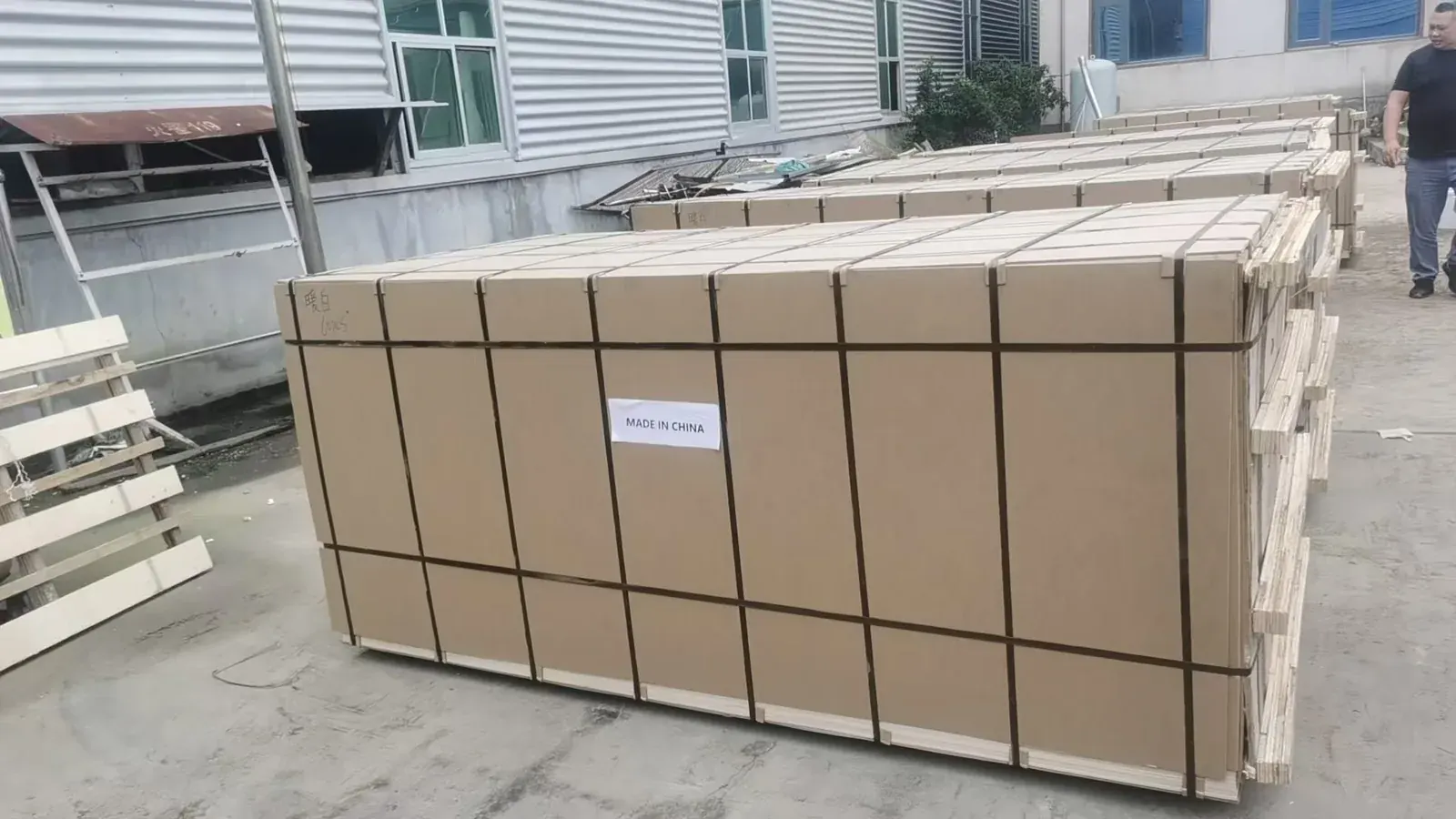
Pre-shipment inspection · 20 October 2026
Follow a 980-panel order in white and brown melamine. See the slot profile, thickness and weight checks, and the aluminium channel fitted into both finishes.
HQC Inspection recorded Pass, with final approval by the buyer. Inspection took place before the panels were packed.
View the inspection case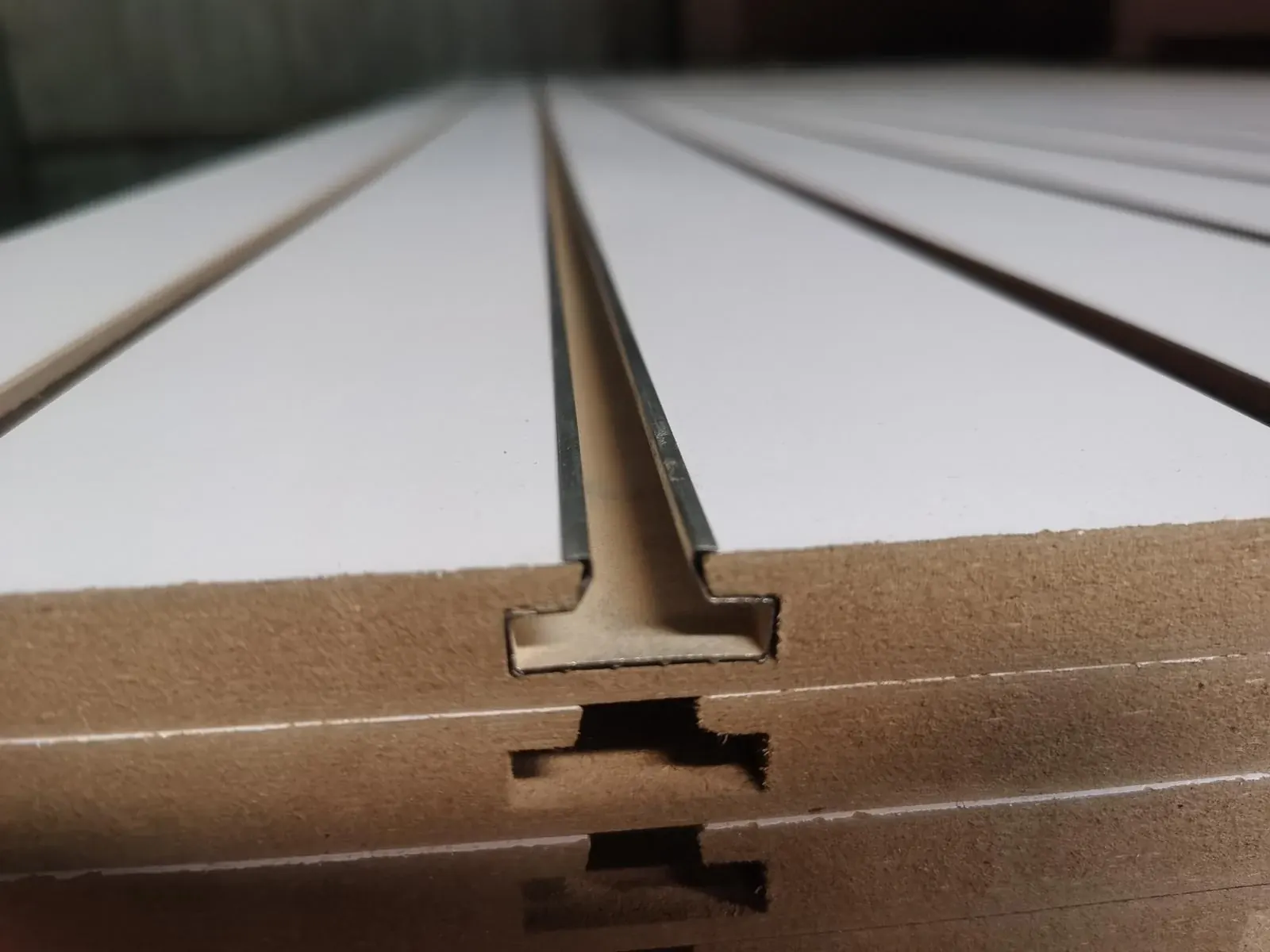
Featured guide
Read a complete buying guide, then explore the library for your own board, finish or order. Keep your component drawing or material reference alongside it to identify the details you want to discuss.
Plan MDF for interior projects with a practical checklist of products, drawings, samples and test reports, from material selection to ordering.
Read GuideWhich board should I choose?
Compare MDF, HDF and hardboard, raw and decorative faces, and thin or thick boards. Understand the differences that affect your finish, machining and material cost before choosing a product.
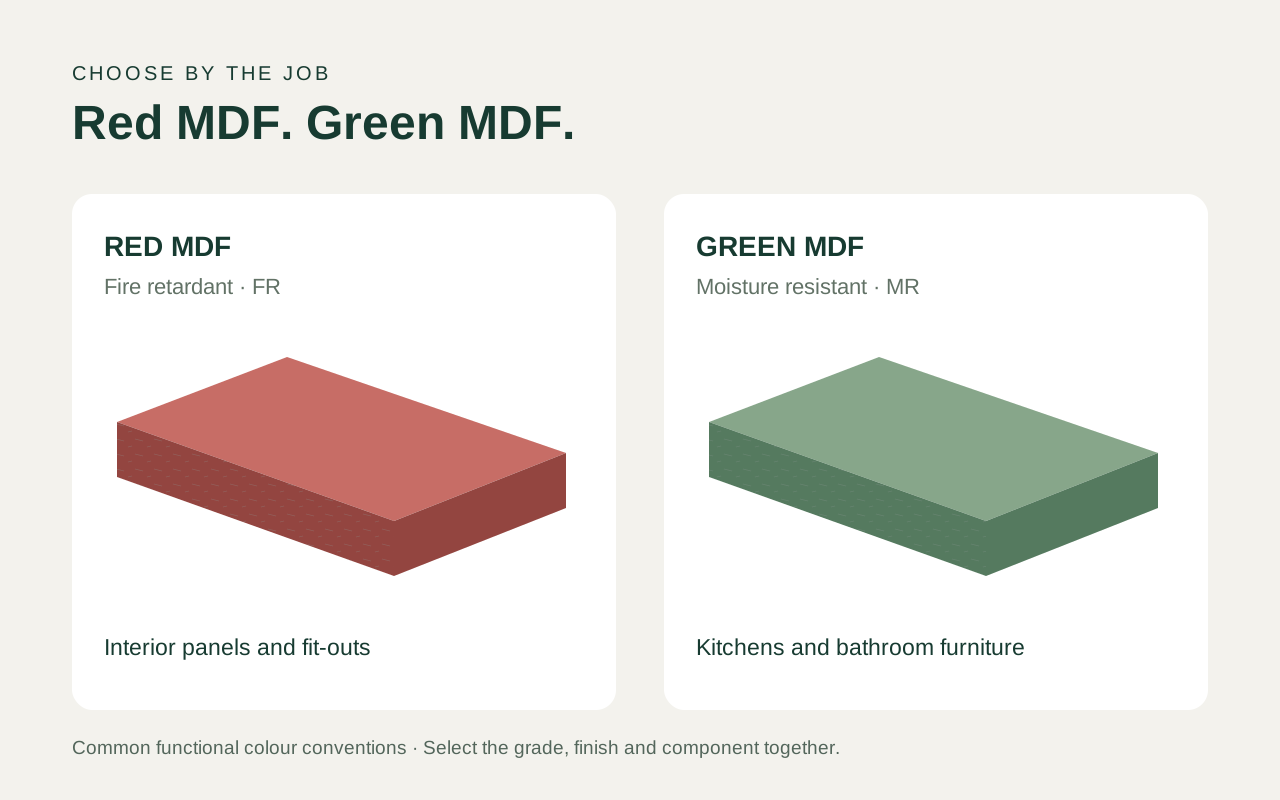
Red MDF commonly identifies fire-retardant board, while green MDF commonly identifies moisture-resistant board. Choose by the job the panel needs to do, then match the grade, finish and dimensions.
Read Guide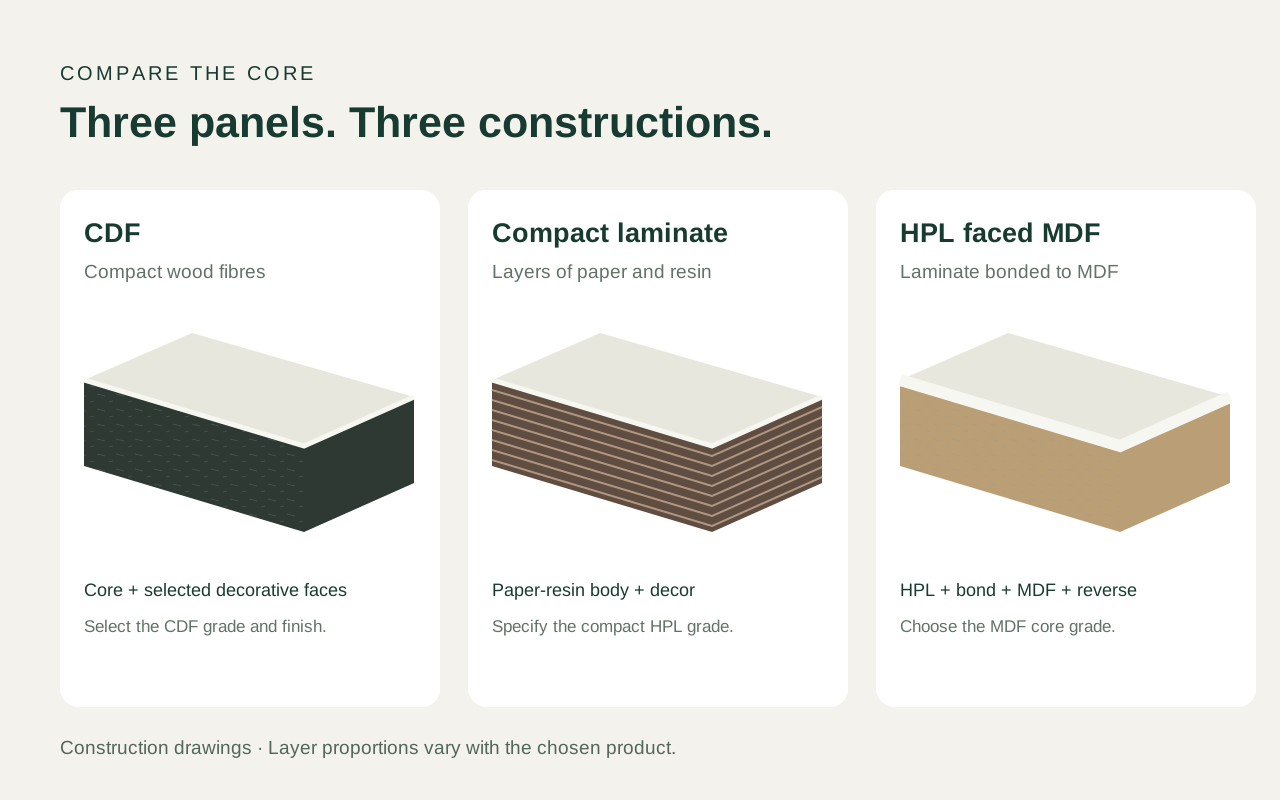
Compare CDF, compact laminate and HPL MDF by their core construction, surface, machining and intended use. A cut-edge sample makes the differences easier to see.
Read Guide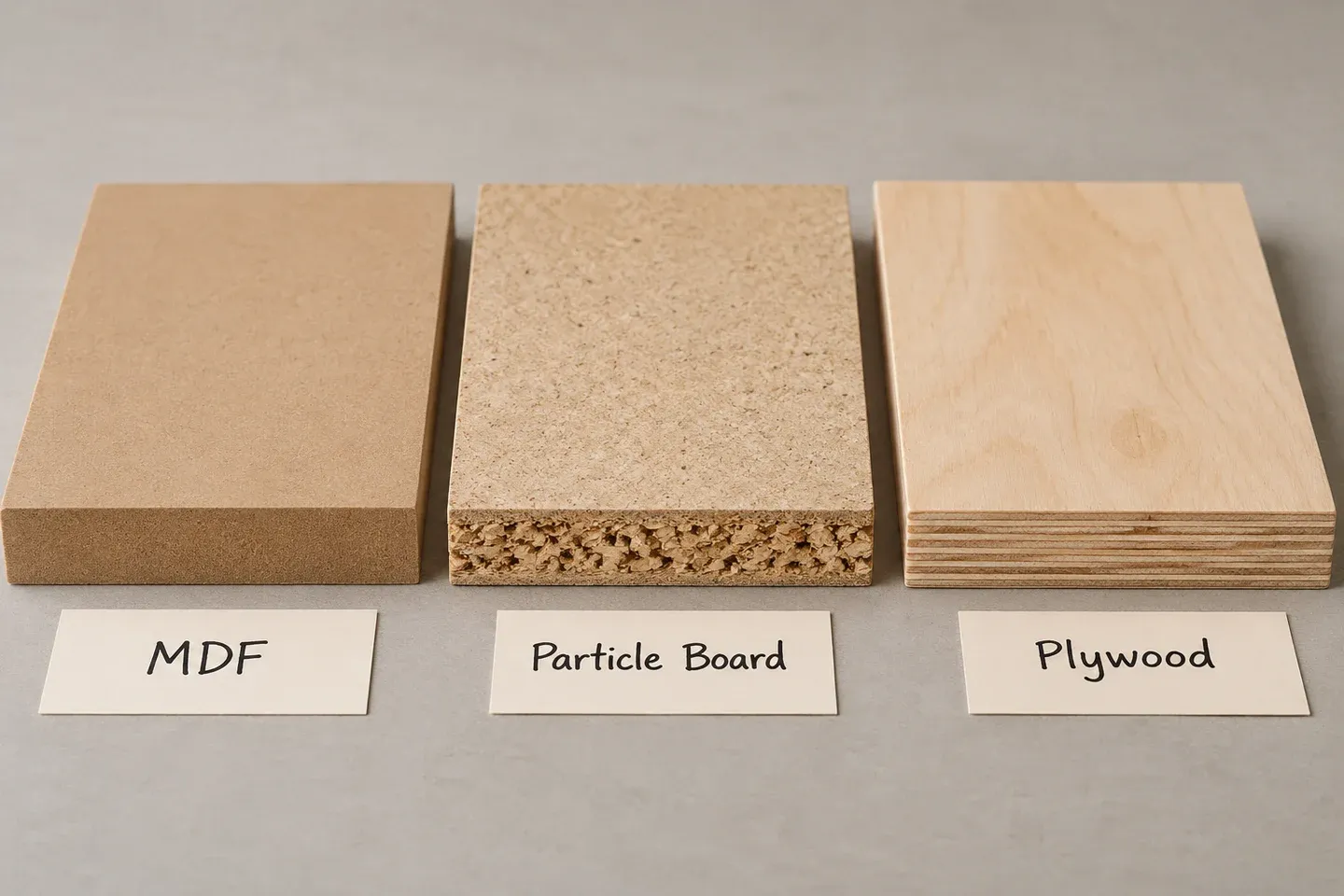
For painted or routed furniture fronts, start with MDF. For faced cabinet parts, compare the complete panel, edges, hardware and finished cost.
Read Guide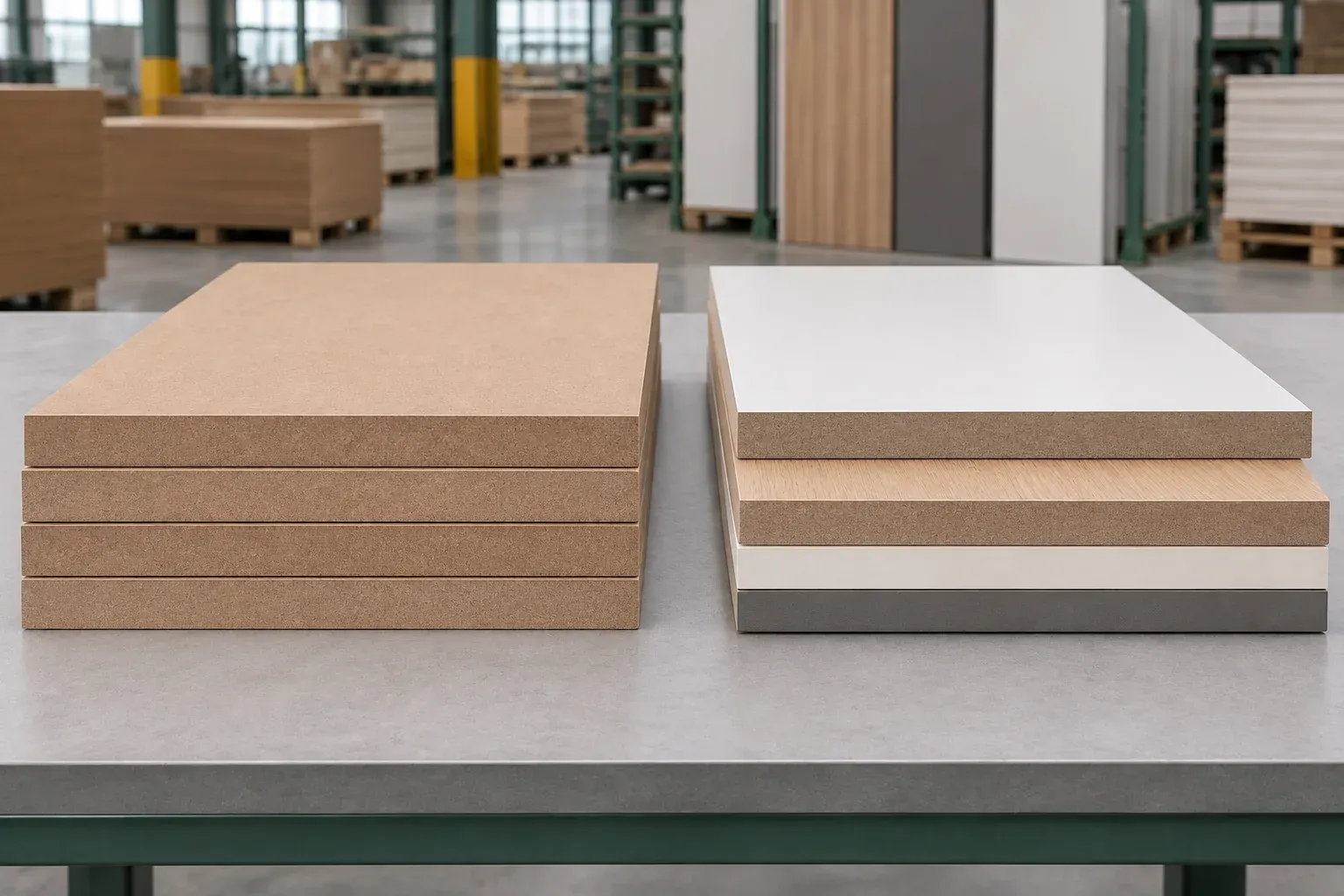
Choose raw MDF when your factory will create the finish. Choose melamine MDF when you want the decorative faces supplied, ready for cutting, drilling and edge completion.
Read GuideWhat suits my component?
Start with cabinets, doors, furniture or wall panels. Explore the board, visible face, edges and assembly details for the component you make and the conditions where it will be used.
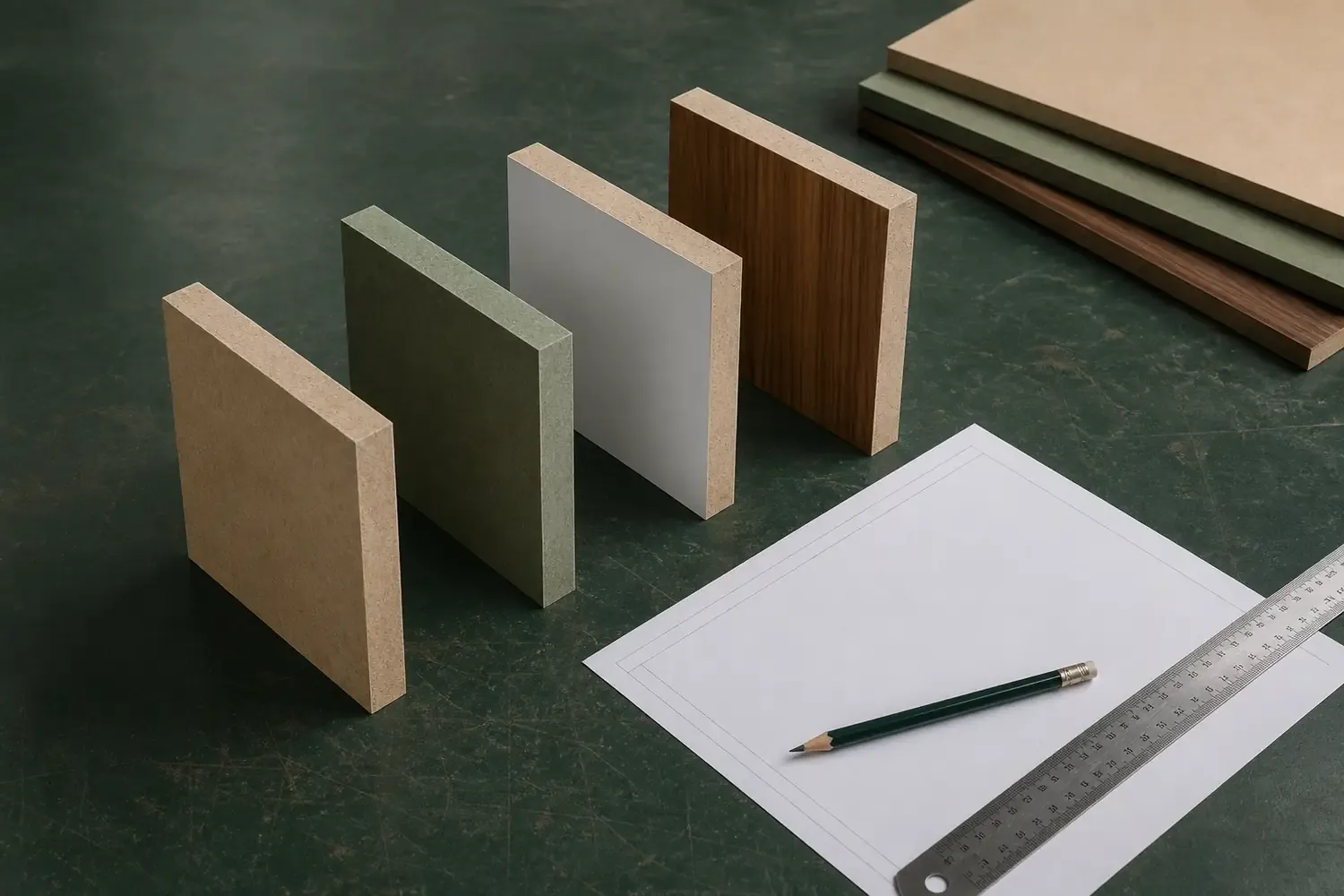
Choose MDF for furniture by the component, finish and work your factory needs to complete. Raw or sanded MDF gives you a base for painting and facing, decorative MDF supplies the selected surface, and cut or CNC parts bring agreed dimensions and machining into the order.
Read Guide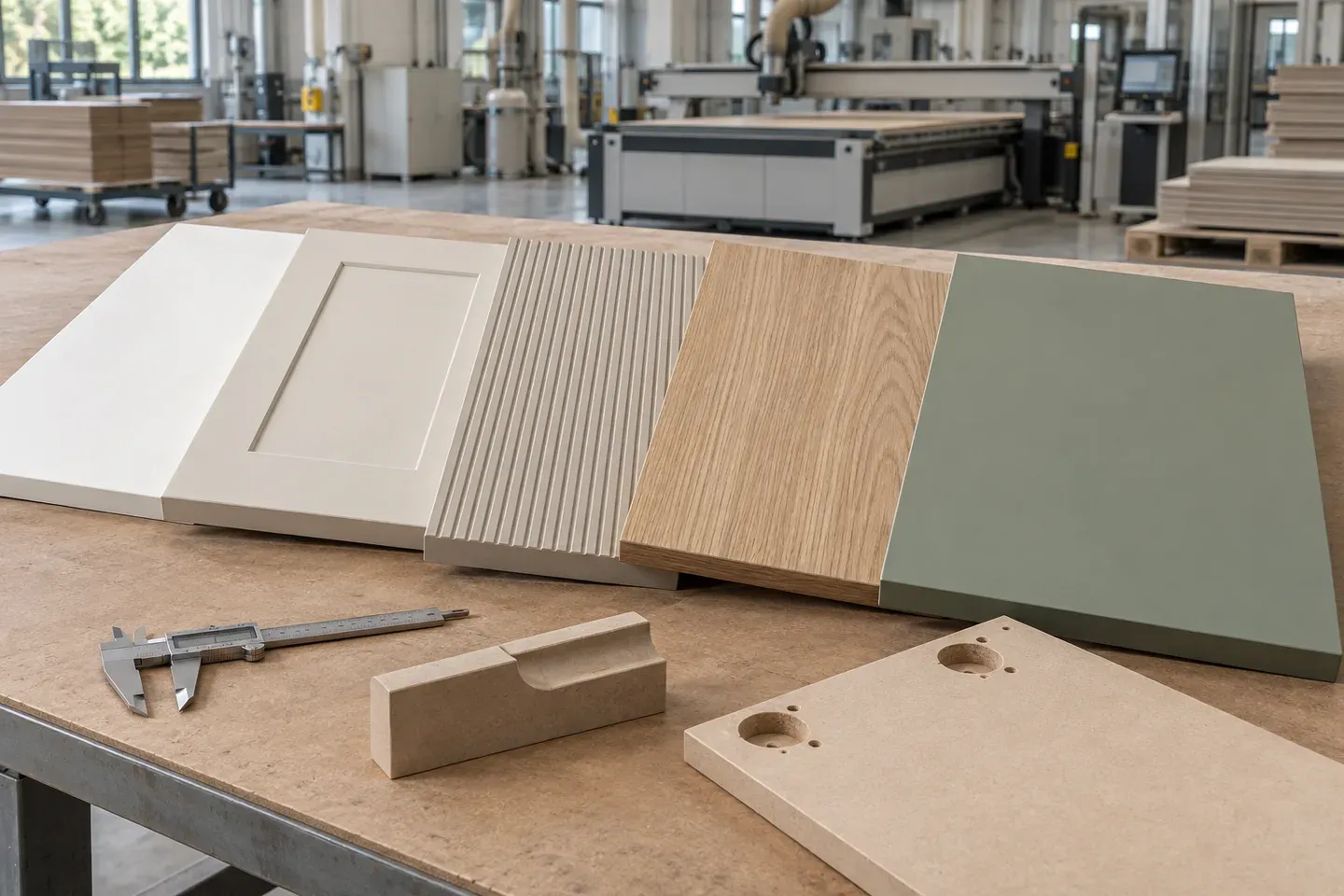
Choose the MDF core, routed section, coating and hinge layout for cabinet doors. Work through front/reverse datums, finished dimensions and paired-front quantities.
Read Guide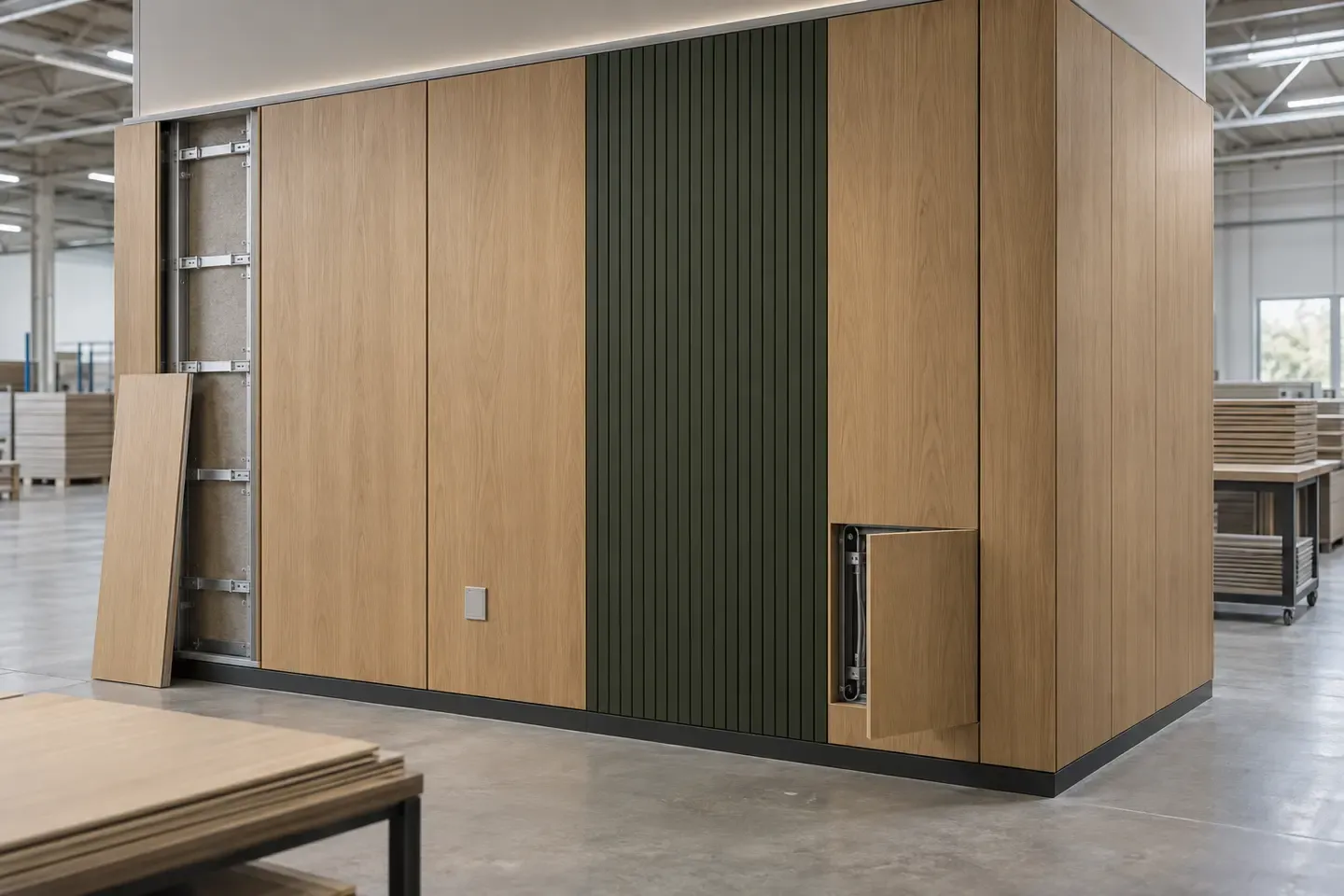
Plan MDF interior wall panels with a complete elevation. Coordinate module sizes, panel joints, service openings, supports, finish and installation quantities.
Read Guide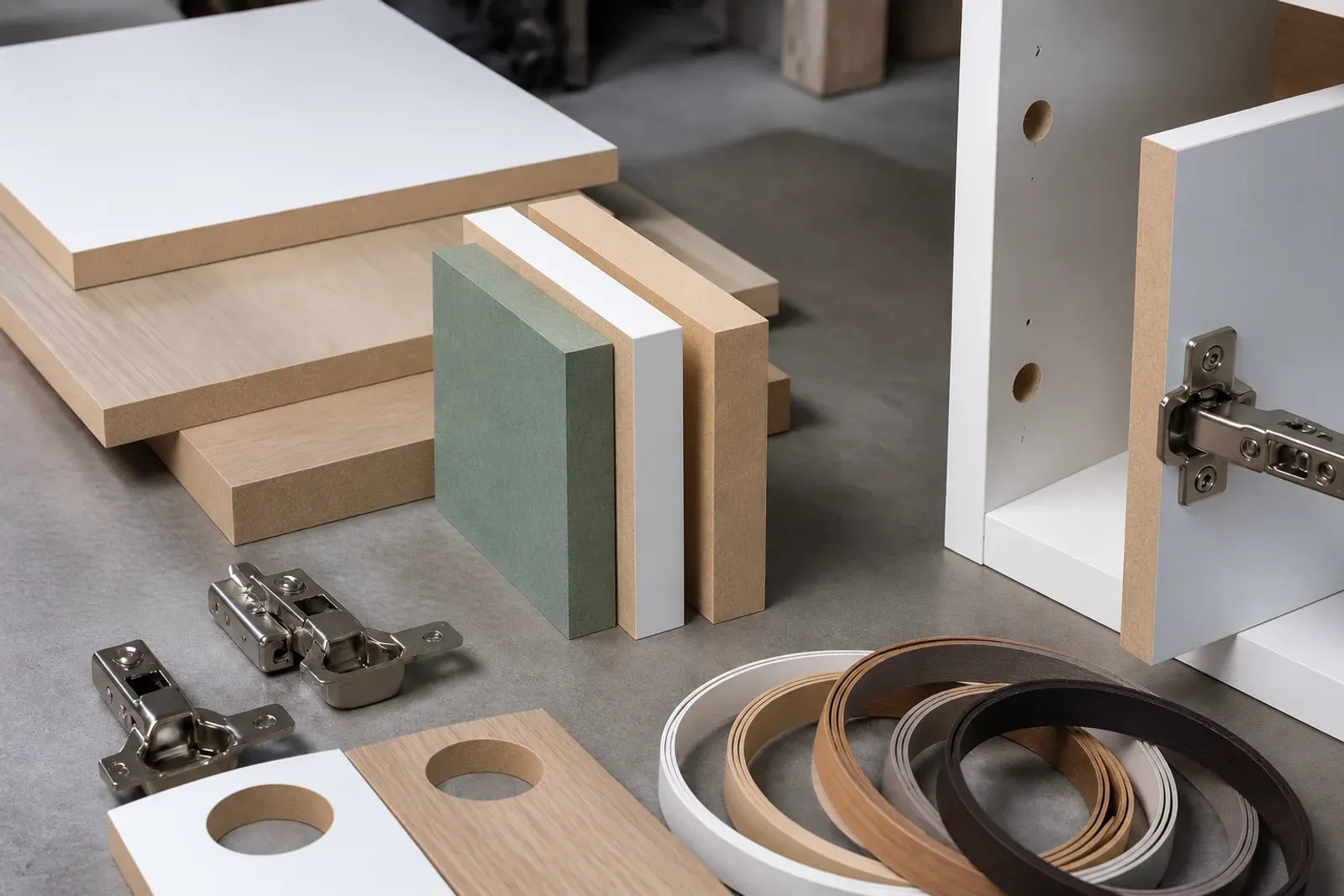
Compare standard, MR and HMR MDF for kitchen doors, carcasses and sink units. Work through finishes, hardware, completed panel dimensions and a cabinet component schedule.
Read GuideWhich specifications matter?
Prepare thickness, dimensions, density and tolerances, then identify the documents your market or project requires. Use the guides to understand product reports and plan the checks for your order.
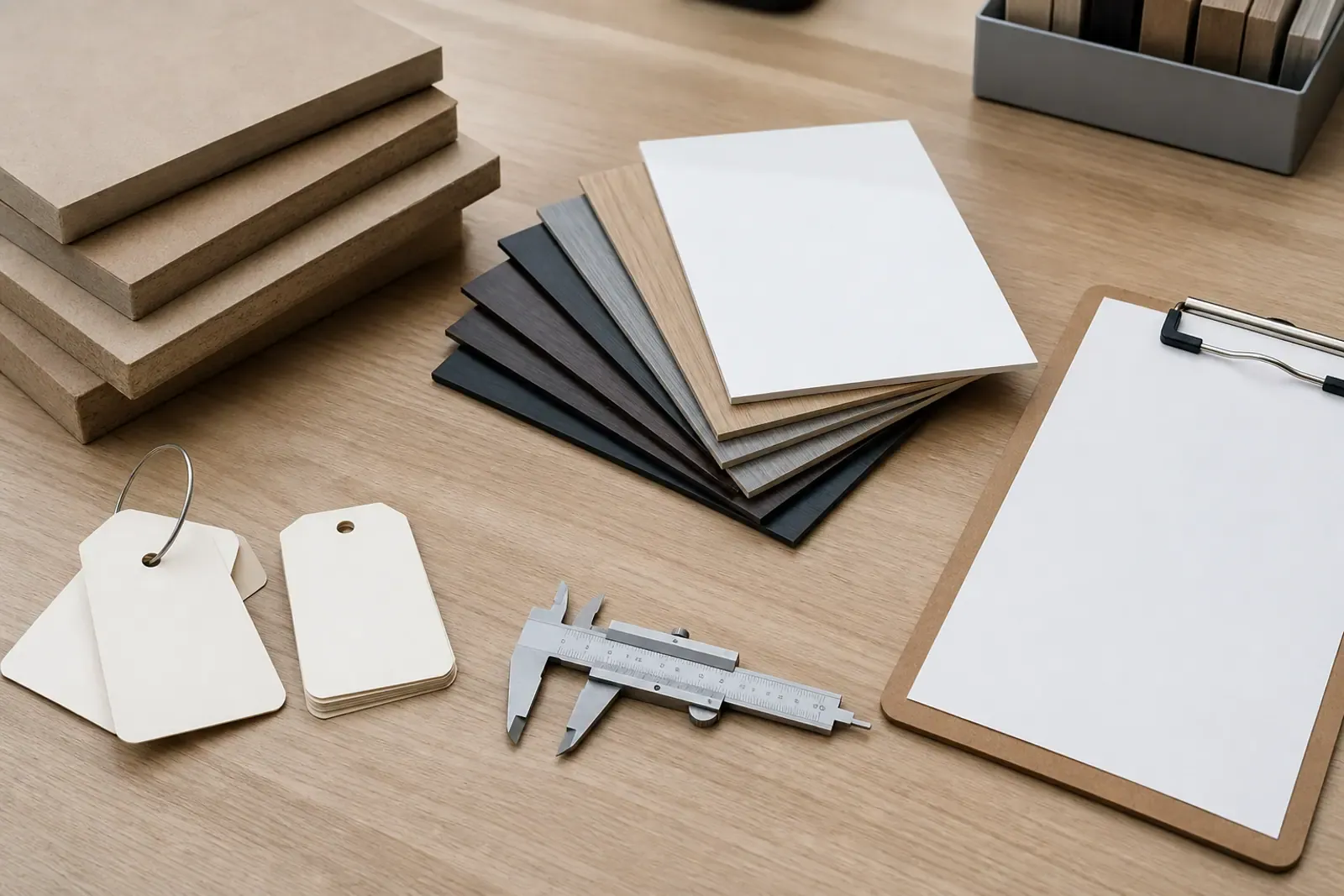
Before ordering MDF, confirm the product and supplied stage, thickness, dimensions, surface construction, quantity and destination. Then agree the processing, performance documents, sample reference, packaging and commercial terms for each order line.
Read Guide
Before you order MDF, make sure the product documents answer the questions your furniture, interior project or destination market requires. Start with the board name and thickness, then read the test method, result, units and date together.
Read Guide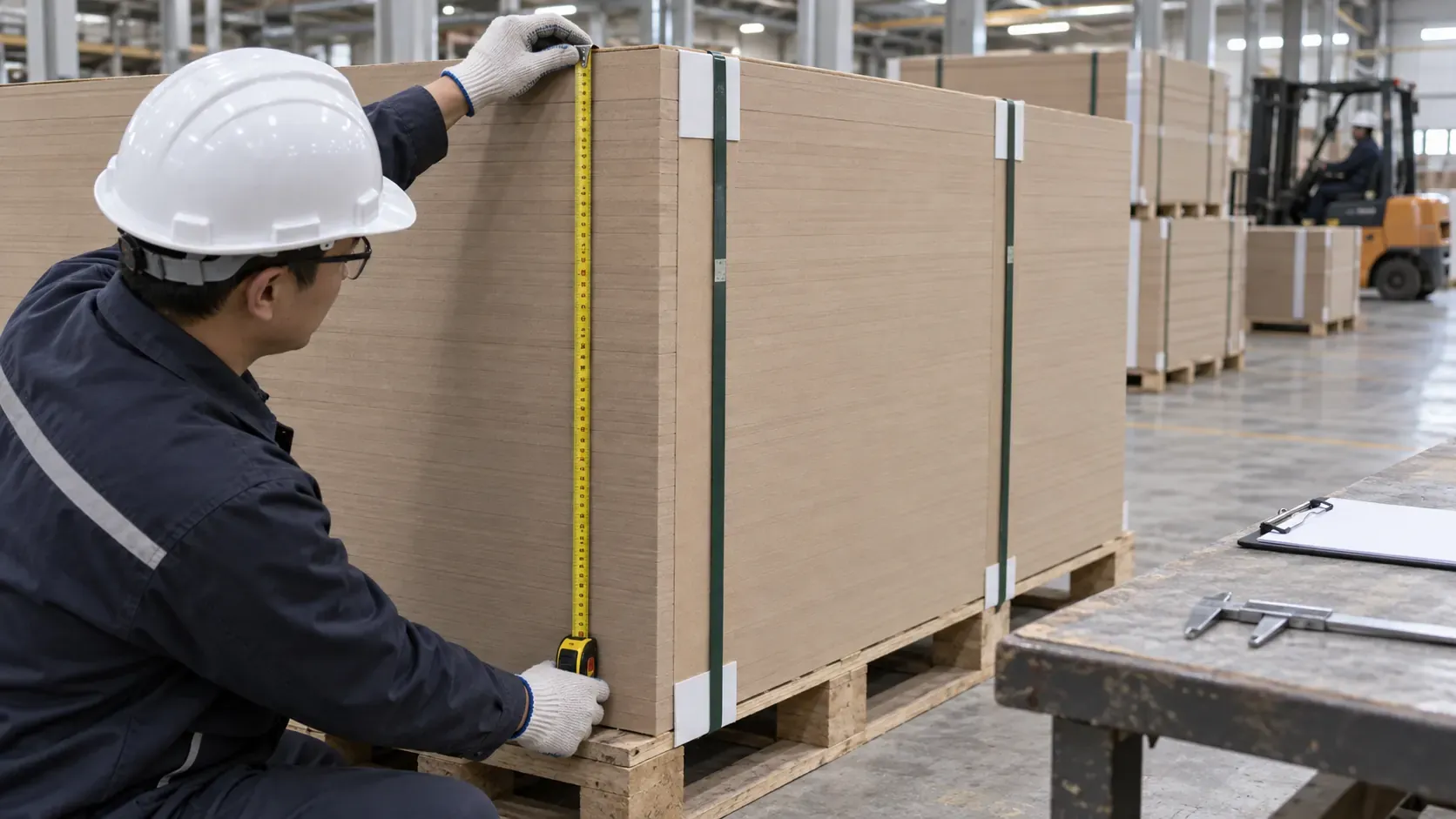
A pre-shipment inspection helps confirm that the MDF order is ready to leave the factory. Compare the identified goods with the specification, drawings, samples and packing instructions you approved.
Read Guide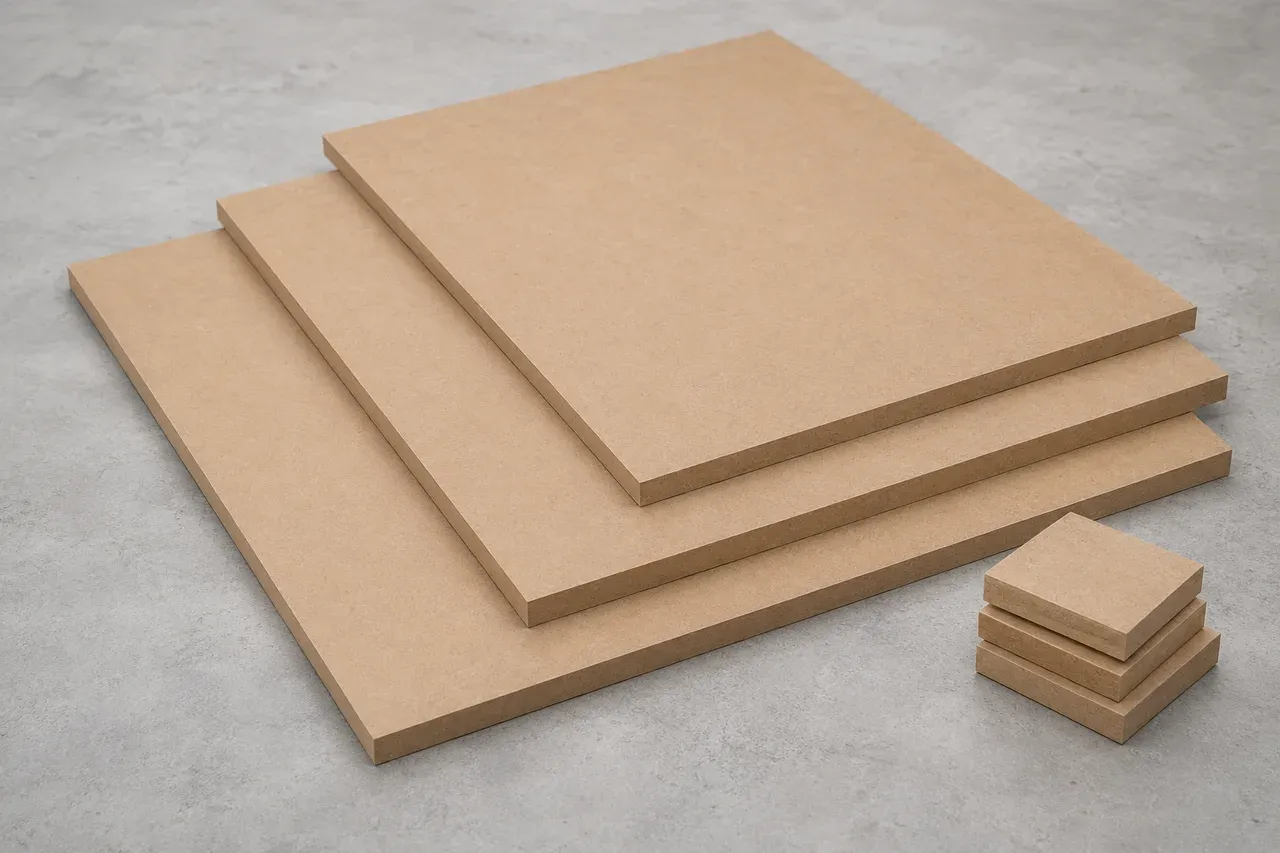
For an inch-based MDF order, put the exact dimensions and tolerances beside the familiar size name. Three-quarter-inch MDF is 19.05 mm; a literal 4 × 8 ft sheet is 1219.2 × 2438.4 mm, slightly different from 1220 × 2440 mm.
Read GuideHow will I process the board?
Plan cutting, CNC routing, drilling, edge preparation and decorative finishes. Bring the drawing, coating or hardware you use into the sample trial so the supplied board fits your production process.
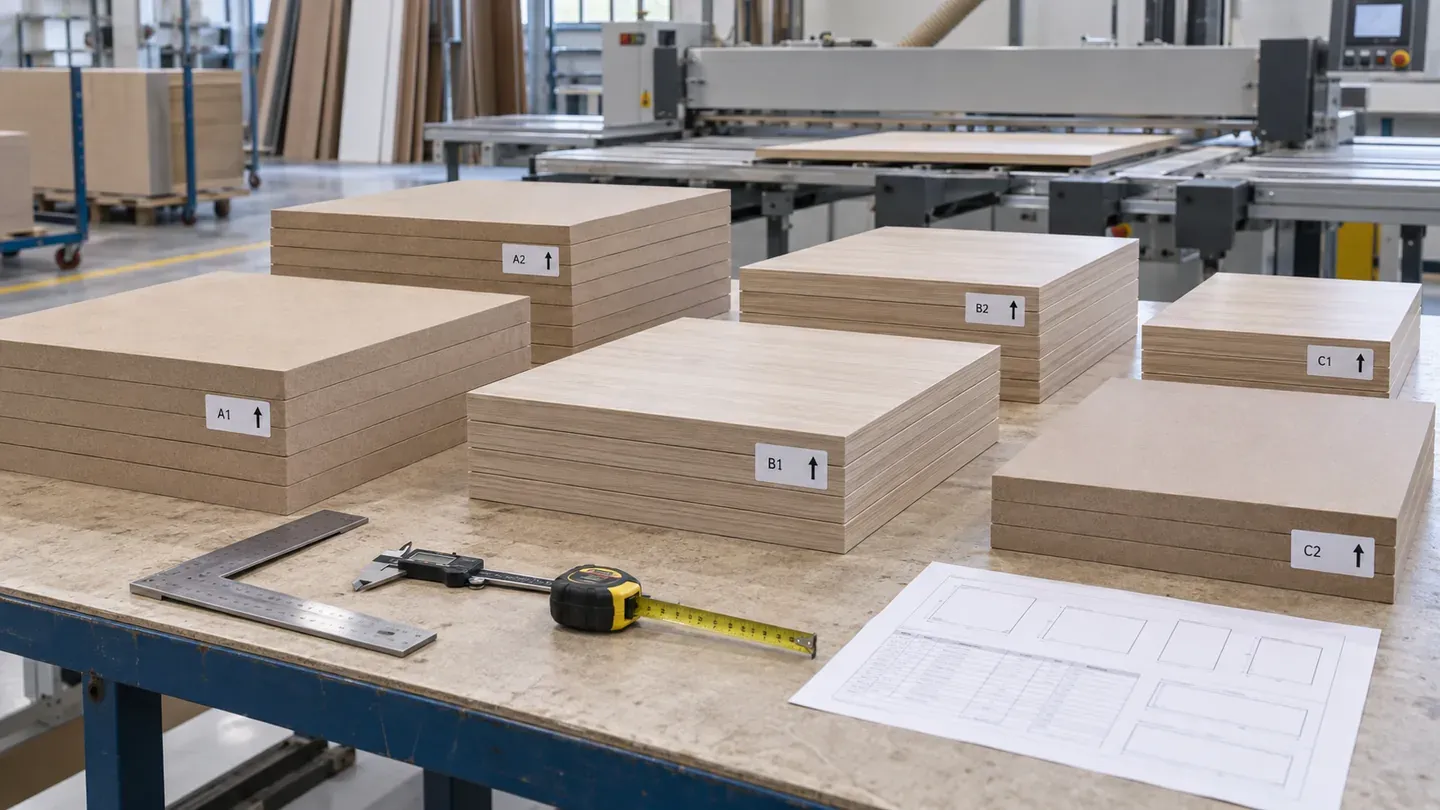
A cut list is most useful when each rectangular MDF part has a clear finished size, quantity and orientation. Add the face, edge treatment and label that your assembly team needs, then agree the dimensional basis.
Read Guide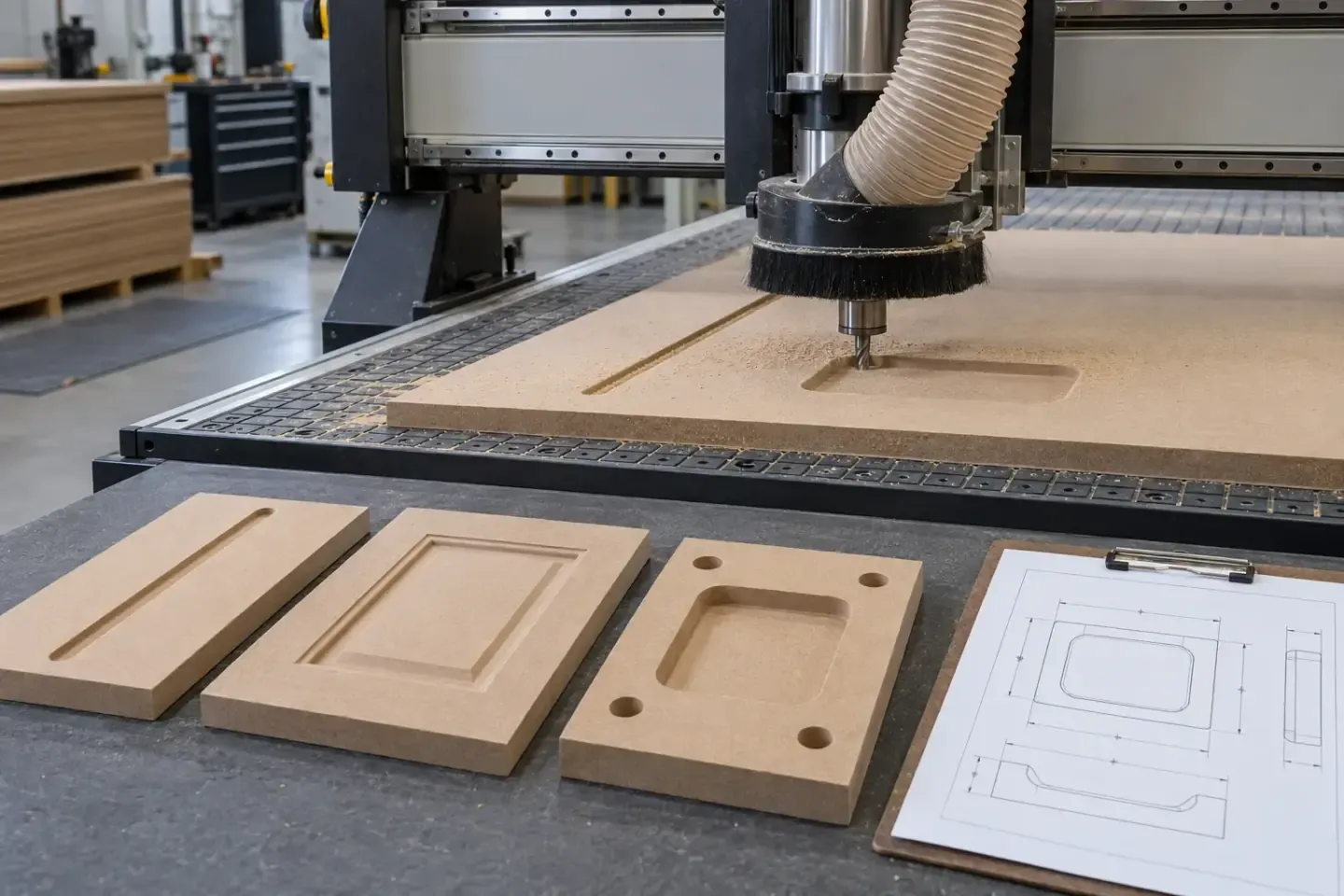
A clear CNC drawing helps your MDF parts arrive with the profiles, holes and orientation your assembly expects. Bring the material specification, file revision, datums and tolerances into one component definition.
Read Guide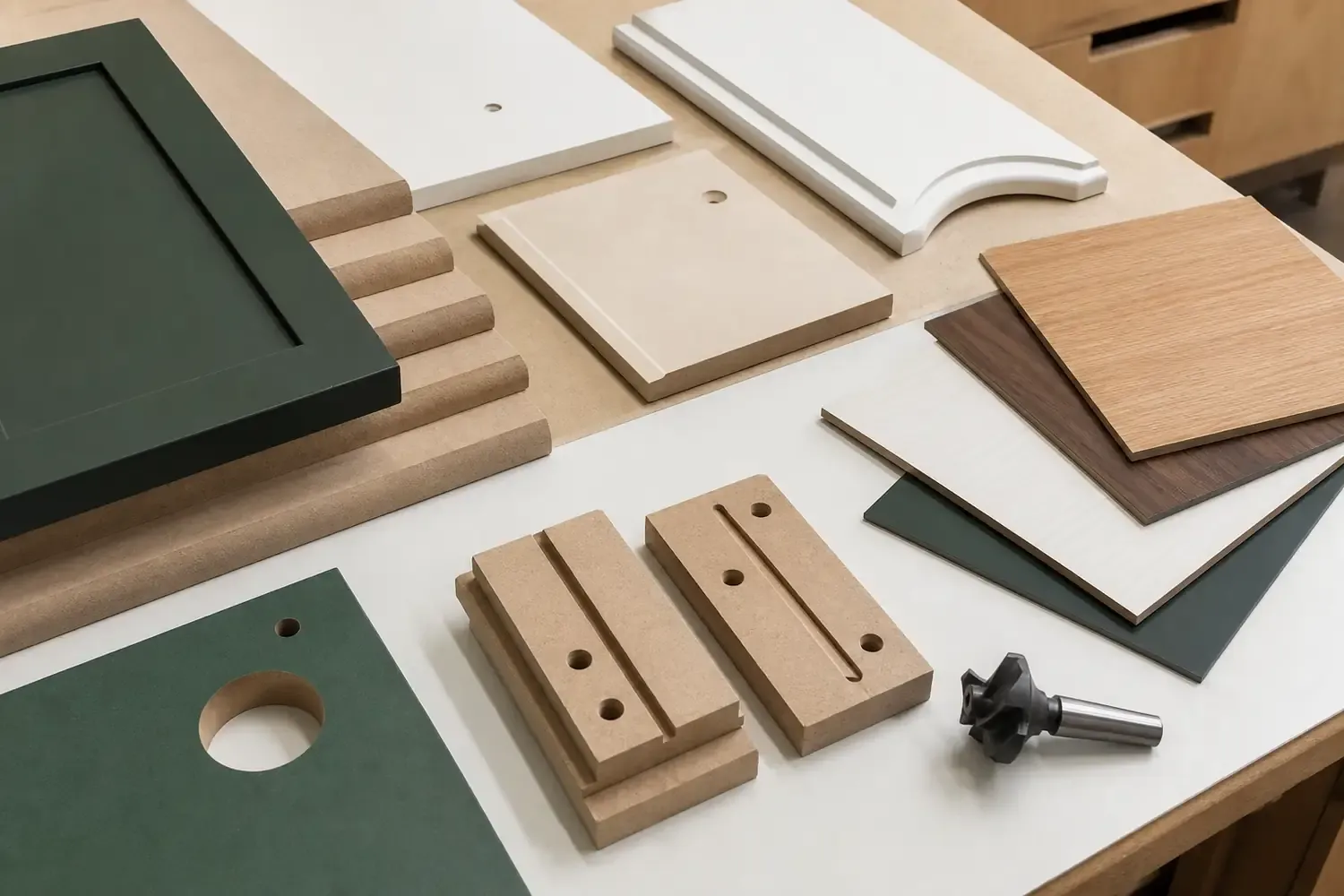
Your MDF surface choice determines the work that remains in your workshop. Raw boards leave the decorative process with you; faced panels bring an agreed finish; prepared components add cutting and machining.
Read Guide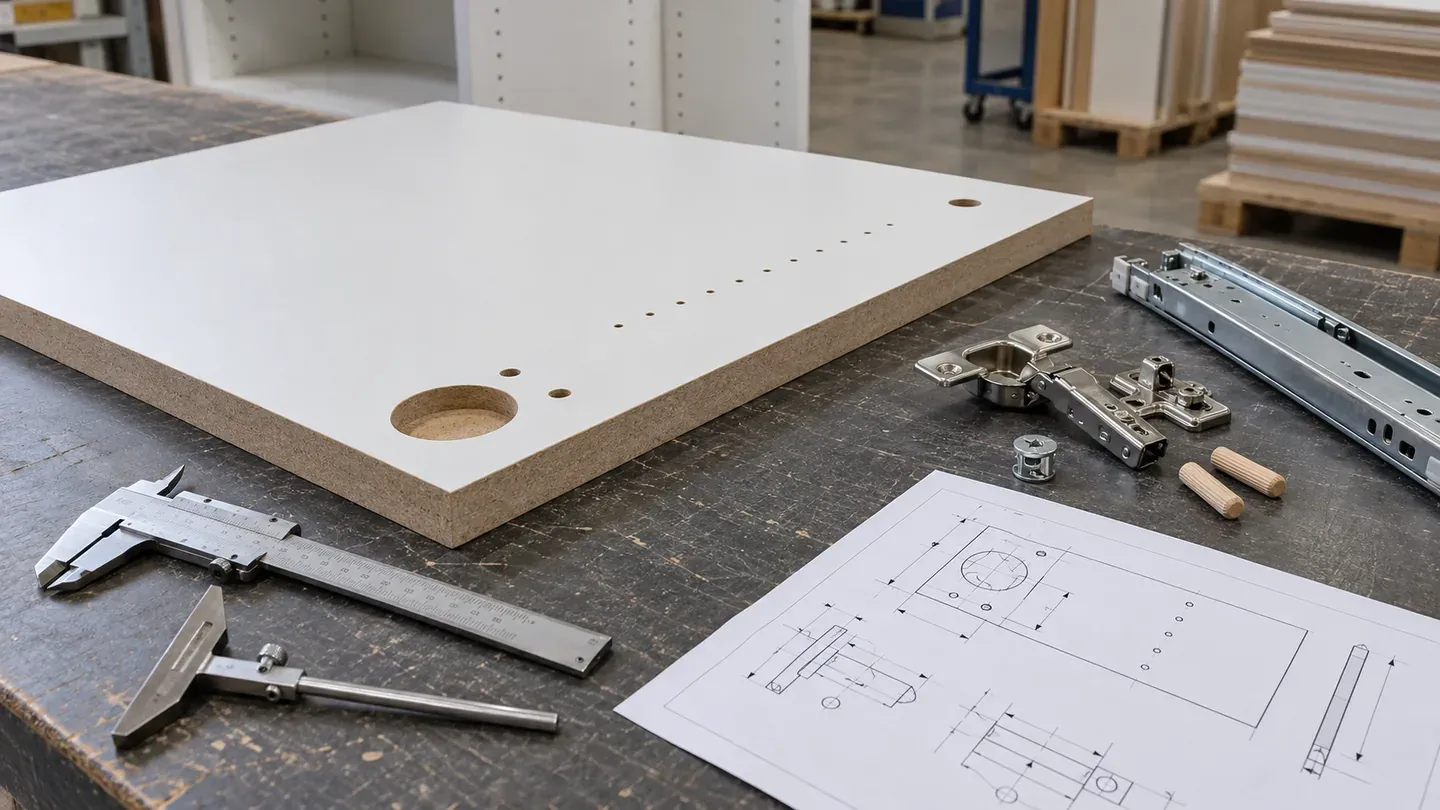
Hinges, runners and connectors fit more reliably when the MDF drawing follows the actual hardware. Define the hole shape, diameter, depth, entry face and datum for every feature, then assemble a representative set.
Read GuideHow should I pack and ship it?
Plan bundle protection, handling, pre-shipment checks and container loading. Work through dimensions, density, packing and shipment timing so the delivery plan matches the product and quantity you order.
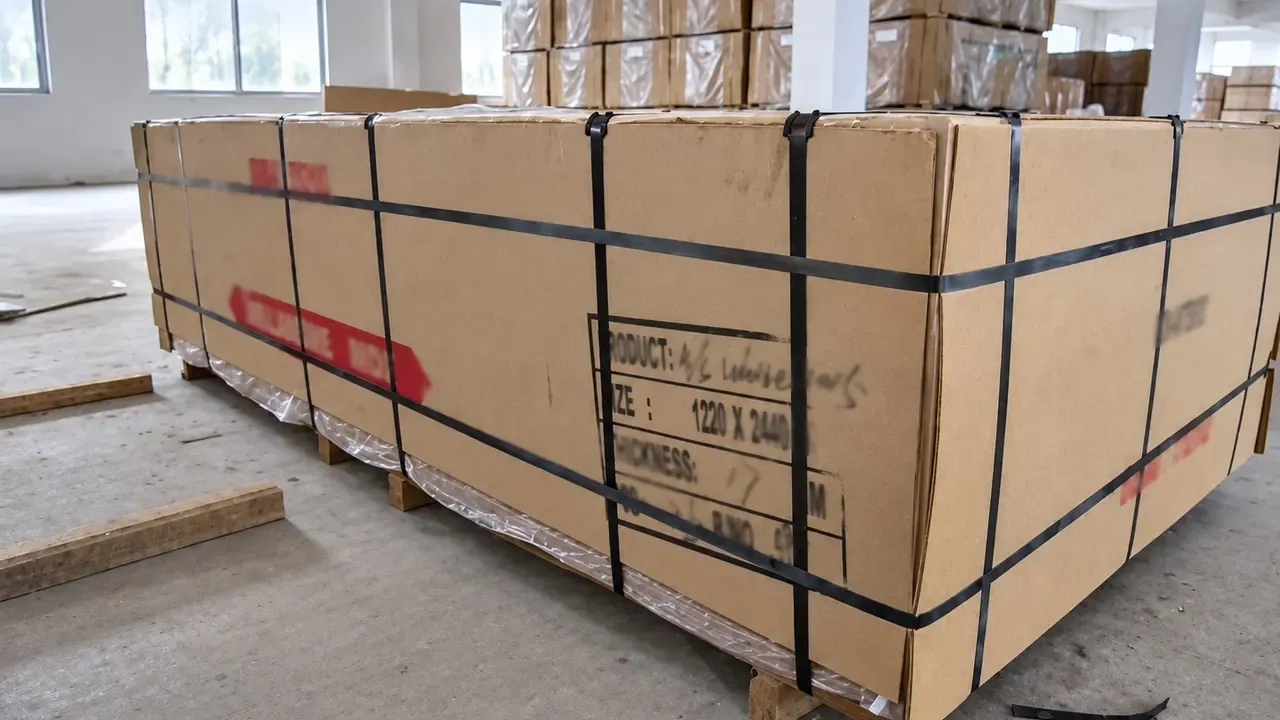
The right MDF pack protects the surfaces you approved and makes unloading easier at the other end. Start with the board or component format, then define separators, edge protection, bundle support and labels.
Read Guide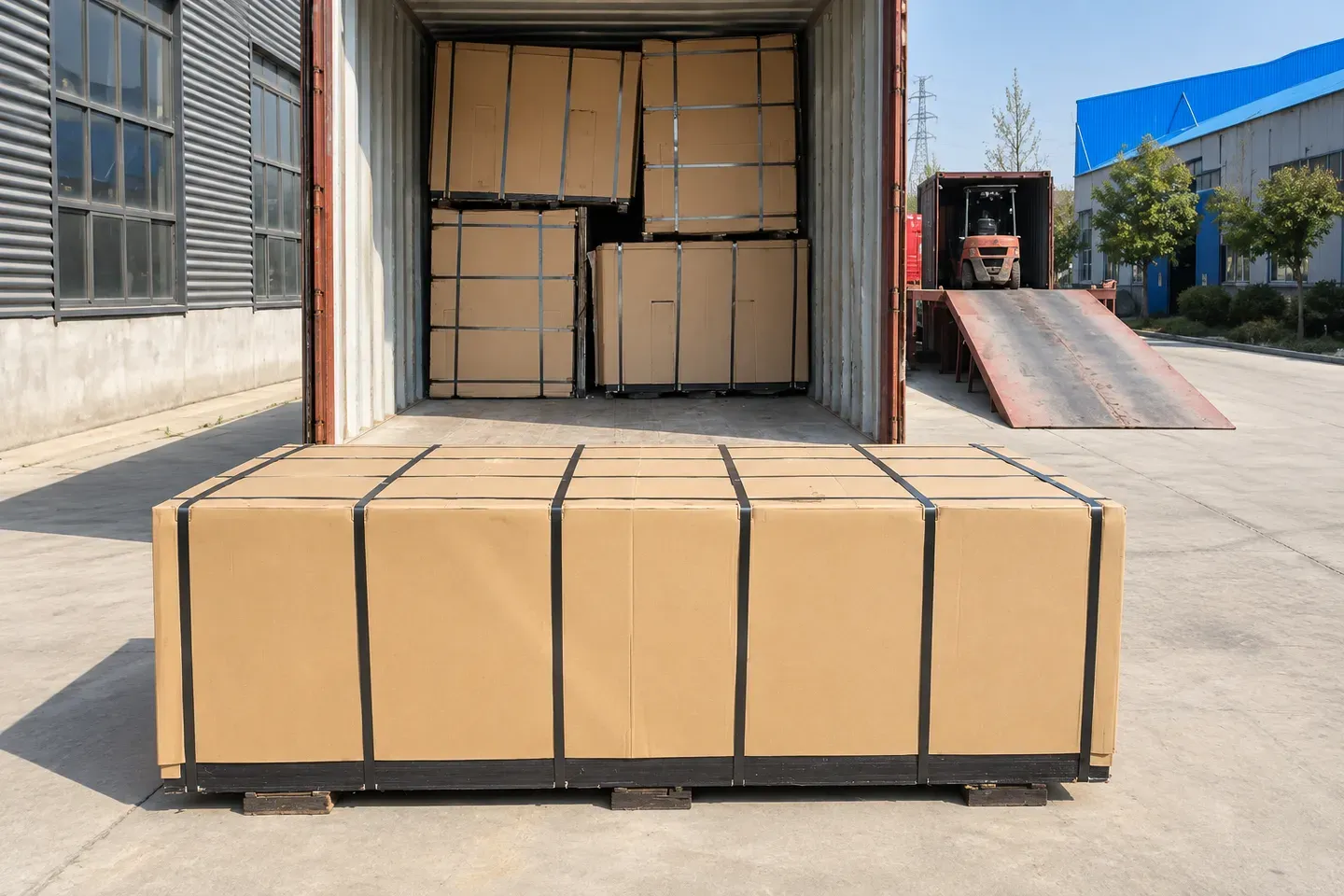
A useful loading plan starts with the packs that will actually be shipped. Confirm their dimensions, quantities, net and gross weights, then match them to the booked container and receiving equipment.
Read Guide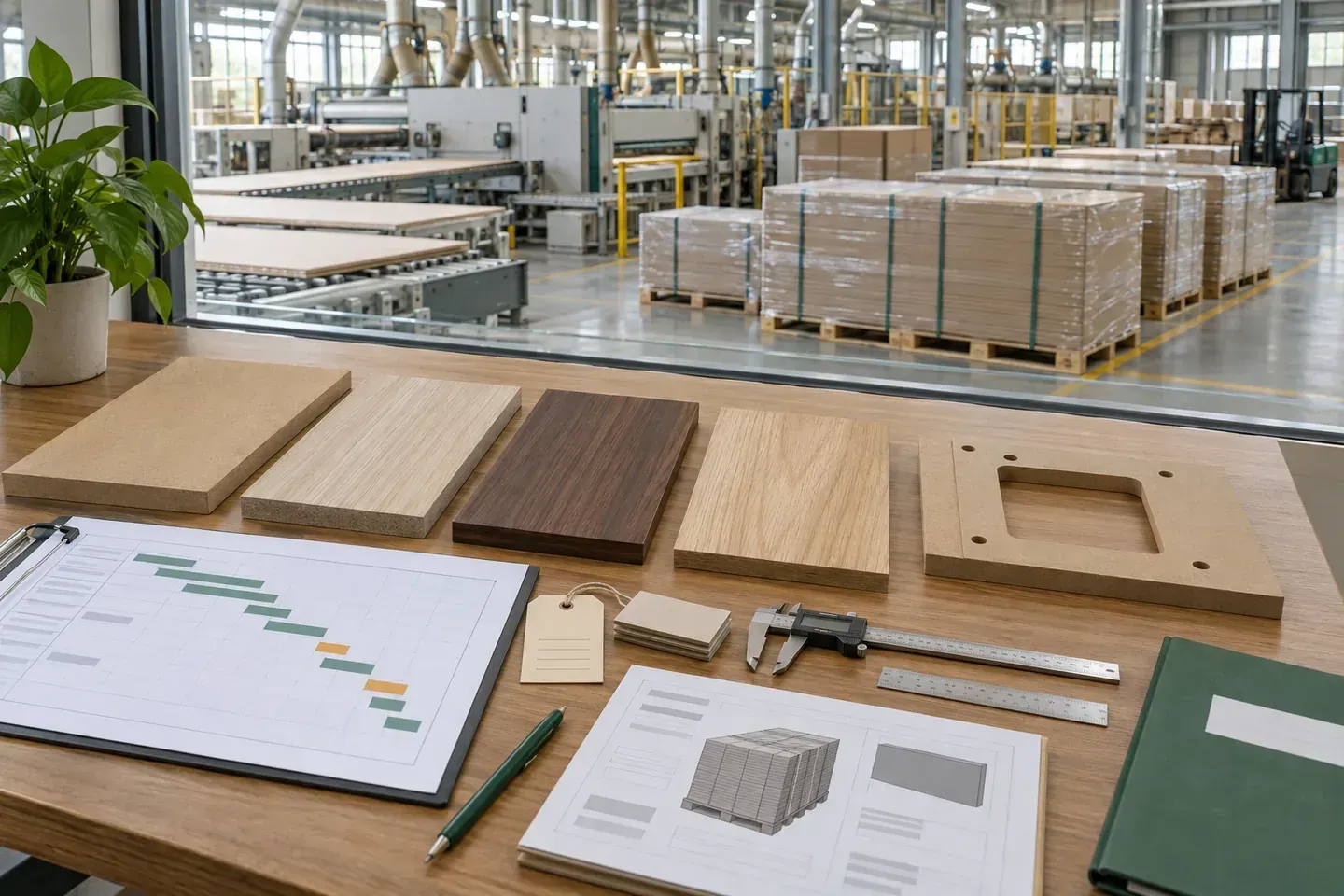
A useful delivery schedule separates production readiness from the journey to your factory. CUZI MDF's normal production lead time is 3–10 days after technical and commercial confirmation.
Read Guide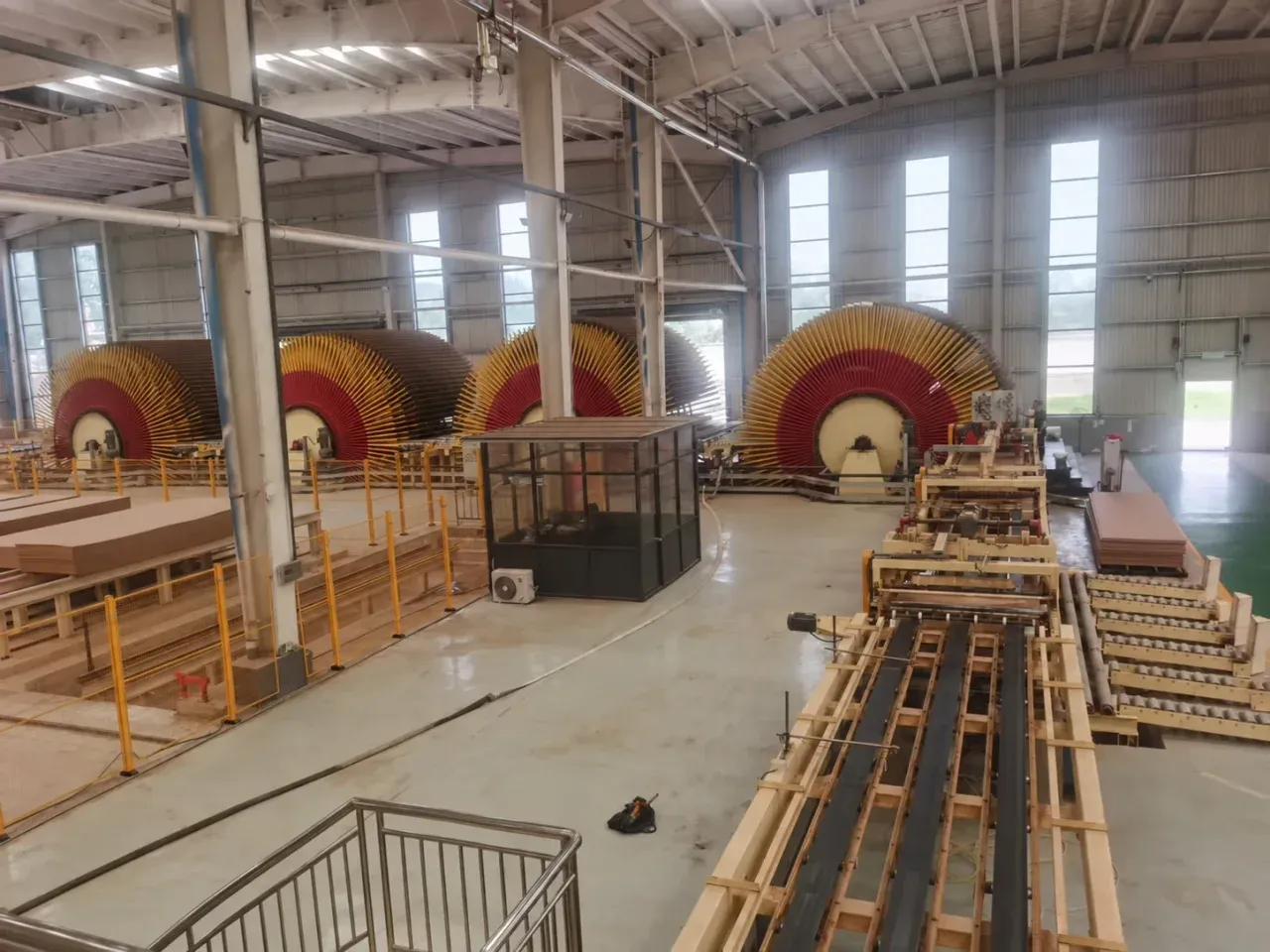
Keep MDF ready for accurate cutting, finishing and assembly. Agree the moisture check, store panels on suitable supports and condition them for the production environment.
Read GuideWhat should my inquiry include?
Prepare an MDF inquiry, compare quotation details and plan sample approval. Explore repeat orders and mixed product requirements, with the specification, quantities, finish and destination ready for discussion with our factory.
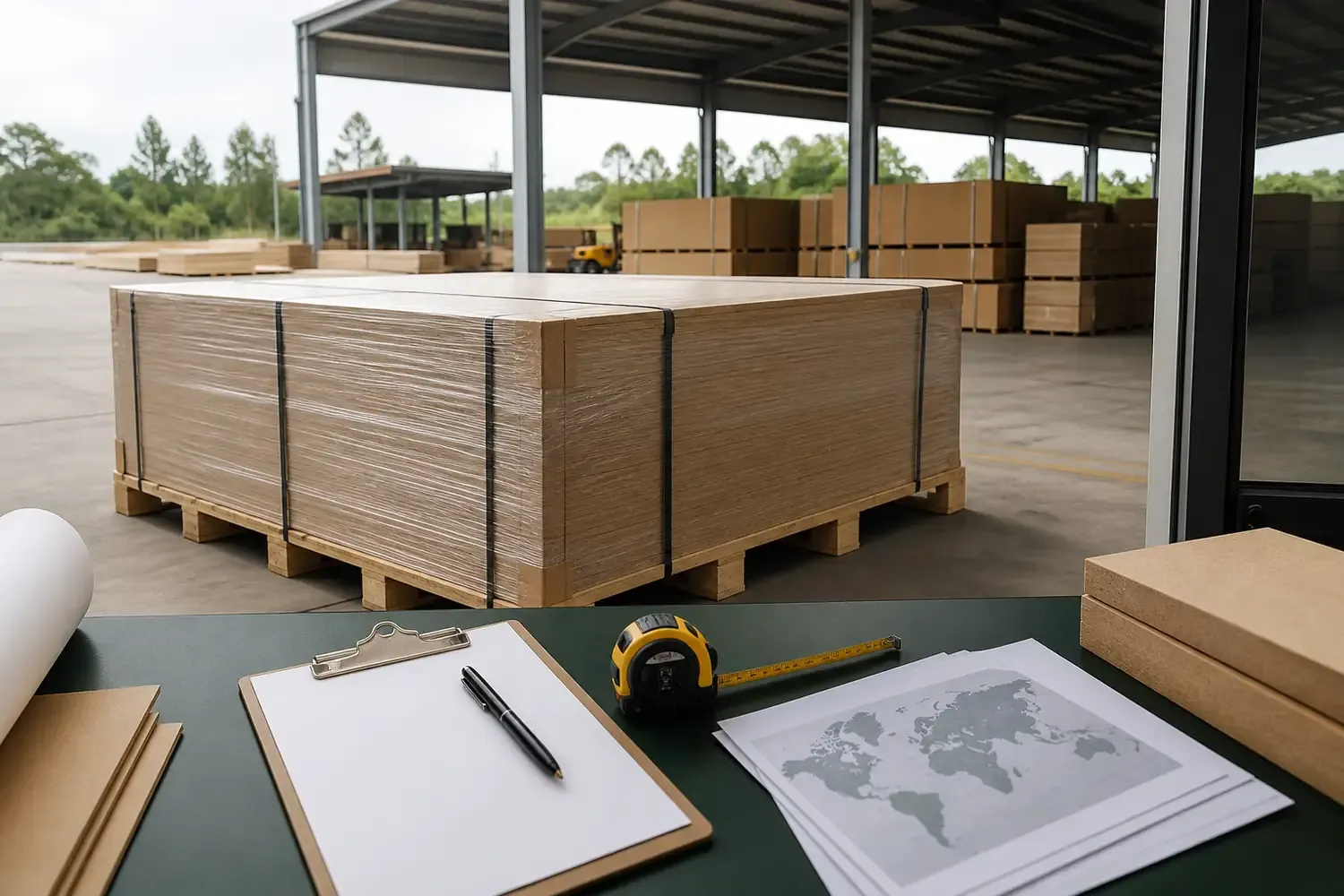
An MDF export order works best when the product, commercial terms and shipment information agree from the start. Buy directly from our factory with a clear board or component specification, then confirm samples, packing, inspection and delivery milestones.
Read Guide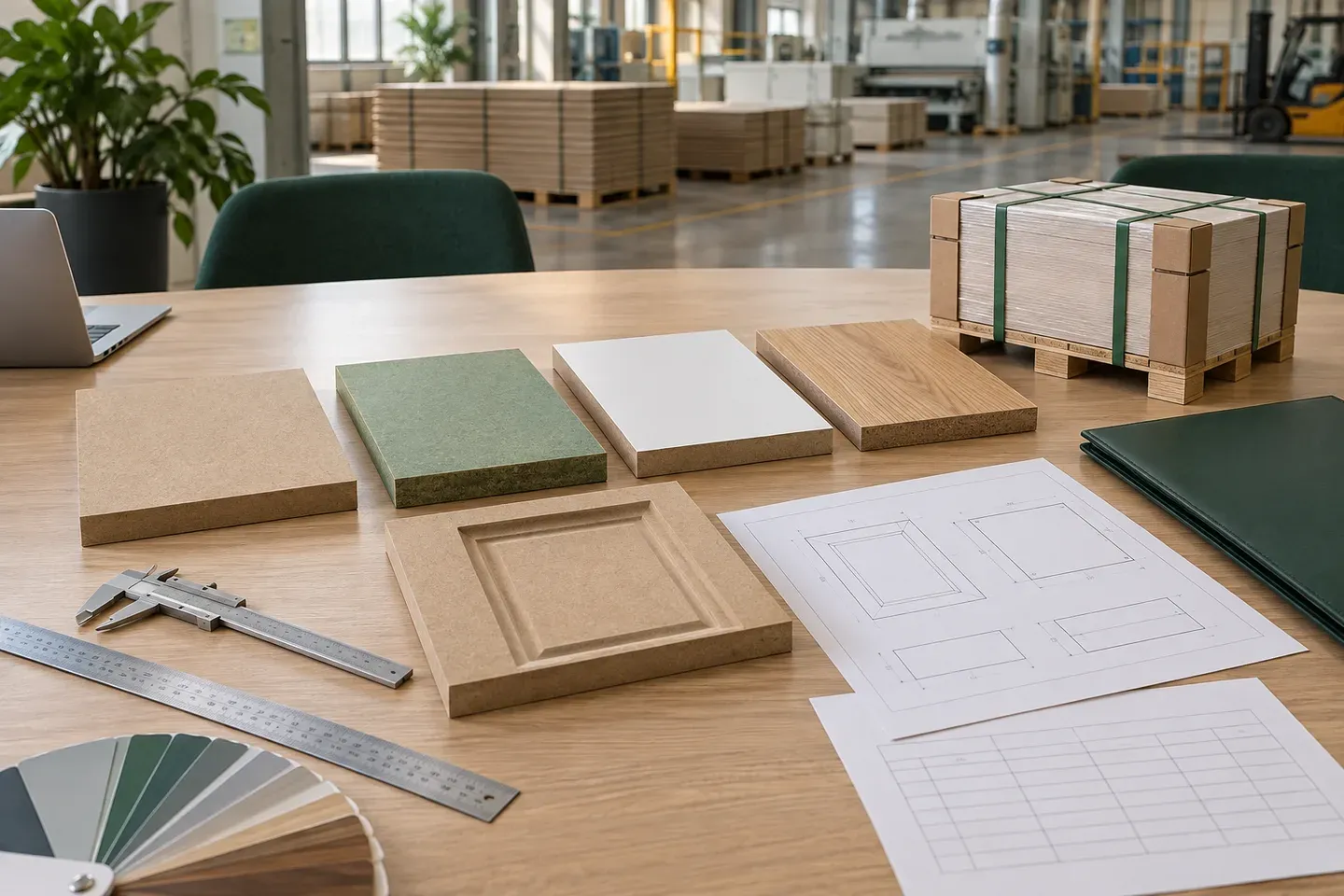
A good MDF RFQ makes your first supplier reply useful. Share what you are making, the boards or components you need, and where the goods will arrive.
Read Guide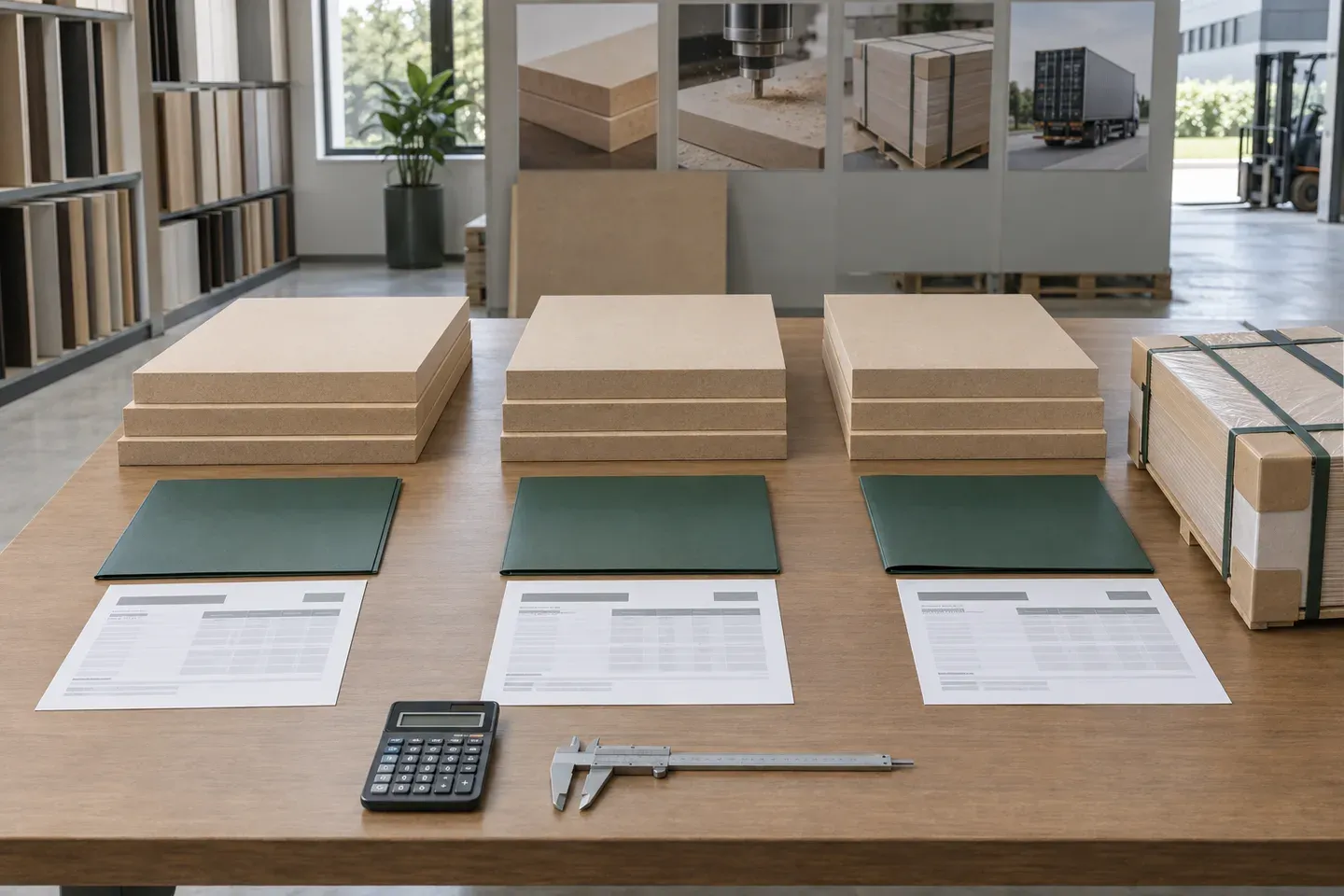
Compare MDF supplier quotations on the same board construction, supplied condition, quantity and delivery point. Convert m³ and sheet prices using the stated dimensions, identify the costs already included in each offer, then add the remaining charges to the same receiving location.
Read Guide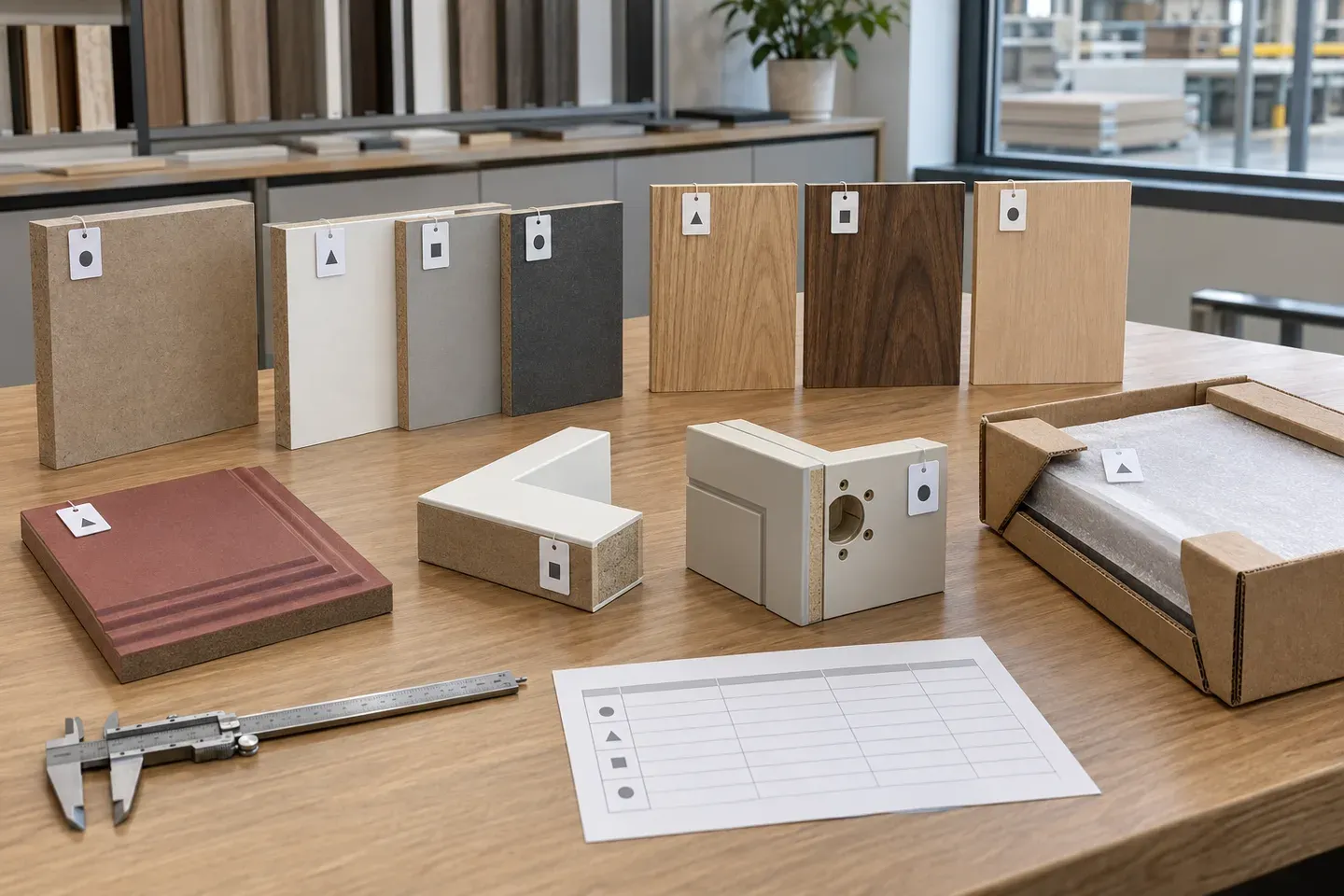
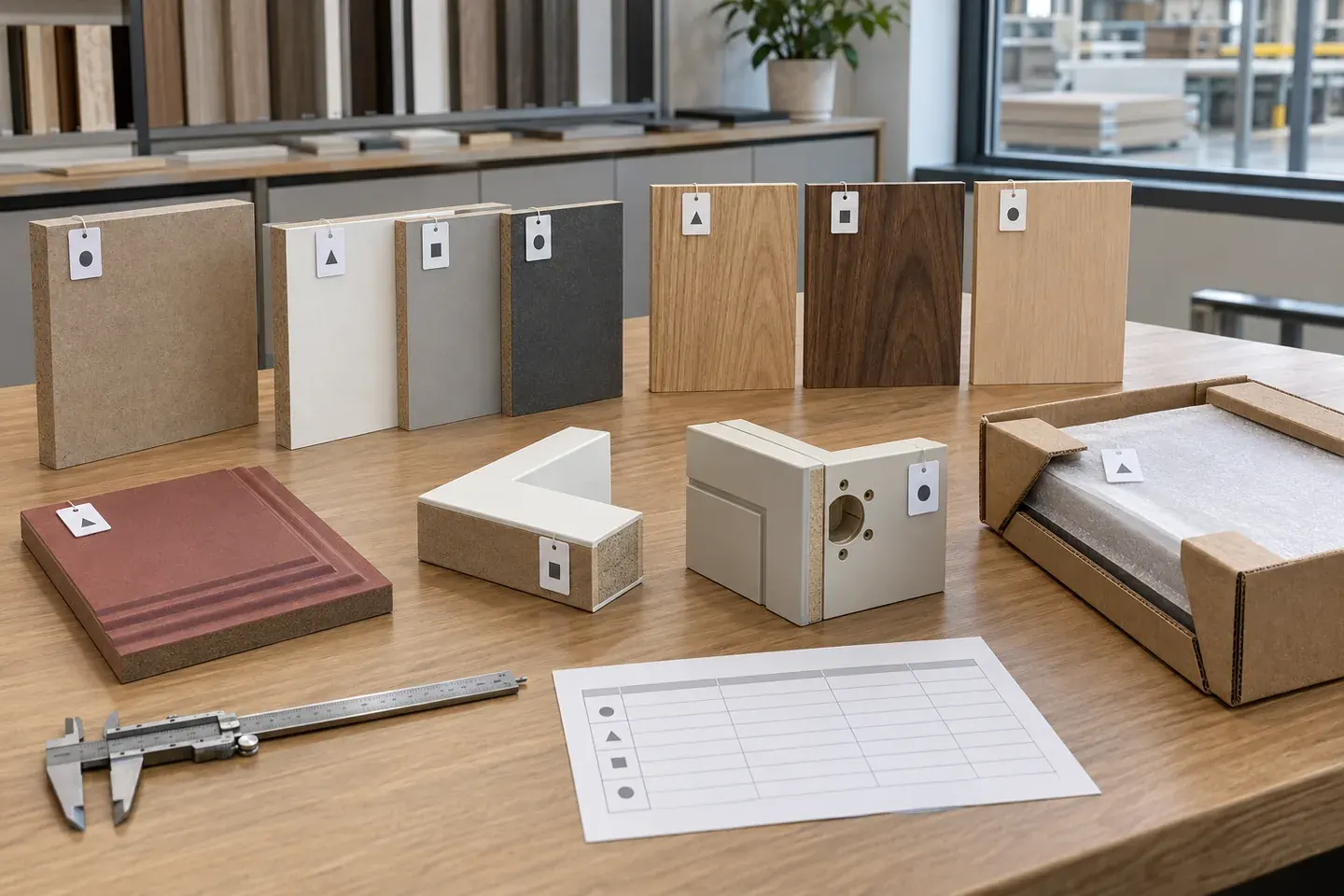
The right MDF sample helps you make the next decision with confidence. A colour swatch selects a direction; a finished corner checks the face and edge; a first component checks machining and fit.
Read GuideTell us what you make, the board or finish you need, quantity and destination. Add a drawing for machined parts. Our sales team replies within 12 hours to help with material selection, samples and a quotation.