Professional Fibreboard Manufacturer & Supplier

Hardboard Sheet Supplier in China

1.5–5 mm hardboard at 810–960 kg/m³ for furniture backing and supported thin components, with face/reverse identification and flat-pack supply from China.

Product focus
Hardboard supply
Buyer review
Grade · size · finish · processing
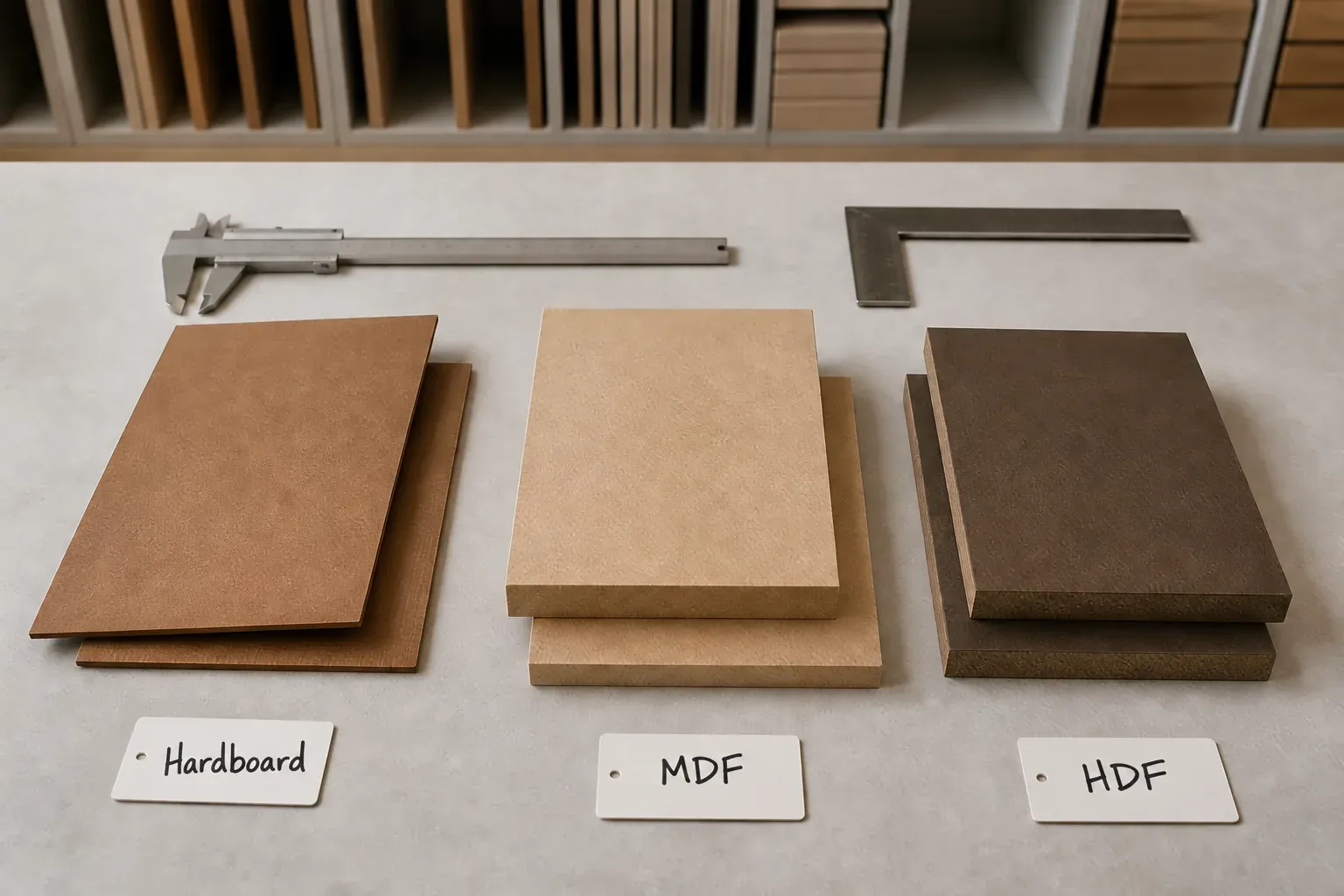
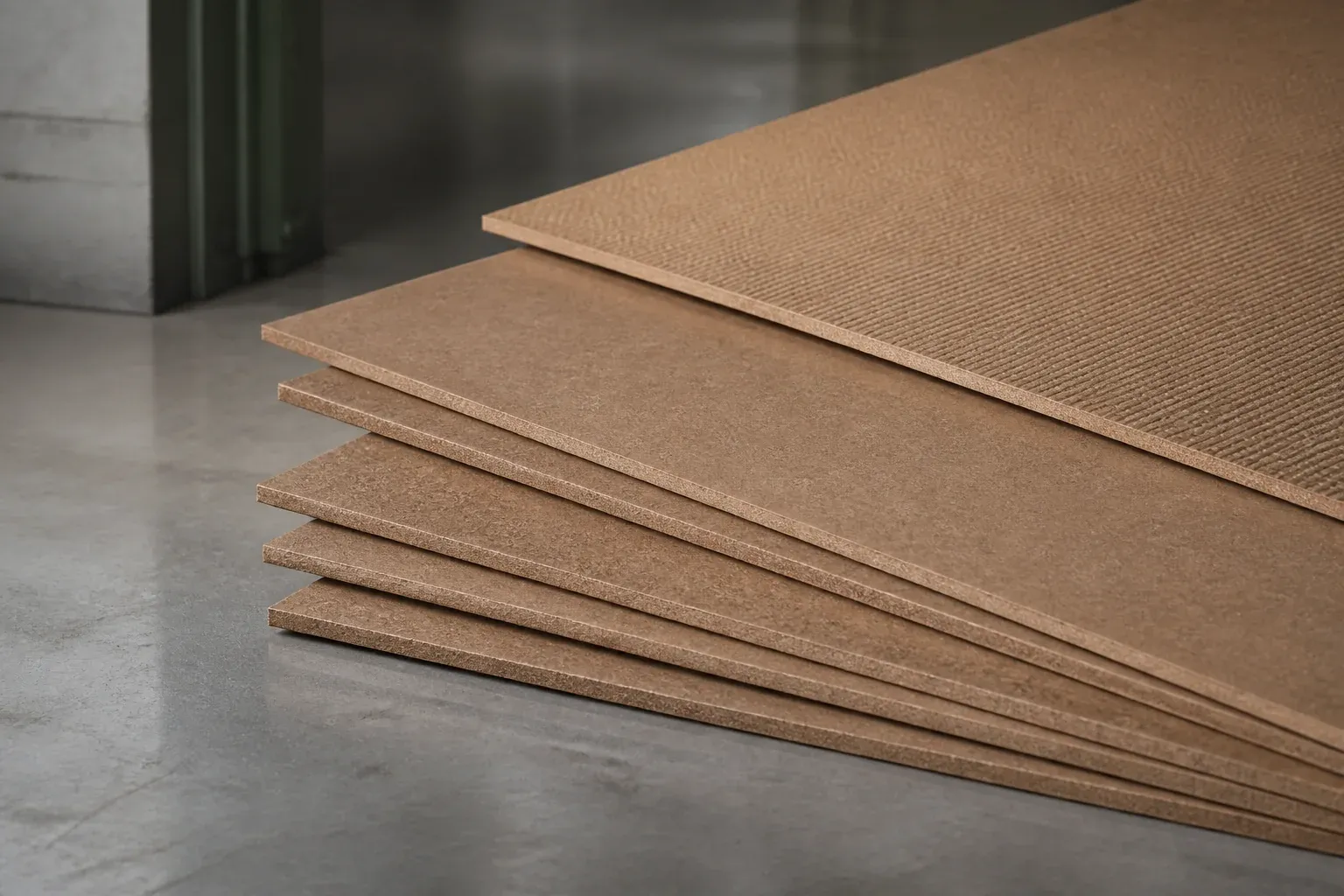
Thin brown hardboard sheets showing a smooth face compressed fibre edge and screen-pattern reverse

Why this panel exists

Hardboard manufactured to confirmed buyer specifications.

This product page covers hardboard sheet and component purchasing. The furniture-backs application guide covers assembly details; the Hardboard vs MDF vs HDF article covers material comparison.

Product introduction

What is Hardboard?

Product definition

What is Hardboard?

Hardboard is a thin, dense fibreboard used for furniture backs, drawer bottoms, framed infill and other supported interior components. The CUZI MDF range is 1.5–5 mm thick at 810–960 kg/m³. Specify the actual face and reverse construction: a smooth visible face and a screen-pattern reverse should be identified separately where supplied. Hardboard is not simply a thinner version of MDF or HDF. The chosen sheet must fit the furniture design, cutting method, groove or rebate and visible finish. CUZI MDF reviews board format, component sizes and export packing from Shuyang, Jiangsu, China against the order.

Buyer advantage

Why choose Hardboard?

Use the hardboard-specific thickness and density range. Select the nominal thickness for the actual supported component. Mark which side faces the cabinet interior or visible drawer surface. Check the supplied texture before approving printing, coating or laminating.

Application fit

Applications

Relevant application discussions include wardrobes, hardboard for furniture backs and drawer bottoms, furniture components. Final product suitability must be reviewed against the buyer's actual application and confirmed specification.

Supply support

Why choose CUZI MDF?

CUZI MDF reviews the fibreboard product type, dimensions, processing, quantity, packaging needs and destination before confirming an order-specific supply option.

Product USP

Why Buyers Choose Hardboard

The purchasing priorities below connect Hardboard with specification, processing and order requirements.

Dedicated hardboard range

Use the hardboard-specific thickness and density range. Select the nominal thickness for the actual supported component.

Face and reverse identified

Mark which side faces the cabinet interior or visible drawer surface. Check the supplied texture before approving printing, coating or laminating.

Cut-component and assembly fit

Confirm finished length and width, squareness, groove fit, hole positions and support arrangement on the first component.

Flat packing for thin sheets

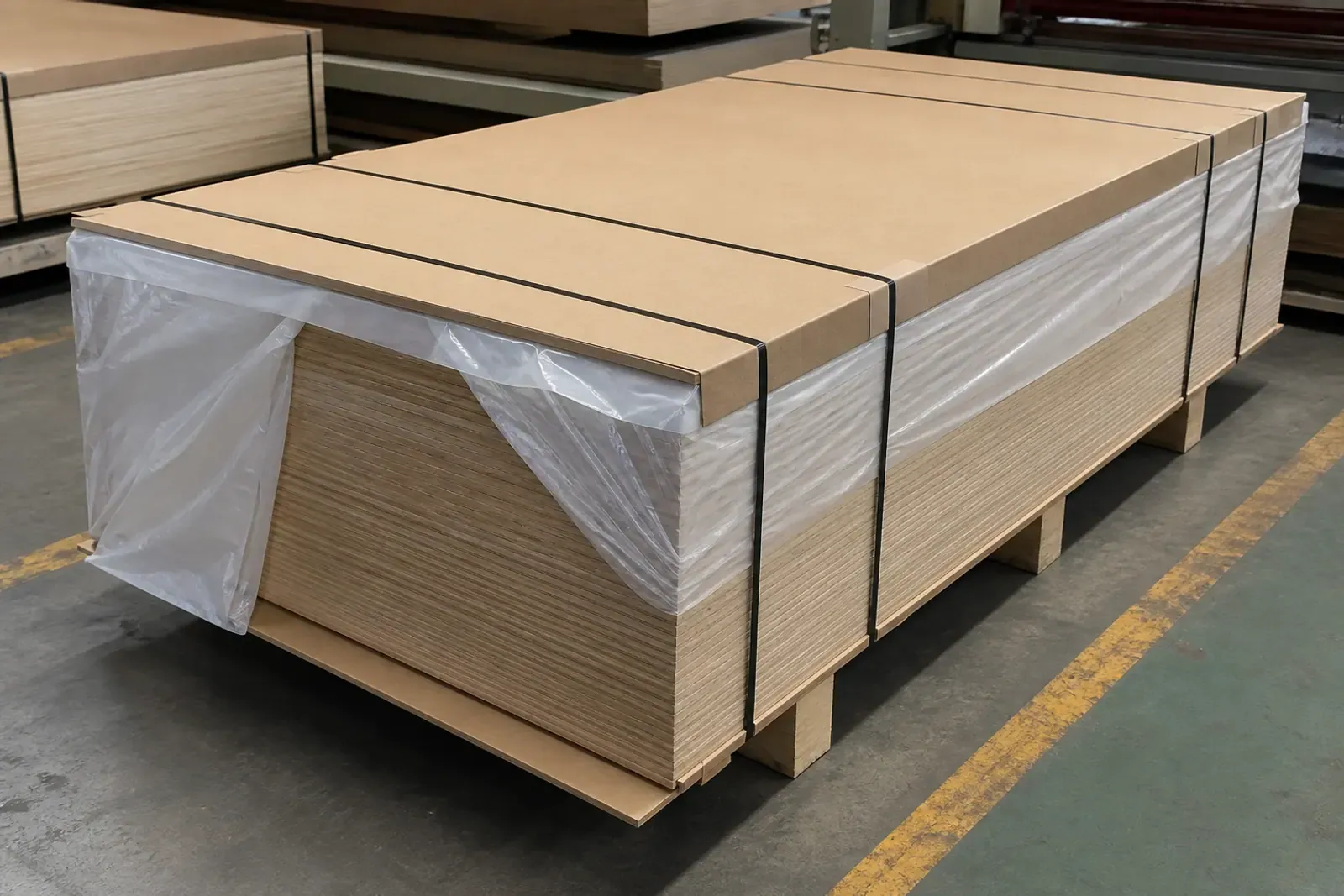
Use continuous support, protected corners and dry covered handling to limit bending and edge damage through transport.

Buyer problems solved

Hardboard Purchasing Checklist

Wrong material ordered under a generic fibreboard name

A quote stating only high-density board can describe a different construction. Identify Hardboard, actual thickness, density, face and reverse before comparing suppliers.

Nominal thickness does not fit the assembly groove

The component and groove need a coordinated tolerance and fit check. Use hardboard-specific tolerances and verify the nominal size in the existing furniture part.

Screen-pattern reverse becomes the visible face

Record orientation in the drawing and part label. A face swap can change appearance and the downstream coating or adhesive contact surface.

Thin components lack support

A drawer bottom or back is part of a complete assembly. Establish the load rating from the thickness, density, support arrangement, furniture design and applicable testing.

Why choose CUZI MDF

Fibreboard manufacturing, customization, inspection and international supply.

CUZI MDF reviews different fibreboard grades and specifications for furniture factories, distributors and international B2B buyers.

Professional fibreboard manufacturing

CUZI MDF focuses on fibreboard manufacturing and specification-led supply for international B2B buyers.

Customized fibreboard review

Thickness, size, surface, processing and packaging requirements are reviewed against the requested product and order.

Quality and document control

Quoted technical values are matched to the selected product, current test reports and the written order specification.

International supply planning

Order planning covers confirmed specification, quantity, packaging needs, destination and shipment coordination.

Technical specification

Hardboard Specifications

CUZI MDF supplies standard and customized specifications for furniture factories, distributors and project orders.

Thickness1.5–5 mm
SizeHardboard full-sheet formats are confirmed separately. Finished component dimensions follow the approved cut list, assembly fit and order-specific tolerance.
DensityCUZI MDF Hardboard density range: 810–960 kg/m³.
GlueThe bonding system follows the selected product grade and construction.
Formaldehyde gradeThe emission class is specified for the selected product and destination requirement.
Surfaceraw brown hardboard with the ordered smooth-face and reverse-face construction, or another confirmed coated, laminated or finished option controlled by physical sample
Construction and intended useMoisture data and relevance depend on the proposed substrate, construction and method. The written quotation confirms CUZI MDF availability, construction, technical values and applicable documents for the proposed order.

All product options, processing, packaging and timing remain subject to confirmation against the final specification, quantity, production schedule and destination.

Indicative export pricing

A practical starting range for quotation planning.

US$170–320 per m³

Availability
Available to order
Specification review
5.0/5.0

Custom specifications determine the final price.

This price range is an indicative export reference for configurable B2B orders, not a fixed or binding offer. Final unit pricing is confirmed in a written quotation.

  • Product grade, thickness, density and board size
  • Surface construction, color, processing and packaging
  • Order quantity, payment terms and production scheduling
  • Incoterm, destination, freight and document requirements

Technical specification completeness review

The product page states the principal board or component specification, configurable order factors, indicative price basis and quotation requirements needed for an initial B2B purchasing review.

Reviewed by CUZI MDF Product & Technical Team.

Request an exact quotation

Features

Specify what matters on the factory floor.

Thickness and density

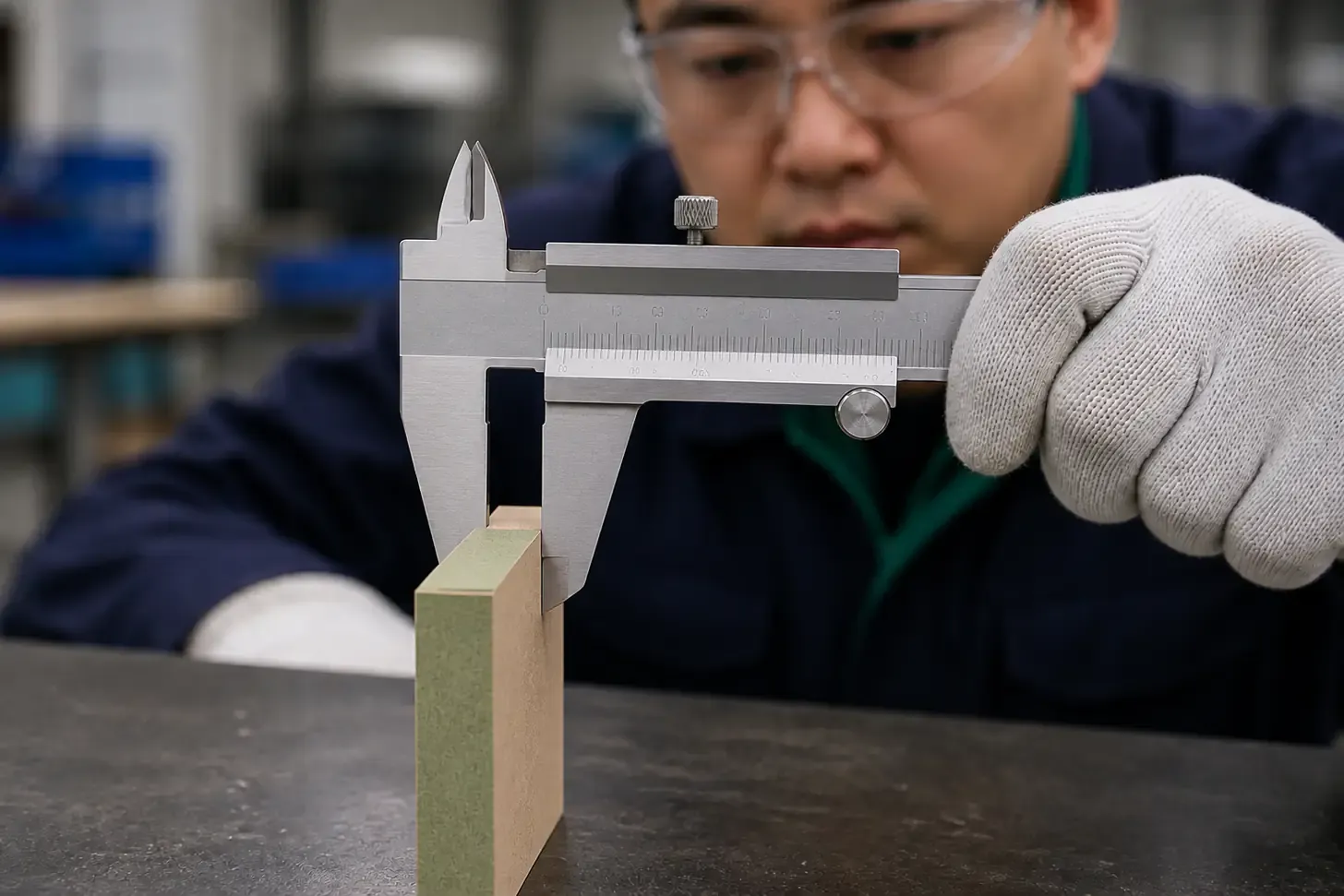
The current hardboard range is 1.5–5 mm and 810–960 kg/m³. Confirm the exact ordered values, measuring method and tolerance in the specification.

Weight for handling estimates

For illustration, a 3 mm component measuring 600 × 400 mm at 810–960 kg/m³ weighs approximately 0.58–0.69 kg before finish and packaging. Calculation: length × width × thickness in metres × density. This example is not an available full-sheet format or a measured shipment weight.

Cutting and edge trial

Use a supported cutting trial to check edge breakout, finished size and squareness. Review punching or drilling on the actual sheet where the assembly needs holes.

Surface-process trial

Test the ordered face with the intended coating, printing or lamination system. Smooth appearance alone does not define adhesive compatibility or the preparation sequence.

Packing and receiving

Specify sheet or part quantities, stack support, wrapping, edge/corner protection and bundle identification. At receipt, compare labels, count, visible condition and sample dimensions with the order.

Moisture-content range

Moisture data and relevance depend on the proposed substrate, construction and method. The written quotation confirms CUZI MDF availability, construction, technical values and applicable documents for the proposed order.

Processing notes

Review sheet cutting, scoring or sawing, punching, drilling, edge preparation, coating or laminating trials, component identification and flat supported packing using controlled specifications and samples where required.

Applications

Applications of Hardboard

MDF for Wardrobes

Select wardrobe MDF separately for each component and its finished use. Carcass sides, long shelves, hinged or sliding doors, drawers and backs need separate dimensions, surfaces, support, hardware, finished-weight checks and cabinet-set packing.

Explore application

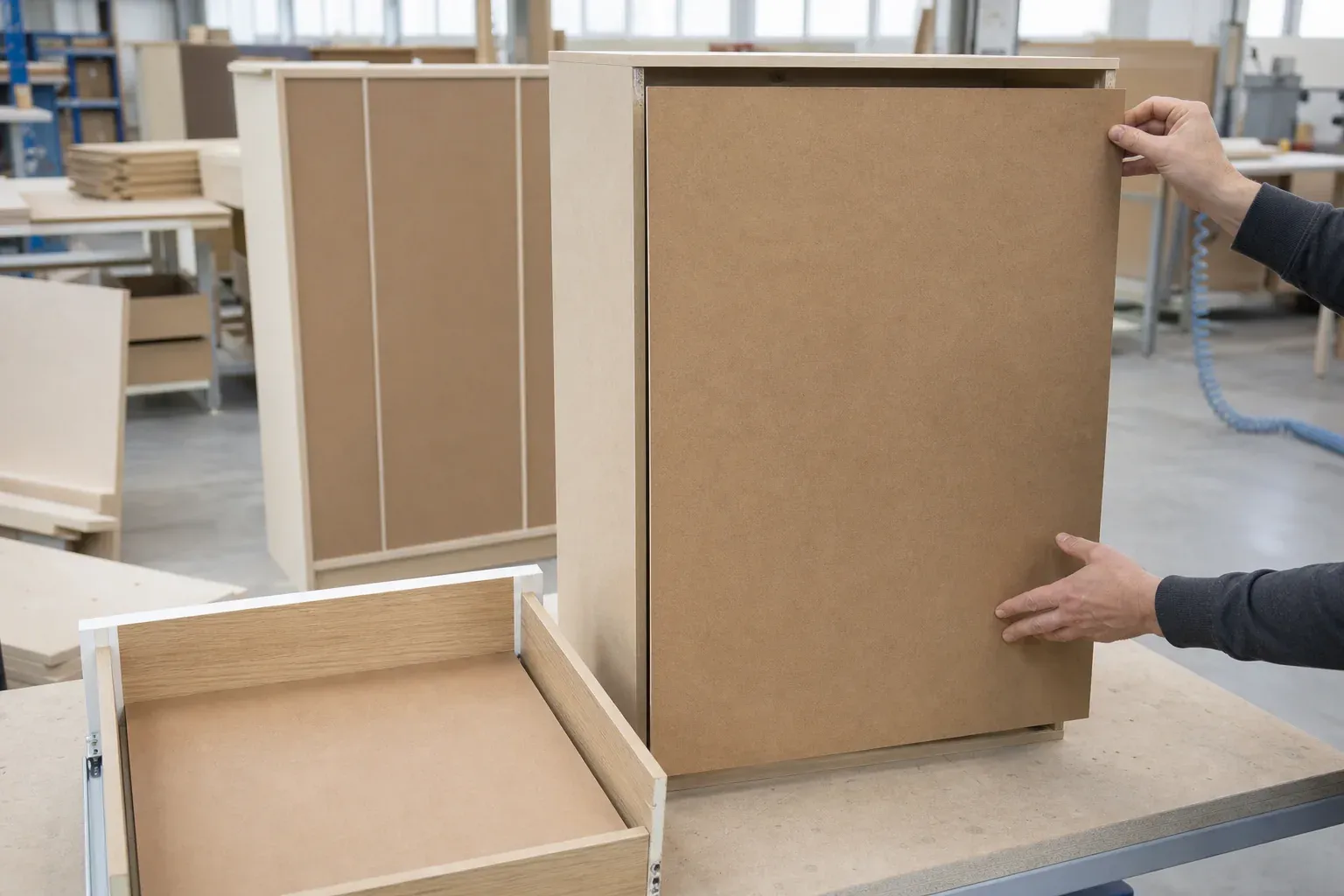
Hardboard for Furniture Backs and Drawer Bottoms

Hardboard backs and drawer bottoms are thin, supported furniture parts. Specify assembly fit, visible-face orientation and support before choosing a nominal sheet thickness.

Explore application

MDF Furniture Components

MDF furniture-component sourcing translates a bill of materials into repeat cut, drilled, routed or faced parts. The buying decision centres on consistent part identity, fit and assembly-ready delivery.

Explore application

Buyer guides

Continue the Hardboard purchasing review.

These guides explain the next specification, application and procurement decisions connected to this product.

What Is MDF Board? Material, Manufacturing and Uses

Understand what medium density fiberboard is, how MDF is made and which product, processing and application details buyers should compare.

Explore application

Hardboard Sheet Buying Guide: Product, Faces, Processing and Packing

A hardboard RFQ should identify hardboard as the product and define thickness, density, full-sheet or component dimensions, face and reverse construction, processing, finish, quantity, packing and destination in one schedule.

Explore application

Hardboard for Furniture Backs: Fit, Face Orientation and Support

Specify a hardboard back or drawer bottom as part of the furniture assembly. Component dimensions, face orientation, groove or fixing interface, support, exposure, finish, trial fit and flat packing determine the delivered part.

Explore application

Hardboard vs MDF vs HDF: Which Fibreboard Fits the Component?

Hardboard, MDF and HDF are separate fibreboard purchasing categories. Choose between them through the component thickness, face and reverse construction, support, machining, finish and packing requirements; density is one comparison value within that complete specification.

Explore application

Customization capability

Customized Hardboard Supply

Send the required dimensions, surface, processing drawings, packaging and destination. CUZI MDF confirms production feasibility before issuing a quotation.

Sheet and part sizes

Send required full-sheet size or a finished cut list. Confirm hardboard format availability from current hardboard-specific supply data.

Face and finish

Define smooth face, reverse texture, visible orientation and any separately confirmed coated or laminated construction.

Assembly sample

Provide groove/rebate dimensions, support detail and any holes. Trial the first component in the actual furniture assembly.

Export quantity and handling

Provide quantity by thickness/part, pack limits, unloading method and destination so supply timing and freight can be quoted.

Packaging options

Use clean separators, face/edge/corner protection, supported packs, identification and destination-appropriate wrapping.

Purchasing / RFQ guidance

Provide application, construction, dimensions, surface, processing, quantity, packaging, destination, timing and required documents.

Manufacturing capability

CUZI MDF Manufacturing Capability

Fibreboard production capability

Production planning begins after the product specification and commercial requirements are confirmed.

Quality management

Applicable checks are aligned with the confirmed fibreboard product, dimensions, surface, processing and other agreed criteria.

Customized manufacturing

CUZI MDF reviews grade, dimensions, surface, CNC processing and packaging requirements before confirming production.

Packaging and supply

Packaging and timing are confirmed against the final product, quantity, production schedule and destination.

Production workflow

CUZI MDF Manufacturing Process

The production workflow connects the confirmed product specification with panel manufacturing, inspection and export-oriented packaging.

Confirm specification

Review product type, dimensions, surface, processing, quantity and destination.

Plan production

Translate the approved order requirements into the applicable production and handling plan.

Inspect and prepare

Review the finished order against agreed requirements before packaging and shipment preparation.

Buyer FAQ

Questions buyers ask before specifying Hardboard.

Is hardboard the same as thin MDF or HDF?

No. Order the identified product construction, thickness, density and face/reverse condition. Similar thickness or density does not make the surfaces, processing or assembly behaviour interchangeable. Compare an actual sample where replacing an existing material.

Which hardboard face should be visible?

Use the specified smooth face for the visible side when that is the chosen construction. Identify any screen-pattern reverse on drawings and labels. For coating or laminating, trial the actual contact face and process for each side used.

Can the standard MDF board sizes be ordered for hardboard?

Hardboard formats must be confirmed separately. Send the required full-sheet size or finished component list, quantity and cutting plan. The MDF format catalogue is not a hardboard availability list.

How should hardboard drawer bottoms be specified?

State finished dimensions and thickness, groove or rebate fit, support arrangement, face orientation and intended drawer use. Select thickness by evaluating the assembled drawer against the responsible designer’s requirements and applicable test reports.

How should buyers compare hardboard quotes?

Compare the same thickness, density range, full-sheet or cut-part dimensions, face/reverse texture, finish, tolerances, quantity and packing. Confirm MOQ, lead time and delivery terms for the actual hardboard order.

What should be checked before shipment?

Confirm labels and quantities, sheet or component dimensions, face/reverse orientation, visible surface and edge condition, and the agreed flatness and packing checks. Keep records against the approved order and sample.

Are the ranges on this page confirmed for every order?

No. Product-specific availability and values are confirmed against the proposed order.

What should the purchasing RFQ include?

Provide application, construction, dimensions, surface, processing, quantity, packaging, destination, timing and required documents.

Specification to quotation

Request a Hardboard Quotation

Send your target grade, dimensions, quantity, surface or processing requirements and destination. CUZI MDF will review the specification and provide quotation support for the confirmed requirement.

  • Target grade or test standard
  • Thickness, size, density and quantity
  • Surface, CNC and packaging requirements
  • Destination and requested timing

By submitting this business inquiry, you acknowledge how CUZI MDF handles the information described in our Privacy Policy.