Professional MDF Manufacturer & Supplier

Veneered MDF Manufacturer in China

Veneered MDF supplied from Shuyang, China for furniture and interior orders requiring a real wood surface over a specified MDF core.

Product focus
Veneered MDF supply
Buyer review
Grade · size · finish · processing
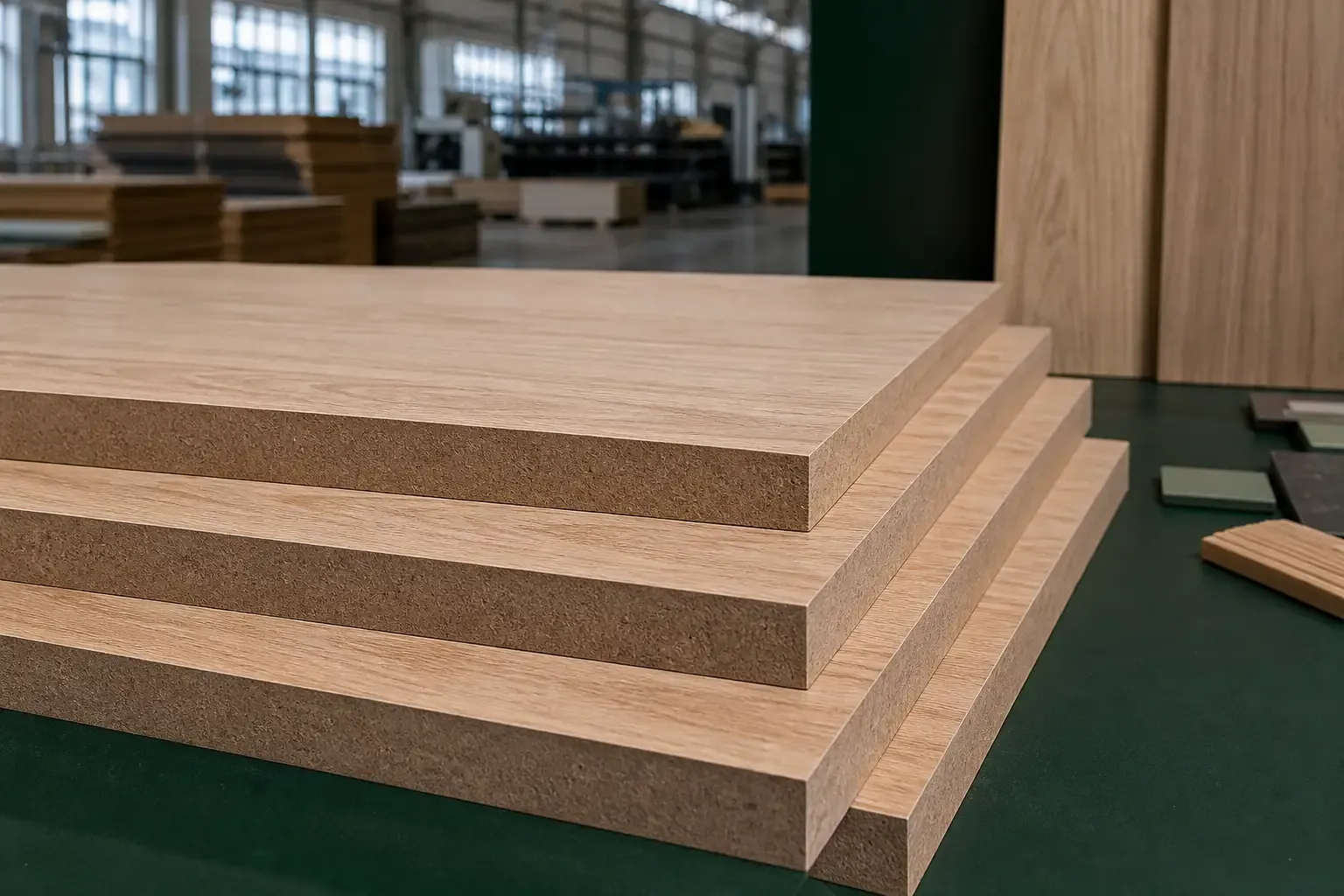
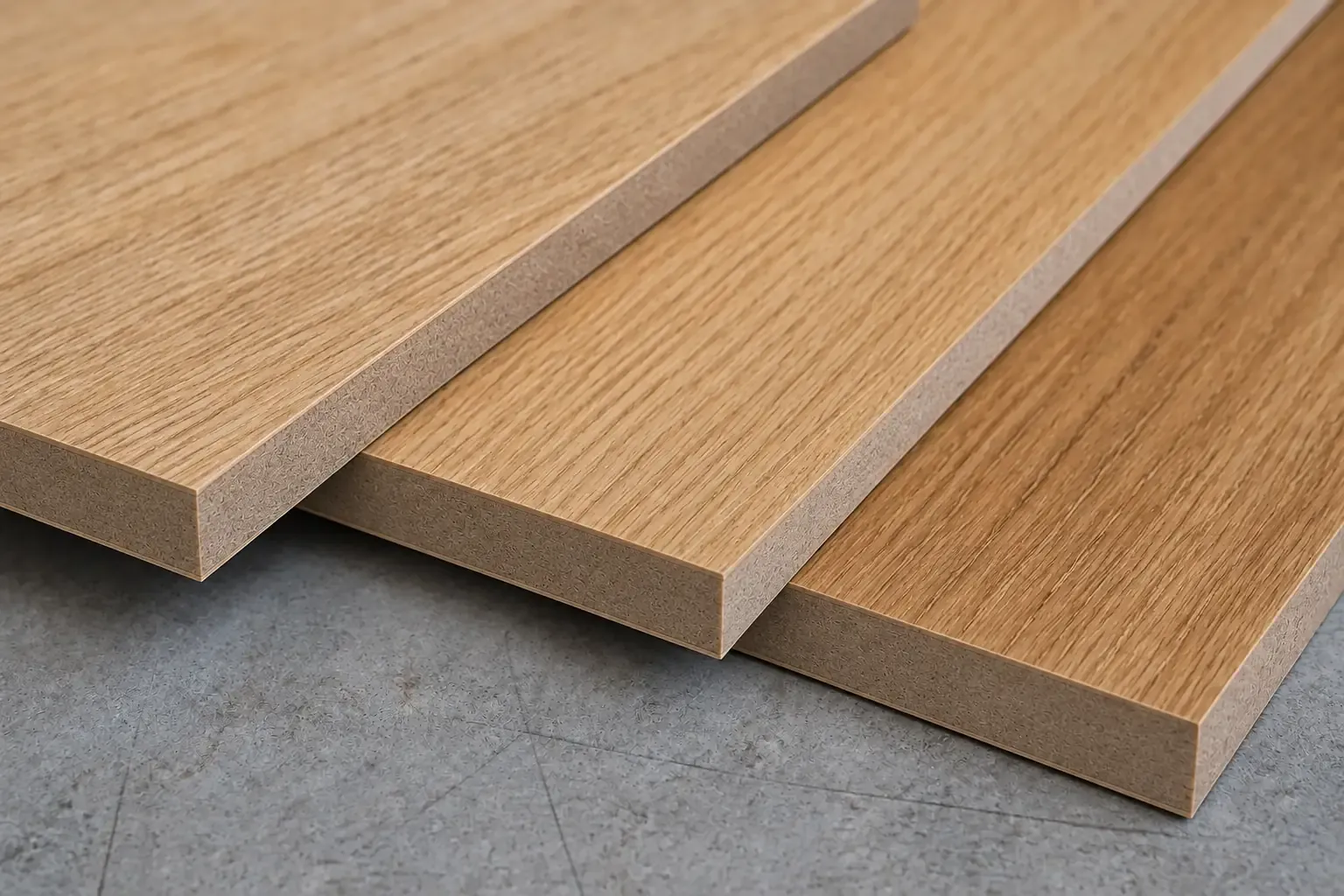
Veneered MDF panels with natural wood surface and MDF edge

Why this panel exists

Veneered MDF manufactured to confirmed buyer specifications.

Veneered MDF combines a natural wood veneer face with an MDF substrate. Common wood species include beech, walnut, oak, ash and maple. The purchasing specification must define the species, rotary-cut or sliced veneer, grade approach, leaf matching, grain direction, face and balancing construction, core, supplied sanding, finishing process and acceptable natural variation.

Product introduction

What is Veneered MDF?

Product definition

What is Veneered MDF?

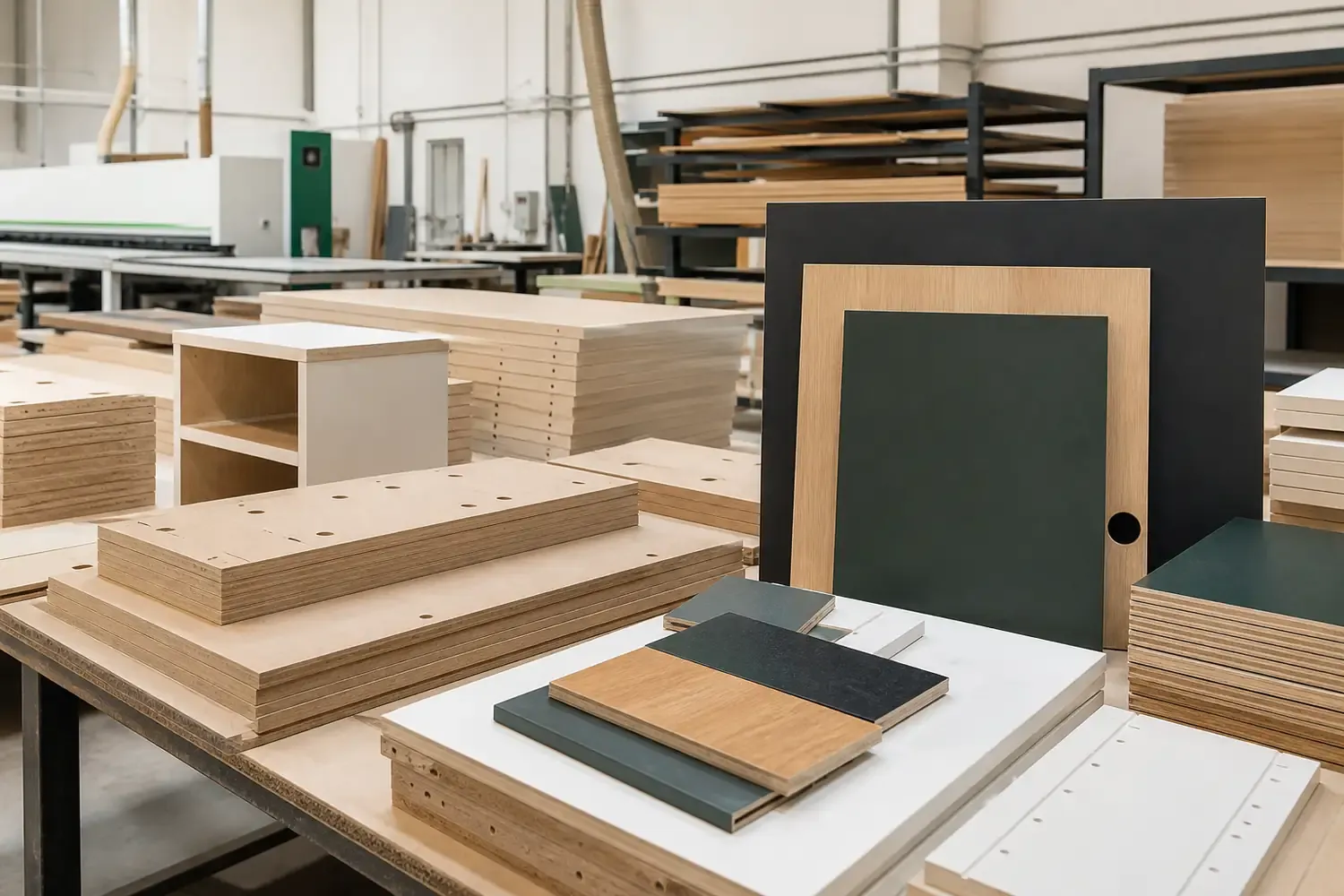
Veneered MDF, also called wood veneer MDF or MDF with wood veneer, is used when furniture, cabinet, wall-panel or fit-out components need a natural wood appearance with an MDF core. Common natural veneer options include beech, walnut, oak, ash and maple, subject to order-specific sample and availability confirmation. Buyers can specify rotary-cut veneer or sliced veneer, together with book match, slip match, random match or running match and a lengthwise or crosswise grain direction. Unlike melamine décor, natural veneer varies in grain, color and figure. A reverse-side veneer or balancing layer is normally selected with the decorative face to balance stresses and moisture response across the panel, helping the finished construction remain flatter and reducing warping risk. CUZI MDF supplies Veneered MDF from Shuyang, Jiangsu, China. The approved physical sample and order record should identify the complete face, core and balancing construction before production.
Buyer advantage

Why choose Veneered MDF?

Real veneer is not visually identical from sheet to sheet. The order needs an agreed range for grain, tone, figure and natural characteristics confirmed by physical veneer references. Book match, slip match, random match, running match or another agreed layout can produce different finished panels. The selected method and grain direction should be stated before production. A decorative face without a defined reverse face or balancing layer leaves the construction incomplete and can affect panel behavior and downstream processing. Veneer faces and edges can be scratched, chipped, contaminated or marked. Tooling, sanding, coating, separators and package protection must suit the ordered surface.

Application fit

Applications

Relevant application discussions include wardrobes, office furniture, hotel furniture, interior wall panels, decorative feature walls. Final product suitability must be reviewed against the buyer's actual application and confirmed specification.

Supply support

Why choose CUZI MDF?

CUZI MDF reviews the MDF product type, dimensions, processing, quantity, packaging needs and destination before confirming an order-specific supply option. Buyer terminology: Wood veneer MDF and MDF with wood veneer describe the same construction family at a broad search level. Oak veneered MDF, oak faced MDF, walnut veneer MDF and maple veneer MDF are species and appearance directions that require an identified veneer construction, grain approach, physical sample and accepted natural variation.

Product USP

Veneered MDF value translated into production priorities.

The purchasing priorities below connect Veneered MDF with specification, processing and order requirements.

Natural wood surface with an MDF core

Uses real wood veneer for natural grain and figure while the MDF substrate provides a uniform panel base for furniture and protected-interior components.

Beech, walnut, oak and other natural veneers

Common options include beech veneer MDF, walnut veneer MDF, oak veneer MDF, ash veneer MDF and maple veneer MDF. Species, grade, tone, grain and availability are confirmed against a physical sample for the order.

Face and balancing construction

The decorative veneer, MDF core, adhesive system and reverse-side veneer or balancing layer form one panel construction. The balancing layer helps equalize stresses and moisture response between the two faces, improving flatness and reducing warping risk.

Processing, finishing and export protection

Cutting, routing, edge treatment, sanding, coating and packaging are planned around the natural veneer face and finished component.

Buyer problems solved

Reduce risk before panels reach production.

Natural variation mistaken for a color defect

Real veneer is not visually identical from sheet to sheet. The order needs an agreed range for grain, tone, figure and natural characteristics confirmed by physical veneer references.

Unspecified veneer matching

Book match, slip match, random match, running match or another agreed layout can produce different finished panels. The selected method and grain direction should be stated before production.

Incomplete face and back construction

A decorative face without a defined reverse face or balancing layer leaves the construction incomplete and can affect panel behavior and downstream processing.

Damage during machining, finishing or transport

Veneer faces and edges can be scratched, chipped, contaminated or marked. Tooling, sanding, coating, separators and package protection must suit the ordered surface.

Why choose CUZI MDF

MDF manufacturing, customization, inspection and international supply.

CUZI MDF reviews different MDF grades and specifications for furniture factories, distributors and international B2B buyers.

Professional MDF manufacturing

CUZI MDF focuses on MDF manufacturing and specification-led supply for international B2B buyers.

Customized MDF review

Thickness, size, surface, processing and packaging requirements are reviewed against the requested product and order.

Quality and document control

Quoted technical values are matched to the selected product, current test reports and the written order specification.

International supply planning

Order planning covers confirmed specification, quantity, packaging needs, destination and shipment coordination.

Technical specification

Veneered MDF Specifications

CUZI MDF supplies standard and customized specifications for furniture factories, distributors and project orders.

ThicknessCUZI MDF panel thickness range: 2–35 mm.
SizeCUZI MDF board formats: 1220 × 2440 mm; 2100 × 2800 mm; 1830 × 3660 mm; 1830 × 2440 mm; 2440 × 3660 mm; 1830 × 4200 mm.
DensityCUZI MDF density range: 2–4 mm: 800–810 kg/m³; 5–8 mm: 780–800 kg/m³; 9–11 mm: 760–780 kg/m³; 12–18 mm: 680–750 kg/m³; 19–35 mm: 650–680 kg/m³.
GlueCore bonding and surface-adhesive construction follow the selected panel build.
Formaldehyde gradeE0, E0.5 and E1 options. The specified emission class, test standard, product scope and destination requirement must be confirmed for each order.
SurfaceNatural beech, walnut, oak, ash, maple or other confirmed veneer; rotary-cut or sliced; crown/flat or quarter cut; book, slip, random or running match; lengthwise or crosswise grain; face and balancing construction confirmed by physical sample.
Moisture resistanceDecorative veneered MDF construction for furniture and protected-interior applications.

All product options, processing, packaging and timing remain subject to confirmation against the final specification, quantity, production schedule and destination.

Indicative export pricing

A practical starting range for quotation planning.

US$260–470 per m³

Availability
Available to order
Specification review
5.0/5.0

Custom specifications determine the final price.

This price range is an indicative export reference for configurable B2B orders, not a fixed or binding offer. Final unit pricing is confirmed in a written quotation.

  • Product grade, thickness, density and board size
  • Surface construction, color, processing and packaging
  • Order quantity, payment terms and production scheduling
  • Incoterm, destination, freight and document requirements

Technical specification completeness review

The product page states the principal board or component specification, configurable order factors, indicative price basis and quotation requirements needed for an initial B2B purchasing review.

Reviewed by CUZI MDF Product & Technical Team.

Request an exact quotation

Features

Specify what matters on the factory floor.

Natural wood veneer species

Common natural veneer options include beech, walnut, oak, ash and maple. Each species has its own grain, tone and natural variation, so the supplied species and appearance are confirmed using an identified physical sample.

Rotary-cut or sliced veneer

Rotary-cut veneer is peeled continuously from the log and usually produces broad, flowing grain with efficient large-sheet coverage. Sliced veneer is cut into individual leaves; crown or flat slicing can show cathedral grain, while quarter slicing gives a straighter, more linear appearance.

Book, slip, random and running match

Book matching opens consecutive leaves like facing pages to create a mirrored pattern. Slip matching lays consecutive leaves in the same direction. Random matching creates a deliberately varied face, while running matching uses consecutive leaves across the panel without requiring equal-width leaves.

Lengthwise or crosswise grain direction

Specify whether the visible grain runs along the panel length or across its width. For doors, wall panels and matched furniture sets, also state the component orientation, cutting plan and whether consecutive panels must be sequenced.

Balancing layer and panel flatness

A reverse-side veneer or compatible balancing layer helps balance stresses and moisture response created by the decorative face. It improves dimensional balance and reduces the risk of bowing or warping, especially during pressing and finishing; correct storage and equal treatment of both faces still matter.

2–35 mm, MOQ and lead time

Total panel thickness is selected with the MDF core, veneer and balancing construction. Nominal thickness tolerance is ±0.1 mm. Normal MOQ is 1 × 20'GP for each specification, with a normal lead time of 7–15 days after the sample and construction are confirmed.

Moisture-content range

Industry reference for the MDF core: approximately 4–8%; veneer conditioning requires separate review.

Processing notes

Confirm cutting, routing, edge treatment, sanding and finishing while protecting the veneer face and balancing construction.

Applications

Applications of Veneered MDF

MDF for Wardrobes

Select wardrobe MDF separately for each component and its finished use. Carcass sides, long shelves, hinged or sliding doors, drawers and backs need separate dimensions, surfaces, support, hardware, finished-weight checks and cabinet-set packing.

Explore application

MDF for Office Furniture

Select MDF for office furniture by component and service condition. Desk and meeting-table tops need a defined span, support frame, edge and cable layout; pedestals and storage units need controlled hardware coordinates; visible parts need an approved face, reverse, edge and repeat-order reference.

Explore application

MDF for Hotel Furniture

Hotel furniture MDF procurement is organised around repeat room types, matching finishes and replacement components, including headboards, desk panels, wardrobe fronts, vanity parts and luggage units.

Explore application

MDF for Interior Wall Panels

Interior wall-panel MDF purchasing begins with the wall elevation, module sizes, joint layout and mounting interfaces. Choose the substrate and finish around that complete interior-panel specification.

Explore application

MDF for Decorative Feature Walls

Decorative MDF feature-wall orders focus on the visible pattern: groove rhythm, veneer direction, light and shadow, adjoining modules and corner returns. Approve the wall-scale effect before repeating components.

Explore application

Buyer guides

Continue the Veneered MDF purchasing review.

These guides explain the next specification, application and procurement decisions connected to this product.

Procurement Scenario: Interior Project MDF Document Review

Review interior-project MDF through a requirement matrix that connects locations, products, drawings, samples, certificates, test reports, scope, revisions, approval parties and procurement release status.

Explore application

Procurement Scenario: Decorative MDF Panel Export Packaging

Plan decorative MDF export packaging by surface, edge and format risk, then coordinate separators, cover boards, supports, wrapping, straps, labels, container or breakbulk handling and destination receiving.

Explore application

MDF Export Guide for International Buyers

Prepare an international MDF order by aligning product identity, specification, required documents, quantity, packaging, delivery basis and destination requirements.

Explore application

MDF Sample Approval: From Colour Swatch to First Component

An MDF sample approval should identify exactly what the sample represents, which attributes were accepted and which production record carries the decision forward. A colour swatch, constructed corner and first finished component answer different questions.

Explore application

Customization capability

Customized Veneered MDF Supply

Send the required dimensions, surface, processing drawings, packaging and destination. CUZI MDF confirms production feasibility before issuing a quotation.

Species and veneer cut

Select beech, walnut, oak, ash, maple or another confirmed natural veneer; then define rotary-cut or sliced veneer and, for sliced veneer, the required crown, flat or quarter-cut appearance.

Matching and grain direction

Choose book match, slip match, random match or running match; state lengthwise or crosswise grain direction and whether visible panels need consecutive sequencing.

Face and balancing layer

Define veneer on one or both faces or specify a compatible reverse-side balancing layer. The balancing layer helps equalize the panel construction, improve flatness and reduce stress-related bowing or warping.

MDF core and emission class

Confirm the MDF grade, 2–35 mm total thickness, listed board format, thickness-based density range and E0, E0.5 or E1 requirement.

Machining and finishing

Provide cutting, CNC, drilling, edge treatment, sanding, stain, sealer, clear coat or other finishing requirements, including the party responsible for each stage.

Packaging options

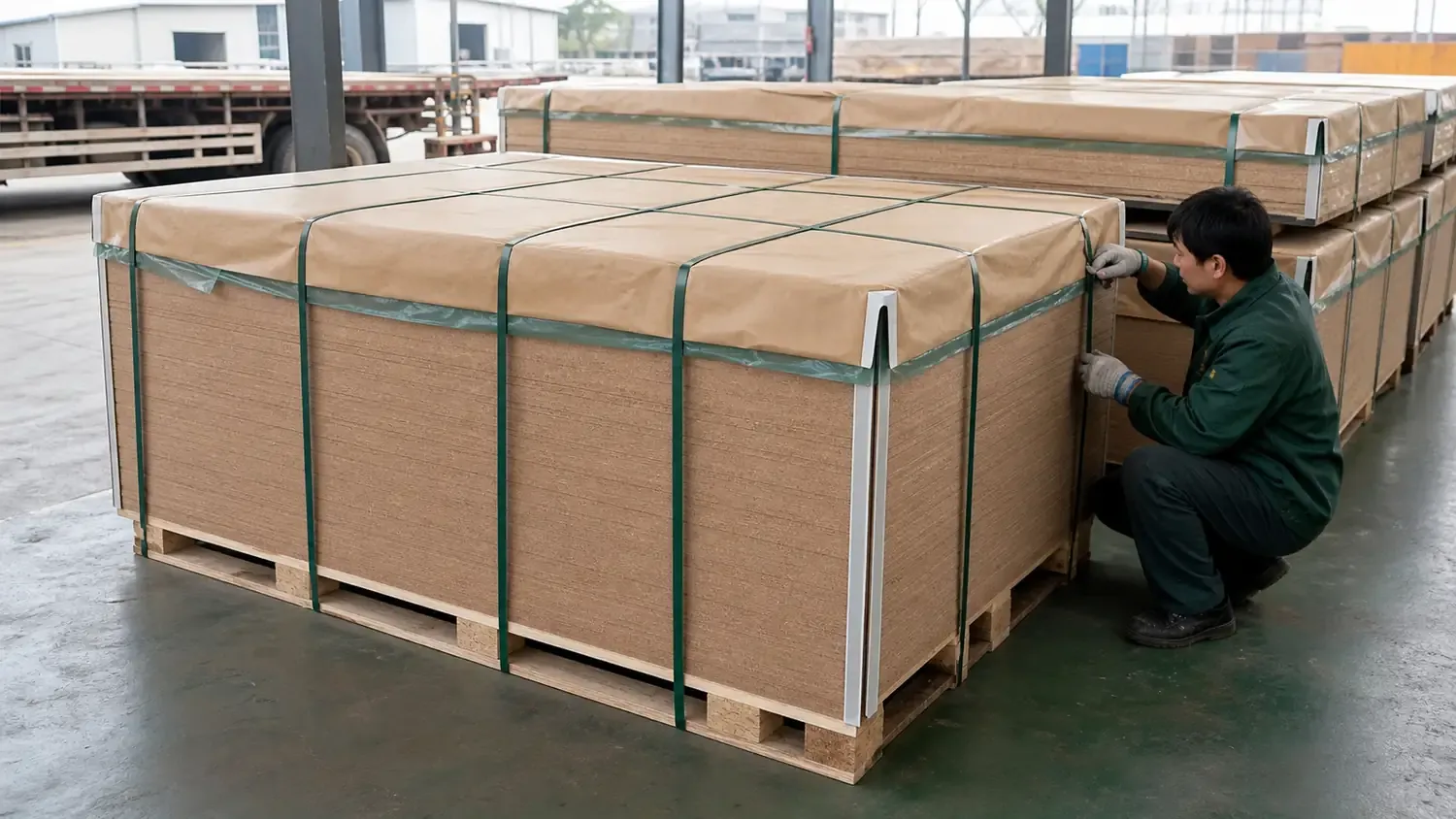
Clean separators, MDF cover boards, face and edge protection, moisture-protective wrapping, supports, straps and bundle identification are selected from size, quantity, veneer sensitivity, destination, handling and customer requirements. Delivery is available through Lianyungang or Qingdao, China.

Purchasing / RFQ guidance

Provide species, veneer cut and grade, matching method, face/back construction, core, thickness, size, finish, quantity and destination.

Manufacturing capability

CUZI MDF Manufacturing Capability

MDF production capability

Production planning begins after the product specification and commercial requirements are confirmed.

Quality management

Applicable checks are aligned with the confirmed MDF product, dimensions, surface, processing and other agreed criteria.

Customized manufacturing

CUZI MDF reviews grade, dimensions, surface, CNC processing and packaging requirements before confirming production.

Packaging and supply

Packaging and timing are confirmed against the final product, quantity, production schedule and destination.

Production workflow

CUZI MDF Manufacturing Process

The production workflow connects the confirmed product specification with panel manufacturing, inspection and export-oriented packaging.

Confirm specification

Review product type, dimensions, surface, processing, quantity and destination.

Plan production

Translate the approved order requirements into the applicable production and handling plan.

Inspect and prepare

Review the finished order against agreed requirements before packaging and shipment preparation.

Buyer FAQ

Questions buyers ask before specifying Veneered MDF.

What is Veneered MDF?

Veneered MDF is an MDF substrate faced with a thin layer of real wood veneer. The supplied panel is defined by the veneer species and cut, matching method, face and balancing construction, MDF core, total thickness, sanding and finishing process.

How is Veneered MDF different from Melamine MDF?

Veneered MDF uses a real wood surface with natural grain and color variation and normally requires a defined finishing process. Melamine MDF uses resin-impregnated decorative paper selected by décor and texture reference. Their appearance controls, processing, edge treatment and cost basis are therefore different.

Will veneer color and grain be identical between sheets?

No. Natural veneer varies between trees and logs, and even consecutive leaves show normal differences. Buyers should approve representative physical samples and define the acceptable range, matching method and sequencing expectations for visible components.

Which natural wood veneer species are available?

Common options include beech, walnut, oak, ash and maple. Species name alone does not define the finished face, so the RFQ should also state veneer cut, grade approach, grain character, color range, matching method and the approved physical sample.

What is the difference between rotary-cut and sliced veneer?

Rotary-cut veneer is peeled from a rotating log as a continuous sheet and commonly shows broad, flowing grain. Sliced veneer is cut into leaves; crown or flat slicing creates a cathedral pattern, while quarter slicing produces a straighter grain. The selected cut changes appearance, matching and yield.

Which veneer matching method and grain direction should a buyer specify?

Book matching mirrors consecutive leaves; slip matching repeats them in the same direction; random matching creates natural variation; and running matching uses consecutive leaves across the panel without requiring equal widths. Also state whether grain runs lengthwise or crosswise and whether visible panels must be sequenced.

Why does Veneered MDF need a balancing layer?

The decorative veneer and adhesive affect one face of the MDF. A reverse-side veneer or compatible balancing layer helps equalize stresses and moisture response across the panel, improving flatness and reducing the risk of bowing or warping during pressing, finishing and use. It does not replace correct conditioning, flat storage or suitable finishing.

Can Veneered MDF be cut, routed and finished?

Yes, subject to construction review. Provide cutting, CNC, drilling, edge and profile details plus the sanding, stain, sealer or coating process. Protect the veneer face during machining and test the complete finishing system on a representative sample.

What are the normal MOQ, capacity and lead time?

Production and delivery capacity is 300 m³ per day for each thickness at the Shuyang base. The normal MOQ is 1 × 20'GP for each individual specification, and normal production lead time is 7–15 days after the veneer sample, panel construction and commercial requirements are confirmed.

What should a Veneered MDF RFQ include?

Provide veneer species, cut, grade approach, matching, grain direction, face/back construction, approved sample, MDF grade, thickness, size, density, E0/E0.5/E1 requirement, machining, finishing, quantity, packaging and destination.

Are the ranges on this page confirmed for every order?

No. Product-specific availability and values are confirmed against the proposed order.

What should the purchasing RFQ include?

Provide species, veneer cut and grade, matching method, face/back construction, core, thickness, size, finish, quantity and destination.

Specification to quotation

Request a Veneered MDF Quotation

Send your target grade, dimensions, quantity, surface or processing requirements and destination. CUZI MDF will review the specification and provide quotation support for the confirmed requirement.

  • Target grade or test standard
  • Thickness, size, density and quantity
  • Surface, CNC and packaging requirements
  • Destination and requested timing

By submitting this business inquiry, you acknowledge how CUZI MDF handles the information described in our Privacy Policy.