
A well-organised file helps your purchasing team evaluate the quote and helps the importer prepare the shipment. CUZI MDF manufactures boards in Shuyang, China. Share the US destination, product construction and document requirements with our factory; we will help with your board specification and the documents needed for your purchase.
Start with the MDF construction and thickness
Write down the actual product: raw MDF, faced board, cut component or finished furniture. Include core thickness, finished thickness, face and reverse materials, and any machining. That description connects the commercial order to the product covered by the documents.
EPA's stakeholder guidance identifies thin MDF as MDF at or below 8 mm. A 3 mm raw MDF panel falls in the thin-MDF category; an 18 mm raw MDF panel falls in the MDF category. Product-range names used in a catalogue can cover a different thickness span, so use the actual panel thickness for the regulatory category.
| Proposed order item | Product description to establish | Document request to carry forward |
|---|---|---|
| Raw MDF sheets | Grade, panel thickness, size and production identity | Certification scope and testing information for that product type |
| Melamine or other faced MDF | Core, face and reverse construction, finished thickness | Underlying panel information plus the supplied construction and applicable requirements |
| Veneered MDF | Core, veneer and bonding system | Review the laminated-product provisions for the actual construction |
| Cut or machined MDF parts | Source panel, part IDs, drawings and intended purchaser | Keep the panel identity connected to the component order and shipment records |
For Raw MDF, begin with the board specification. For Melamine MDF or Veneered MDF, send the full supplied construction. A photograph of a decorative face helps with appearance; the material description and product documents establish the compliance review.
Specify TSCA Title VI and California coverage clearly
EPA's rule summary explains the federal testing, certification, labelling and recordkeeping programme. Current US purchases of regulated composite wood products use TSCA Title VI requirements; the transition allowing CARB Phase 2 labelling alone ended in March 2019.
For an order sold or supplied in California, also identify the CARB Phase 2 requirement in the inquiry and purchase order. EPA's consumer overview explains that the emission limits are aligned, while programme requirements differ. Check the applicable federal and California coverage for the proposed product.
Give every requested programme its own line in your document list. E0 or E1 information, management-system certificates and FSC traceability documents serve their stated purposes. Add the TSCA-specific certification and supporting records needed for the US purchase. Our Quality Control page introduces these destination-specific requests alongside the wider product checks.
Read the US MDF emission limits with their test method
40 CFR 770.10 gives the following limits on the ASTM E1333-14 basis. Use the product category and test method together when reading the US records for your order.
| US product category | Panel thickness | Formaldehyde emission limit |
|---|---|---|
| Thin MDF | At or below 8 mm | 0.13 ppm |
| MDF | Above 8 mm | 0.11 ppm |
Keep each laboratory result in its original unit and method. The certification and testing provisions in 40 CFR 770.15 use ASTM E1333-14 or ASTM D6007-14 with the required showing of equivalence. A report using EN 717-1 belongs with the product's formaldehyde information; the US order file also includes the applicable TPC certification and US testing records.
Match the producer and certifier to the offered board
Certification is carried out by an EPA-recognized third-party certifier, commonly called a TPC. Use the EPA certifier directory to check the organisation and number on the documents. The directory also links the suspended or revoked list; check the status when reviewing the order.
Read the named production facility, product scope, document dates and any limitations together. A certifier's recognition and a specific panel's certification answer separate questions. Your purchase needs the producer and offered product within the applicable scope.
When several thicknesses, finishes or product constructions are included, keep a schedule that connects each line to its supporting documents. Ask for a written explanation of coverage where the document groups products into a type or thickness range. That makes mixed-product quotations easier to review and gives repeat orders a stable reference.
A practical document packet to request
Ask for the file while comparing quotations, then add the production and shipment records as they become available. The following is a buyer's request worksheet. Actual issuer names, dates, numbers and product coverage come from the documents for the offered order.
A document request can read: “Please quote 18 mm raw MDF, 1220 × 2440 mm, for furniture production in the United States with the applicable TSCA Title VI documentation. Please identify the producer, TPC and product coverage, provide the relevant testing records, and confirm how the shipment's labels and commercial documents will identify this order.” Add your quantity, destination and any California requirement.
| Document or record | Fields to read | Connect it to your order |
|---|---|---|
| Product specification | Grade, thickness, size, core and supplied surface | The same product description and drawing revision as the quote |
| TPC certification or scope statement | Producer, facility, product type, certifier number and scope dates | The offered grade and construction, including grouped product coverage |
| Relevant emissions test records | Sample identity, date, method, result, units and TPC | The product type and represented lot, with the scope explained |
| Panel or bundle label information | Producer identity, lot, TPC number and compliance statement | The identifiable panels or bundles being shipped |
| Commercial and packing documents | Product lines, quantities, pack IDs and applicable compliance statement | The approved purchase order and physical shipment |
| Importer file | Production identity and dates, purchase and import records | The import entry and the records retained by the importer |
Our certificate and test-report guide explains a general document review. This US checklist adds the panel-to-shipment connections your importer needs. Put the files in a named order folder, with the quotation and purchase order at the front, so production and logistics teams can find the same references.
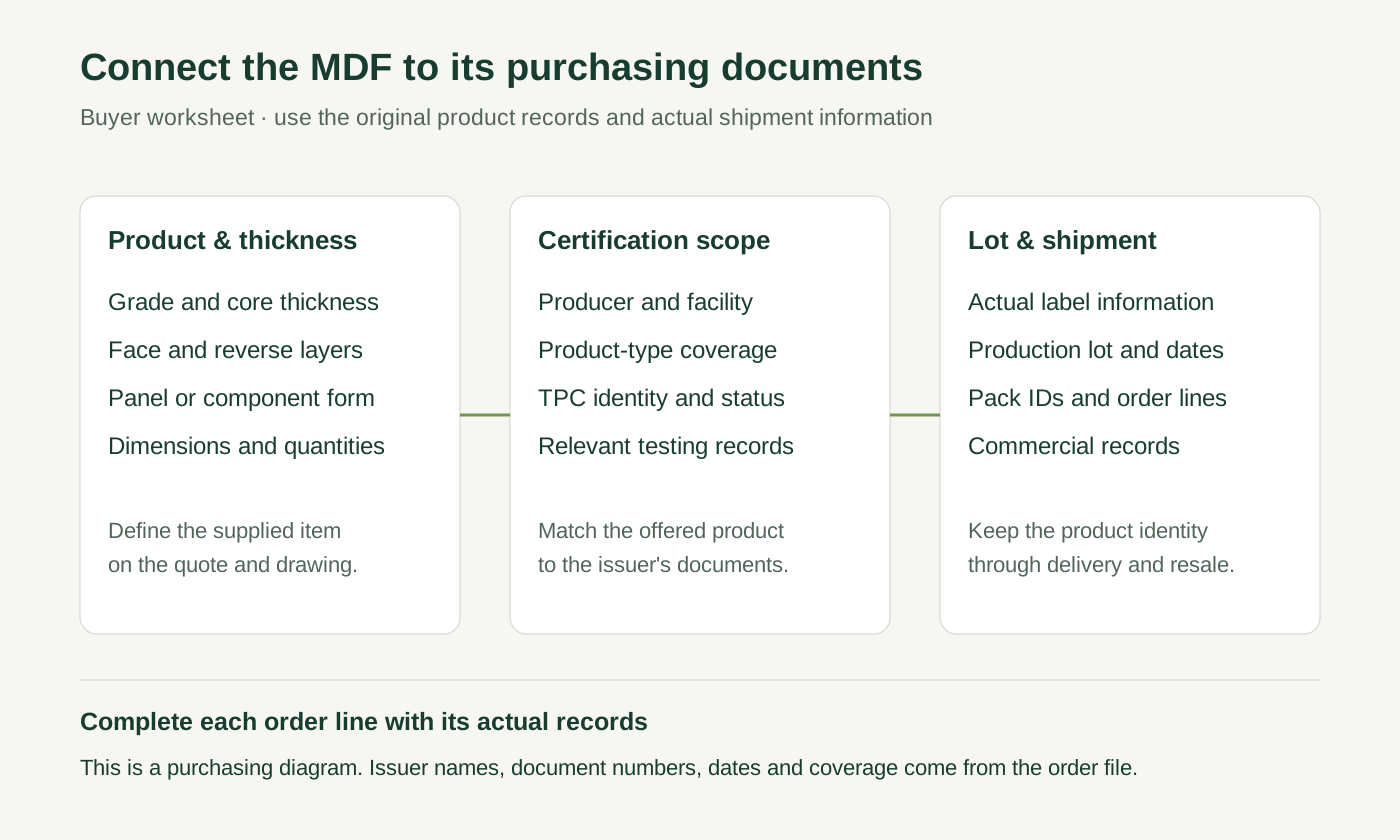
View the MDF document-matching diagram for a compact view of the information to connect. It is a purchasing worksheet; use the issuer's original records and the actual shipment label to complete the review.
Read the test record within its product scope
40 CFR Part 770, sections 770.20 and 770.40 distinguish ongoing quality-control and third-party testing records. Quarterly records identify the TPC, test date, product type, represented lot, method and result. Direct purchasers can request the applicable quarterly testing records from the producer.
For purchasing review, compare the named specimen with the offered construction and ask how the record represents the production type. A test date, a tested sample and a shipment lot are different identifiers; the file should explain their relationship. Keep the relevant method and units beside the result when reviewing a data sheet or laboratory report.
If your technical team needs a particular method or acceptance requirement, include that in the initial request. The actual test programme and any permitted testing or certification exemption are established by the applicable rules and records. Keep that explanation with the proposed product, so a change of core or bonding system receives the appropriate review.
Use CUZI MDF product reports in your document request
You can view and download the CUZI MDF reports on this page before contacting our factory. Read the product name, thickness, test or information covered, method and date in the complete file. Include the relevant report title with your specification so our team can connect your request to the board you are considering.
| CUZI MDF document | Product information available | Next step for a US order |
|---|---|---|
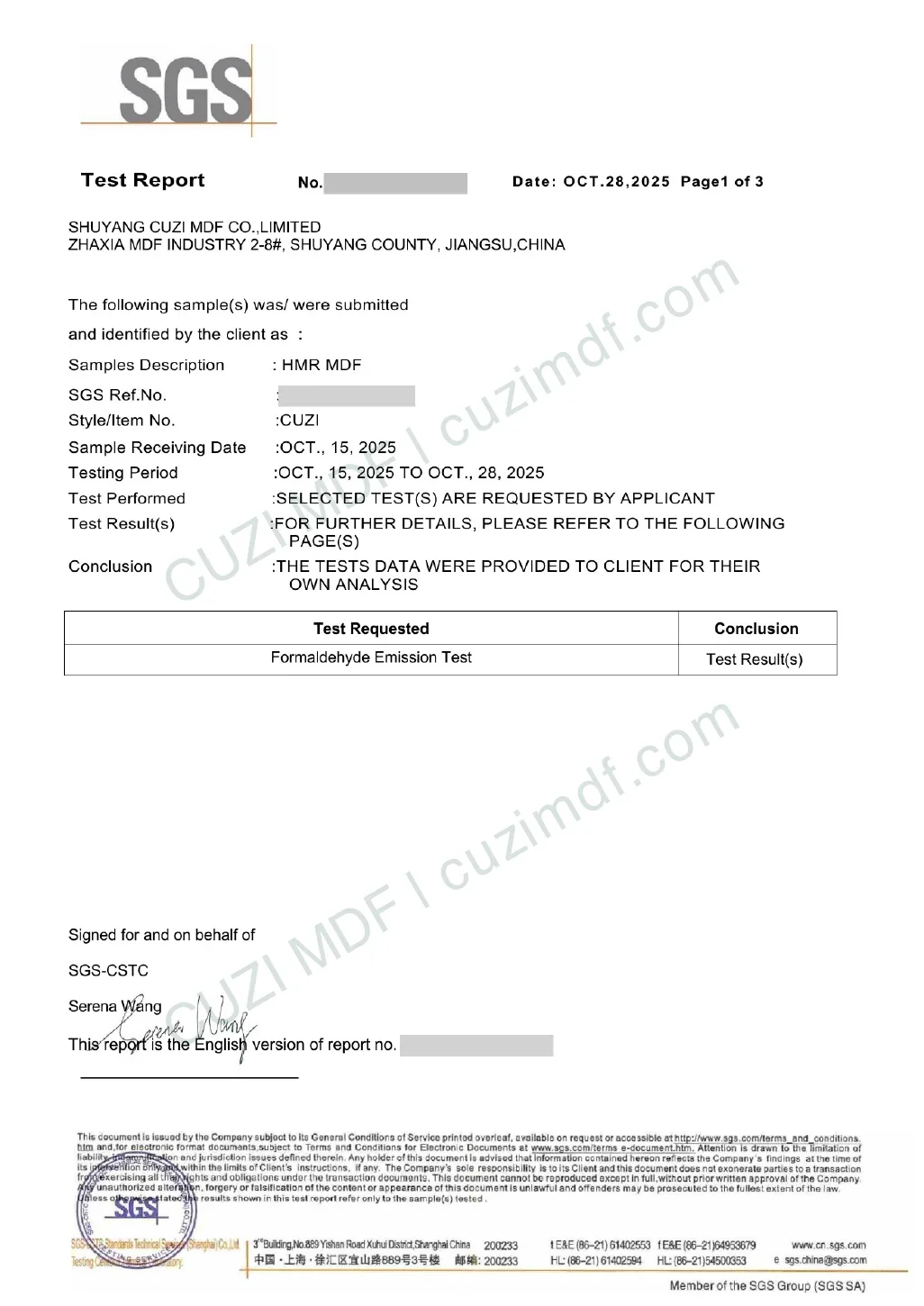
| HMR MDF Formaldehyde Test Report | Three-page formaldehyde report dated 28 October 2025 | Review HMR MDF and request the US documents for the required thickness and grade |
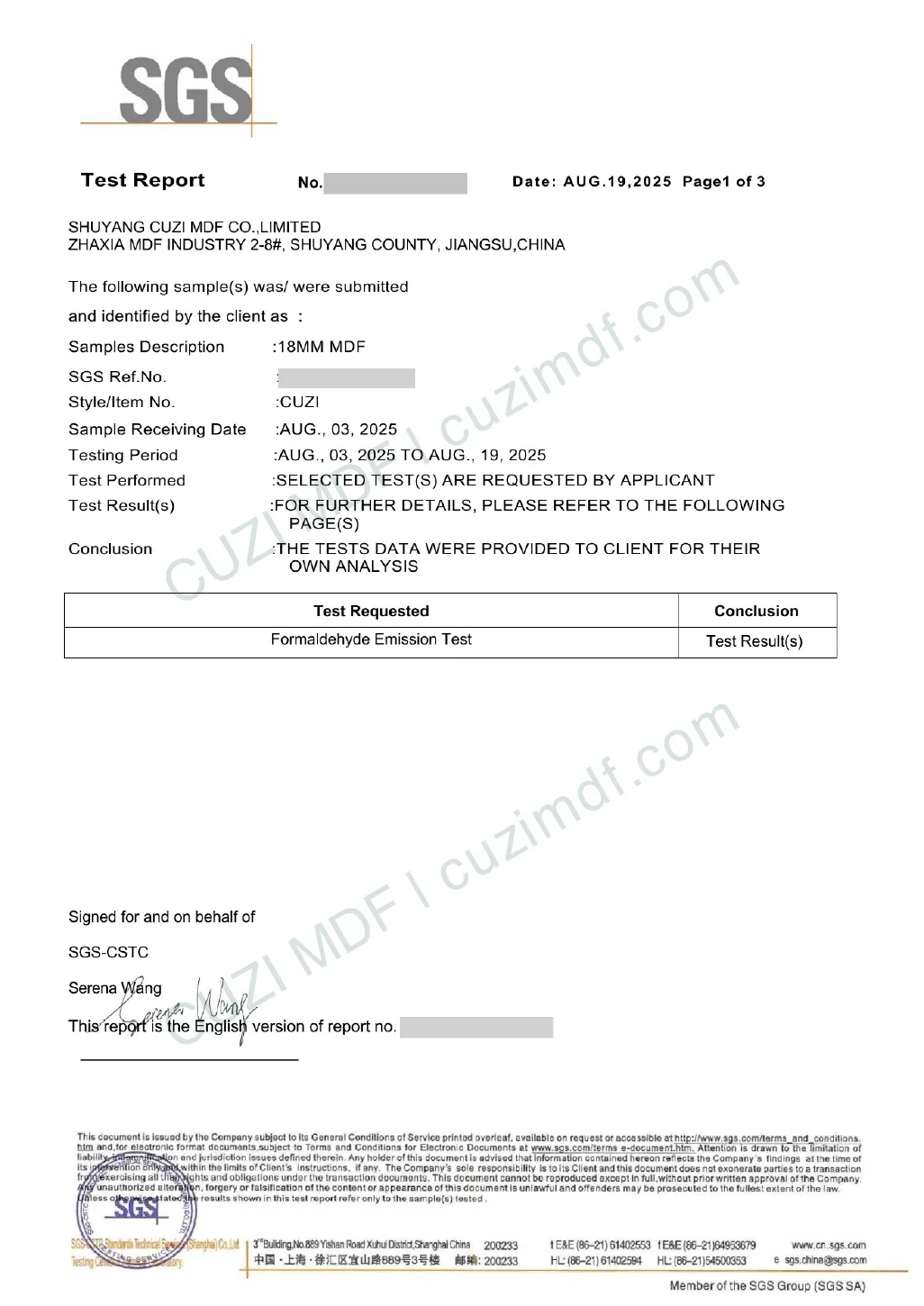
| 18 mm White-Faced MDF Formaldehyde Test Report | Three-page formaldehyde report dated 19 August 2025 | Review Decorative MDF, identify the face and reverse construction, and request its applicable US documents |
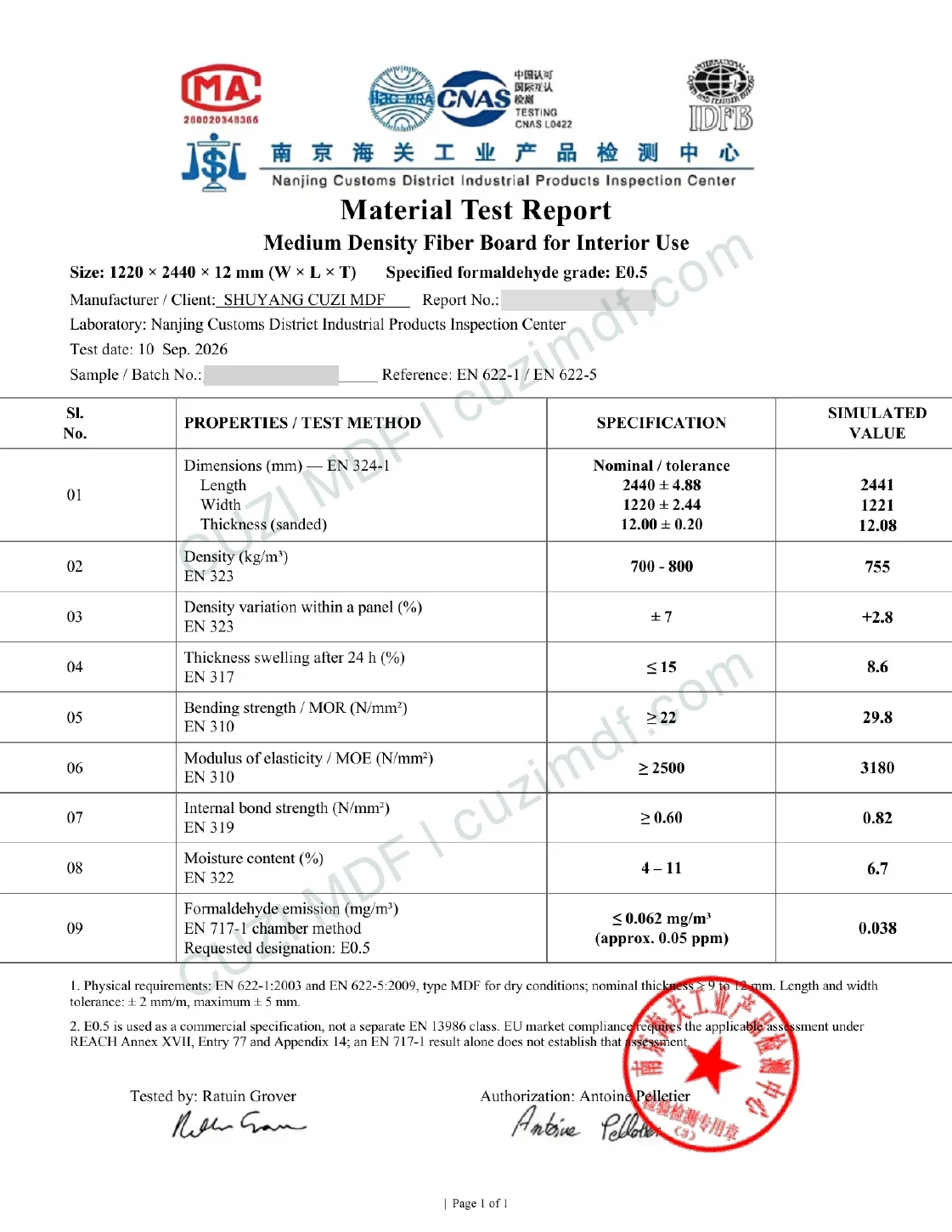
| 12 mm MDF Material Report | One-page material report dated 10 September 2026 | Review Raw MDF and specify the product, thickness and TSCA Title VI requirement in your request |
The product reports provide their stated material and formaldehyde information. For US purchasing, bring the applicable TPC certification, US testing records, label information and shipment references into the same order file. That gives your purchasing team the product information and your importer the records needed for the supplied goods.
View or download CUZI MDF reports, read the report guide, or request documents for your US MDF order.
Check panel labels and finished-good labels separately
EPA's label overview describes panel labels with producer, lot, TPC number and a TSCA Title VI compliance statement. Finished-good labels use the fabricator, production month/year and compliance statement. The labelling provisions also address permitted identifiers and exceptions; apply them to the form being purchased.
For a panel order, request a clear photograph or copy of the actual label information with the shipment documents. Read it with the packing list so a warehouse can identify the bundles after arrival. Where panels are labelled by bundle, keep the connection when that bundle is split into smaller quantities.
| Panel-label field | Buyer check | Useful cross-reference |
|---|---|---|
| Producer identity | Identify the manufacturing entity behind the panel | Certification scope and production records |
| Lot number | Read the identifier on the actual panel or bundle | Pack schedule and lot-to-order records |
| TPC number | Match the number and certifier name | Current EPA directory and product certification |
| Compliance statement | Read the statement for the regulated product | The applicable supplier statement on commercial records |
For components supplied to a furniture fabricator, establish the downstream use and applicable labelling treatment. Keep the source-panel and compliance records with the part IDs. For components sold separately to end users, review the finished-good provisions. This keeps a component order accurate for the way it will be supplied and used.
Review veneer and adhesive construction before ordering
In this programme, a laminated product has a specific meaning involving wood or woody-grass veneer bonded to a regulated core or platform. A commercial name such as laminated MDF should be supported by the actual construction description.
EPA's laminated-product guidance explains that, from 22 March 2024, non-exempt laminated-product producers have the applicable hardwood-plywood producer obligations. The exemption provisions depend on the construction and resin, with supporting records for eligible products.
For a veneered order, request the core identity, veneer material and bonding system together. Ask how the supplied construction is addressed under the applicable provisions and which records support that explanation. Include the proposed finish, reverse and any subsequent processing your factory will perform.
For paper, HPL, acrylic or other surface materials, describe the face accurately and review the requirements for that actual product. A clear layer description helps the importer distinguish the supplied item and request the right documents. Our factory can discuss the specification, facing and machined component as part of the same order review.
Prepare the file in purchasing order
The EPA Small Entity Compliance Guide for Importers, Distributors and Retailers is a public document you can read with your importing team. In its printed pages 7–8, the Records and Labels sections explain the importer information and bundle-label handling. Read it alongside the current EPA guidance and regulations when preparing a new order.
Keep one schedule from quotation through arrival. Separate the product lines by thickness and construction, then add the supporting files at the stage when they are available.
| Purchasing stage | Information to collect | What the buyer can confirm |
|---|---|---|
| Compare quotations | Product specification, certification scope and relevant test records | The offered construction and documents for each order line |
| Confirm production | Agreed specification, component drawings and production identity | The grade, thickness and supplied work in the accepted order |
| Prepare shipment | Label information, lot references, pack schedule and commercial documents | The goods and records handed to the importer and broker |
| Receive and distribute | Arrival records and the link from packs to panels or parts | Product identity through warehouse handling and repeat orders |
Prepare the importer file before shipment
EPA's importer guide calls for retained commercial records carrying the supplier's compliance statement, with producer and production-date information available. The relevant records are retained for at least three years; requested importer information must be available to EPA within 30 calendar days. Section 13 import certification is a separate import-entry requirement for regulated products.
Agree with your importer or customs broker who will prepare the entry, which shipment documents they need and when they need them. Send the commercial description and pack schedule for their review before loading. Use the same product names and quantities on the final purchase order, invoice and packing list, while preserving the underlying lot references.
As a factory and supplier, CUZI MDF reviews the product and supplied-document requirements with you. The US importer handles the applicable import certification and recordkeeping. Our Global Supply page explains FOB terms, shipment ports and third-party inspection arrangements that can be included in your order plan.
Buyer review checklist
- Identify the supplied MDF construction, panel thickness and finished-product form.
- State TSCA Title VI and any California requirements on the inquiry and order.
- Match the producer, facility, product type and TPC to the offered scope.
- Read relevant test records with their sample, represented lot, method and result.
- Obtain the actual panel, bundle or applicable finished-good label information.
- Connect pack IDs and order lines to their production and compliance records.
- Review veneer and adhesive construction with the applicable laminated-product provisions.
- Agree the importer and broker's document handoff before shipment.
- Keep the original files with the purchase and shipment records for repeat-order review.
Frequently asked questions
What should I request when buying TSCA Title VI MDF?
Start with the proposed product specification, producer identity and applicable certification scope. Add the relevant test records, label information and shipment references. Check that the documents include each product you plan to order.
Does CARB Phase 2 wording cover the federal US requirement?
State TSCA Title VI explicitly for the US order and add CARB Phase 2 where California requirements apply. Review both programme coverages in the actual file. EPA's rule summary and programme guidance explain their relationship.
How should I check the TPC number?
Read the certifier number and organisation on the product documents, then check the current EPA directory and its suspended or revoked list. Match the product certification scope as well as the certifier identity.
How do I review several MDF thicknesses in one order?
List each thickness and supplied construction separately. Ask how each line is covered by the product scope and testing records. Use the applicable product category and keep the explanation with the accepted schedule.
What changes when I buy veneered MDF?
Include the veneer, adhesive and core in the specification. Review the programme's laminated-product provisions for that construction and request the applicable supporting records. Keep the construction explanation with the certification or exemption documents provided for the order.
How can I trace panels after a bundle is split?
Retain the label information and the method linking individual panels to the original bundle. Keep your warehouse or resale records aligned with that reference so the product information remains available downstream.
Can a sample and a document request be sent together?
Yes. Name the board or component, thickness, surface and US destination in the same request. A sample helps with appearance, machining and fit; the product documents support the compliance review for the proposed supply.
How does an EN 717-1 report fit into my US document file?
Keep it as formaldehyde information for the product and sample described in that report. For the US order, also request the applicable TSCA Title VI certification and testing records using the programme's methods. Read the method and original units with each result, and match all files to the offered board.
Which CUZI MDF reports can I download here?
The report section provides the HMR MDF formaldehyde report, the 18 mm white-faced MDF formaldehyde report and the 12 mm MDF material report. Each download includes the complete document. Send your product specification and US destination when asking for order documents.
What should I include when requesting US documents from CUZI MDF?
Tell us the MDF product, core thickness, finished construction, quantity and US destination. Add TSCA Title VI, any California requirement, your importer's document checklist and component drawings where relevant. Request US MDF documents and our factory team will reply within 12 hours.
Who prepares the TSCA import certification?
The US importer handles the applicable Section 13 import certification, working with its customs broker where appropriate. Agree the required shipment documents and handoff date with them before dispatch.
Discuss your order with our factory
Send the product, thickness, face and reverse construction, quantity, destination and document list. We reply within 12 hours to help with your board specification, documents and quotation. Add component drawings where cutting, hardware or assembly fit matters.
Samples across our range are free and normally available from stock. Buyers pay the courier charge, which can be credited against the formal order amount. We confirm any custom preparation, dispatch and estimated transit timing for your request. The written quotation includes the specification, quantity, price and currency, packing, delivery terms and place, lead time, payment terms and validity.
Request US purchasing documents, request a product sample, or request an MDF quotation.
For the current requirements, use the linked EPA guidance and regulatory sources with your importer. The tables here organise a product and shipment review; the offered specification and its original documents establish the records for your order.