
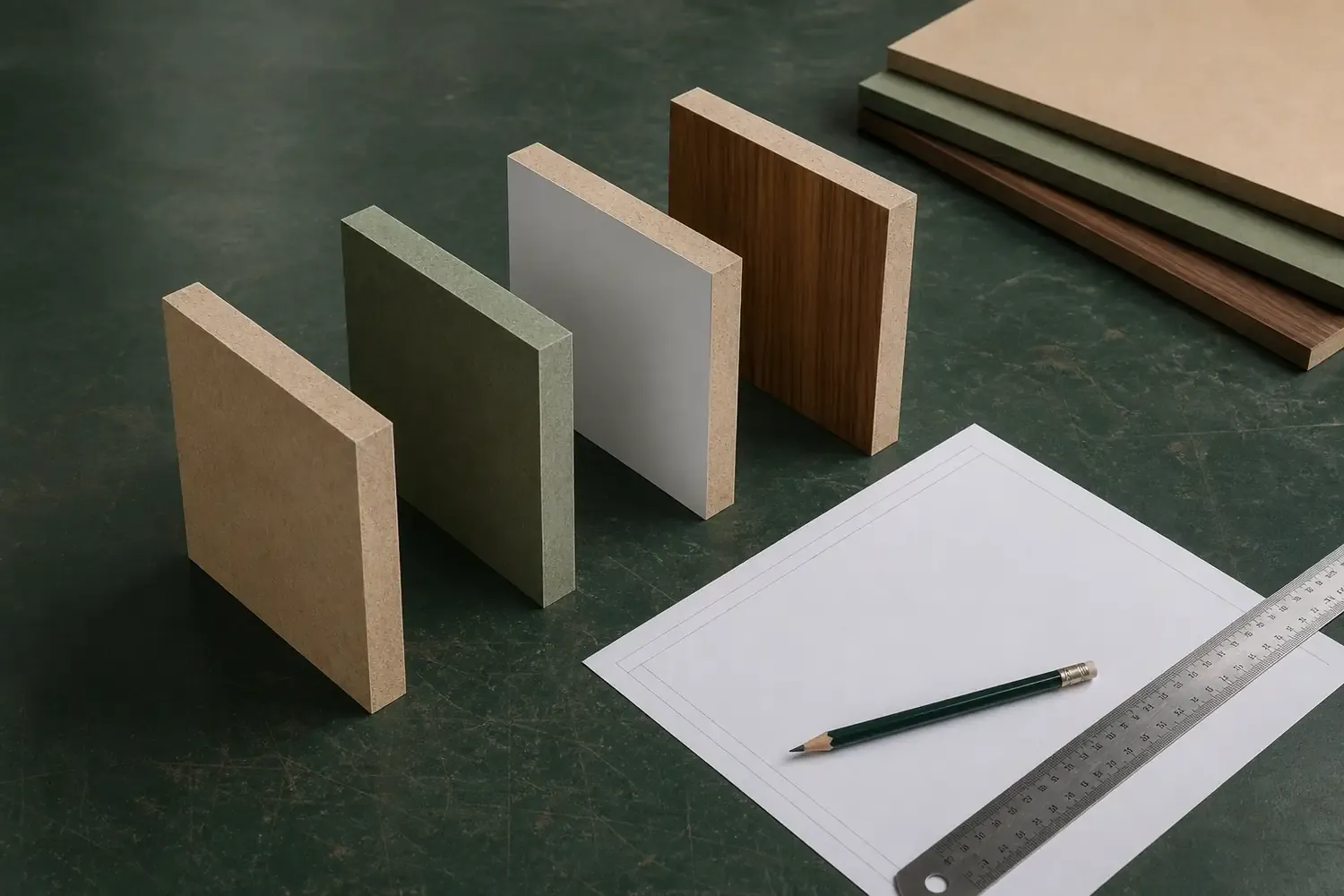
MDF means medium-density fibreboard: an engineered wood-based panel formed from prepared wood fibres and a bonding system under heat and pressure. Buyers specify the exact product through thickness, format, density, emission requirement, surface, processing and finished application.
What medium-density fibreboard is
MDF has a relatively uniform fibre structure and smooth sanded faces. This supports cutting, routing, drilling, painting, melamine pressing, laminating and veneering when the selected product and process are coordinated. MDF, HDF, hardboard, particleboard and plywood remain separate product categories.
How MDF is manufactured
At industry level, production includes wood preparation, fibre refining, drying, blending with resin and additives, mat forming, hot pressing, conditioning, sanding, sizing and inspection. Product recipes and process controls vary by grade and manufacturer.
How thickness and density relate
CUZI MDF supplies MDF-family panels from 2–35 mm with thickness-specific density ranges. Density helps identify the proposed product and calculate theoretical weight. Component design, machining, moisture, emission and fire requirements each use their own applicable review.
Common MDF surface constructions
Raw MDF provides a smooth sanded substrate for downstream finishing. Melamine, veneer, laminate, PVC and acrylic constructions add different face and reverse systems. Paint-grade and sanded MDF focus on the preparation process; every faced option should be approved through a physical sample.
Common processing methods
MDF can be supplied as full sheets, cut rectangular parts, CNC-routed components, drilled parts, grooved panels and cabinet-door fronts. Drawings should define part IDs, datums, dimensions, depth, remaining material, orientation and revision.
Where manufacturers use MDF
Furniture factories use MDF for cabinets, wardrobes, doors, shelves, fronts, decorative parts and interior panels. Selection follows the completed component, support, hardware, exposure, finish and document requirement.
How buyers compare MDF products
Compare product name, thickness, size, density, tolerance, E0/E0.5/E1 requirement, face/reverse construction, processing, sample, packaging and destination. Keep every technical value linked to the exact offered product and scope.
How CUZI MDF supplies international orders
CUZI MDF supplies from Shuyang, Jiangsu, China. Normal MOQ is 1 × 20'GP for each individual specification and normal production lead time is 7–15 days after requirements are confirmed. Packaging and transport are selected from product size, quantity, surface, destination and buyer requirements.
Prepare an MDF inquiry
Send application, product or unresolved requirement, thickness, dimensions, density, surface, processing, quantity, required documents, packaging and destination. Use the Raw MDF product page for current supply data and request a quotation.