
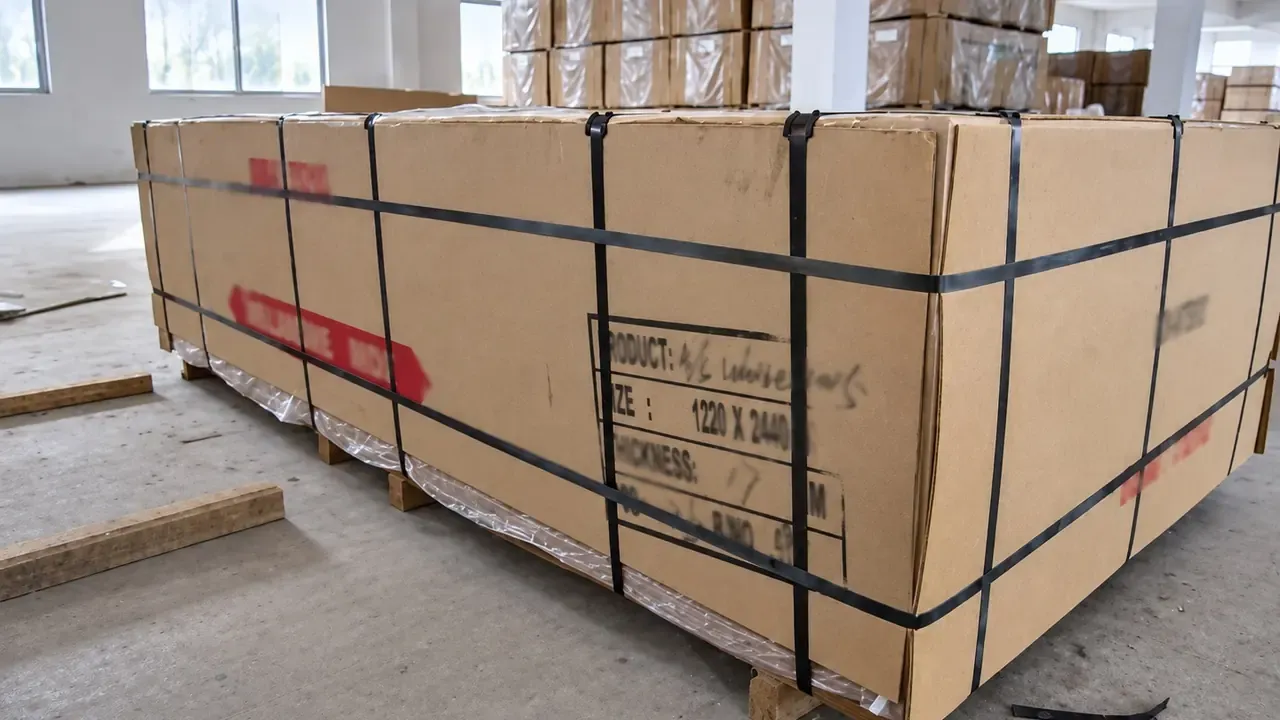
MDF packaging should be designed around product format, surface sensitivity, bundle weight, handling route, transport mode and destination. The approved pack protects the specific order and gives loading and receiving teams clear handling information.
Classify the goods before packing
Separate raw sheets, thin panels, decorative faced boards, veneer, high-gloss surfaces, machined components and finished parts. Record the surfaces, profiles and edges that need protection and any required installation sequence.
Build the bundle from the product outward
Choose clean separators, face protection, top and bottom cover boards, edge and corner protectors, wrapping, straps and base supports for the actual goods. Coordinate strap locations and pressure with thin sheets and finished profiles.
Define support and forklift access
State bundle length, width, height, weight, bearer positions and fork-entry direction. Provide continuous flat support for flexible sheets and stable skids or pallets for the planned loading method. Mark lifting restrictions on outer labels.
Control moisture exposure through the route
Plan covered factory storage, wrapping, container or vessel conditions, terminal handling and destination storage. Select protective materials and closure details for the confirmed route. Keep receiving instructions aligned with the pack design.
Record quantities and weights
List sheets or parts per bundle, bundle count, net product weight, packaging weight and gross cargo weight. Distinguish theoretical calculations from measured or confirmed shipment data. Link every bundle ID to the packing list.
Choose container or breakbulk planning
Container shipments suit order quantities and dimensions that fit the selected equipment and payload. Large-volume heavy MDF programs may use breakbulk or another route after port, vessel, packaging and lifting review. Confirm the actual logistics option with the appointed forwarder or carrier.
Design labels for receiving
Include order, product, specification, bundle number, quantity, dimensions, gross weight, orientation and handling marks. For component orders, add room, cabinet, module or installation sequence. Keep labels readable through outer wrapping.
Inspect the pack and loading process
Check materials, supports, covers, straps, labels, bundle dimensions and weights against the approved pack. Record loading order, cargo condition and restraint. Provide photos or records within the agreed inspection scope.
Prepare the packaging request
Send product mix, surfaces, quantities, bundle preference, destination, transport route, unloading method and site limits. Use Packaging & Shipping, the container-loading guide and request an order-specific packing review.