
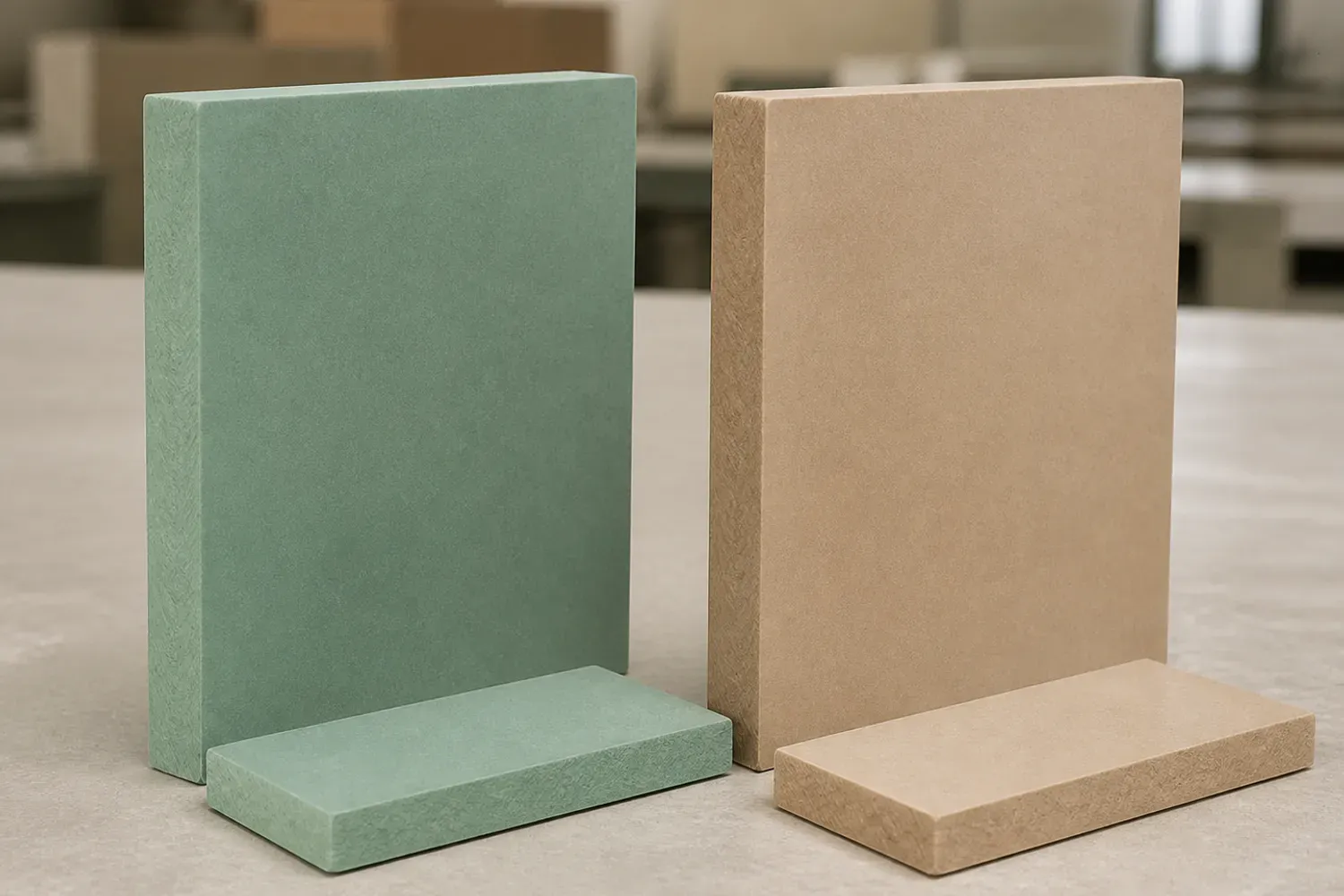
MDF moisture performance depends on the selected product, test method, finished construction and exposure. Standard MDF, MR MDF and HMR MDF provide different protected-interior options, while continued outdoor weather, standing water and immersion require a separate material and assembly option.
Translate waterproof searches into exposure
Buyers searching “waterproof MDF”, “water-resistant MDF” or “moisture-proof MDF” may need resistance to room humidity, condensation, occasional splash, cleaning or a plumbing-adjacent location. Write the exposure condition, frequency and duration before selecting a product.
Standard MDF in dry protected interiors
Standard MDF suits dry protected furniture and interior components when the completed design, surface, edges, ventilation and maintenance match that condition. State any local humidity or cleaning concerns in the RFQ.
MR MDF for improved moisture resistance
Moisture Resistant MDF provides improved performance for defined protected-interior humidity and brief incidental moisture conditions. Request the applicable product-specific test method and result, then coordinate the face, reverse, edges and openings.
HMR MDF for higher moisture performance
HMR MDF uses higher density ranges, more moisture-resistant resin or additive material and tighter production control. It provides stronger moisture resistance and slower water ingress during brief incidental contact. Long-term immersion follows a different material and assembly decision.
Map moisture entry points
Review faces, reverse sides, sawn edges, routed profiles, hinge cups, sink cut-outs, plumbing holes, joints and site cuts. Draw the protection plan for each point and identify the party completing factory and site work.
Coordinate finish and ventilation
Paint, melamine, laminate, PVC, acrylic and veneer constructions protect covered surfaces in different ways. Match primers, adhesives, coatings and edge materials to the selected product. Provide airflow and service access around enclosed or plumbing-adjacent components.
Review test reports and samples
Match the offered product, thickness and construction to the moisture test method and result. Use a representative finished component to review machining, edge protection, coating and hardware interfaces. Emission class remains a separate specification.
Plan storage and installation
Keep panels flat, supported and dry through factory storage, transport, site storage and installation. Protect exposed work during site cutting and restore the specified finish around new openings.
Prepare the moisture-performance RFQ
Send component, exposure, product option, thickness, size, density, face/reverse/edge construction, machining, quantity, required documents, packaging and destination. Compare MR MDF and HMR MDF, then request a specification review.