
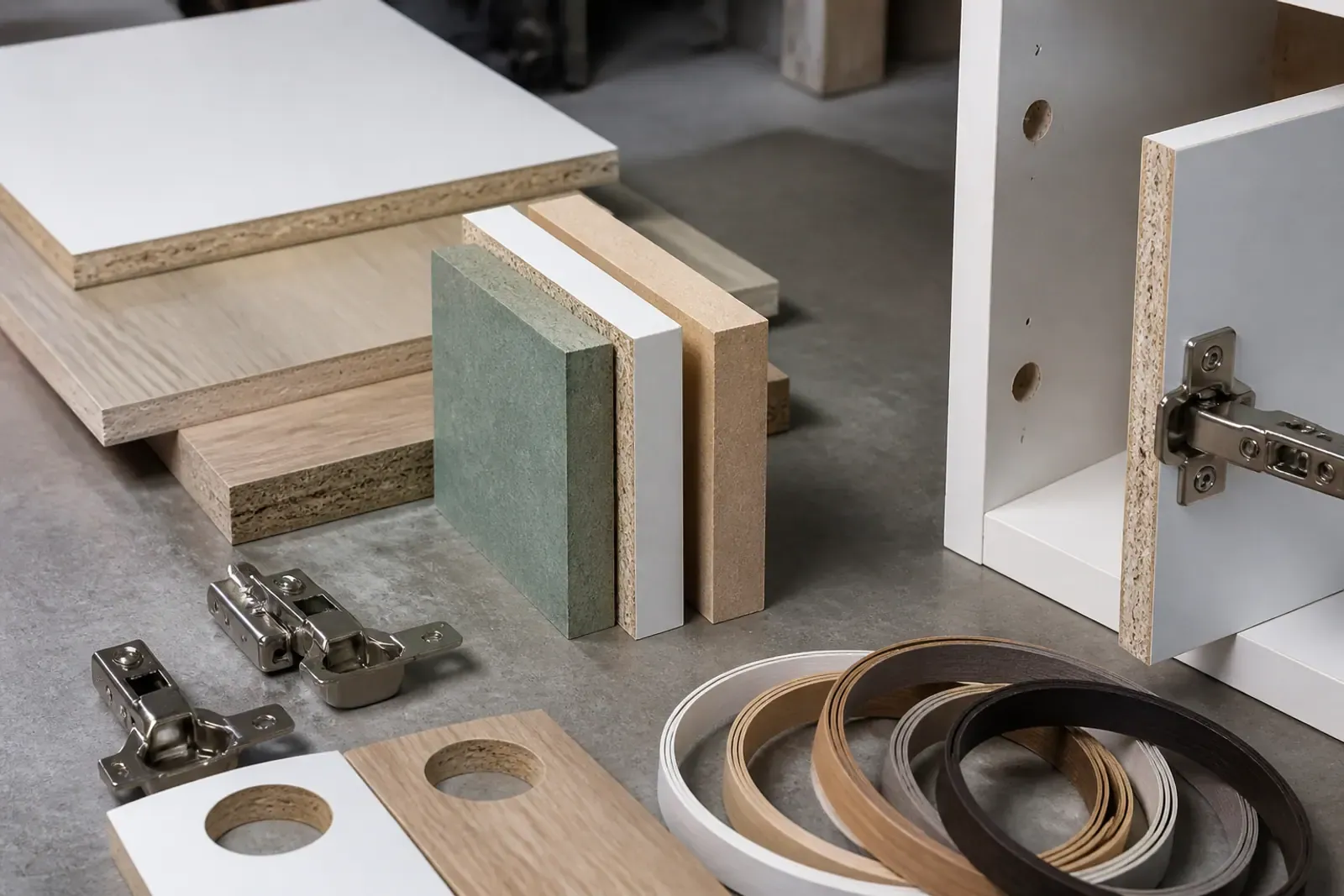
Kitchen cabinet MDF selection should begin with the completed cabinet and its exposure. Separate wall cabinets, base cabinets, sink units, doors, shelves, backs and decorative end panels before choosing board and finish.
Divide the kitchen into exposure zones
Record ambient humidity, cooking steam, sink or dishwasher proximity, intermittent splash, cleaning and ventilation. Map water, heat and service access around each component so every position receives its own service condition.
Choose product by component
Standard MDF can suit dry protected components. MR or HMR MDF can support higher protected-interior moisture requirements when matched to applicable product documents and test reports. Select the product, thickness and density together with component support and machining.
Specify the complete surface construction
Record face, reverse, edge and exposed openings for paint, melamine, veneer, laminate, PVC or acrylic options. Approve colour, texture, gloss or veneer through physical samples. Include sink cut-outs, service holes and site-cut edges in the protection plan.
Coordinate doors and routed fronts
Provide front and section drawings for slab, shaker-style, grooved or custom doors. Show routing depth, remaining material, edge shape, hinge cups and handle locations. Review finished door weight and dimensions with the selected hardware.
Review shelves, backs and carcasses
Define shelf span, supports, edge treatment and drilling. State back-panel construction, groove or fixing and face orientation. Use component-specific material codes so thin backs, structural carcass parts and decorative fronts remain distinct.
Approve a representative cabinet section
Build a sink-side or other demanding module with actual face, reverse, edge, hardware and openings. Review fit, appearance, ventilation, access and exposure details. Record the accepted sample, drawing and hardware references.
Inspect production parts
Check product identity, dimensions, finish, grain direction, edge joints, routed profiles, drilling and labels. Assemble representative doors and carcass parts to verify gaps and hardware alignment before repeat production.
Pack by cabinet and installation sequence
Protect decorative faces and door edges, separate hardware and label cabinets, rooms or units clearly. State bundle dimensions, weights, unloading method and destination storage conditions.
Prepare the kitchen-cabinet RFQ
Send cabinet elevations, component schedule, exposure zones, MDF products, finishes, hardware, quantity, sample scope, packaging and destination. Use MDF for Kitchen Cabinets and request a cabinet review.